The dry tubers, which are the natural plants, are valuable medicines, both in traditional medicine and in modern medicine。
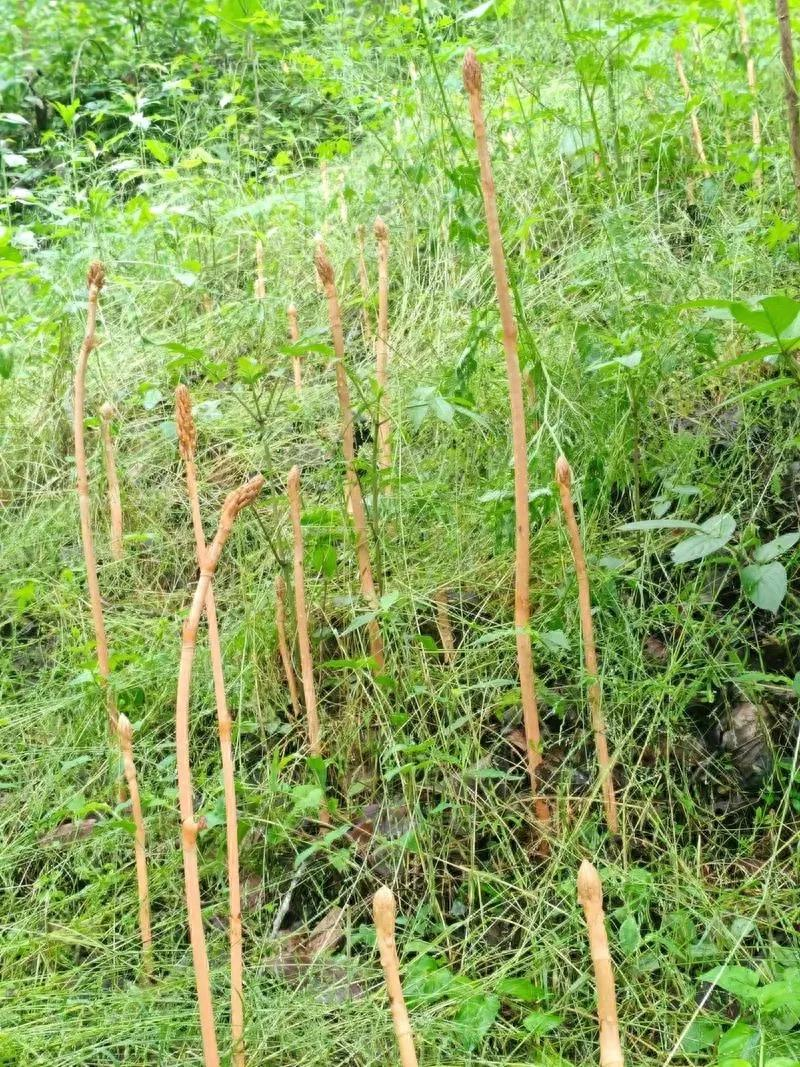
It's a plant
The cynics have no roots, no leaves, no light co-operation, and rely on honey circulus to provide nutrition. Plants are 30 - 100 centimetres high, sometimes up to 2 metres high; they are thick root-shaped, tubular, elliptical to near-mute bell-shaped, they are fleshy, they have a more dense section, and they are stale with many triangles of wide eggs. Roofs are upright, orange, yellow, grey brown or blue green, green-free, and several membranes are found in the lower part。
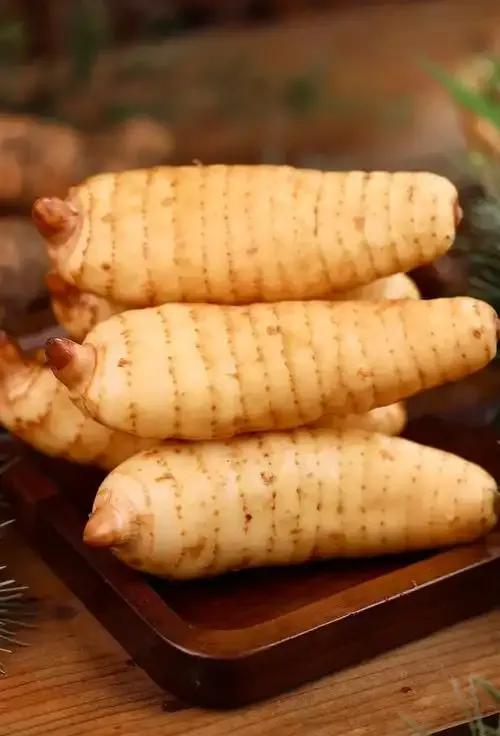
Tinker bell
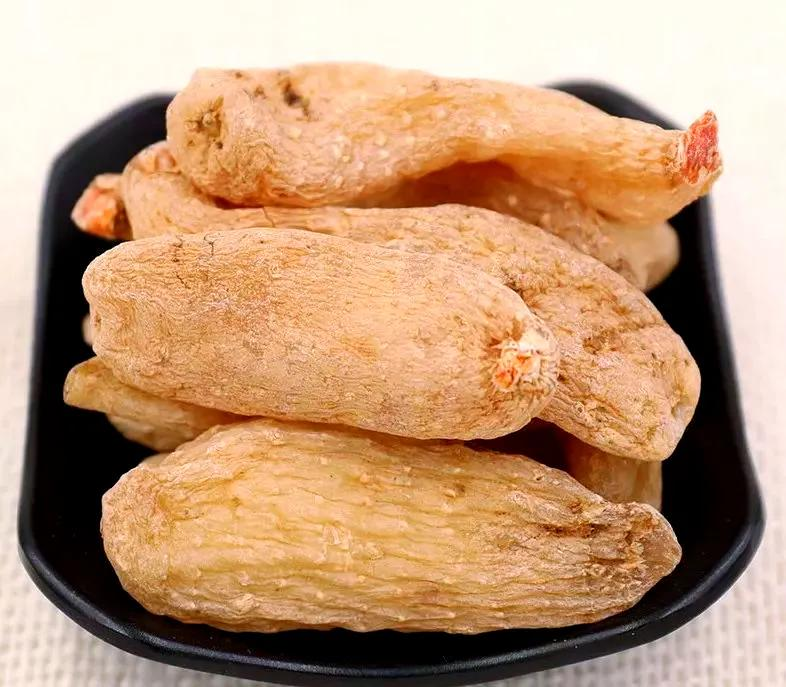
It's potion
It is located in jilin, liaoning, inner mongolia, hebei, shanxi, shaanxi, gansu, jiangsu, anhui, zhejiang, jiangxi, taiwan, henan, hubei, hunan, sichuan, guizhou, yunnan and tibet. They grow under the forest, in the middle of the forest, at the edge of the forest, at the edge of the bush。
As a well-known chinese medicine, tianma gives you details of its cultivation methods:
Preparation for planting
1. Land selection
The absence of leaves and the inability to engage in photosynthesis, which rely primarily on honey circulus to provide nutrition, necessitates the choice of an environment suitable for honey circulus growth. It is desirable to choose the mountainous areas of 500 - 2,000 metres above sea level, where vegetation is abundant, the air is wet, the summer is cool and the winter is not very cold。
The soil is suitable for sandy sandy soil, which is loose, fertile, well drained and rich in decomposed soil, with ph values ranging from 5. 5 to 6. 5。
Bacteria and leachate selection
(b) the species of honey circulus: choice of high-growth, non-micro-polluting, corrosive, multi-segregated, high-quality species of honey circulus. The most common good species of honey circulus are the zinnon one。
Manic species: white and rice. It is larger and typically weighs 10 - 50 grams and is suitable for seed production; it is smaller, such as grain size, and is mainly used to expand breeding. A non-damaged, non-pest-free, normal and full-of-the-skinned species should be chosen。
3. Preparation of materials
Nutrients are the backbone of the growth of the honey circulus and the source of nutrition for cynics. Commonly used culture is wood crumbs, branches, wood, etc. Of broad leaves. For example, the twigs, e. G., e. G., e. G., e. G., twigs, twigs, 5 - 10 cm long, sawn in 50 - 60 cm long wood, cut off a fish trap every 5 - 10 cm on the wood section, to depths appropriate for cutting through the bark to the wood, so that the honey rings can enter better。
Cultivation steps
1. Bacillus culture
Digging cellars: typically 30 - 40 cm deep, 60 - 80 cm wide, depending on the terrain and the size of cultivation。
Painting: a layer of 3 - 5 centimetres thick leaves or weeds laid at the base of the cellar, then a layer of ready wood, a gap of 2 - 3 centimetres between the logs, and a branch of the tree, then a layer of honey circulus species spread evenly over the wood and branches, and a layer of 5 - 10 centimetres thick decomposed or sandy soil, so repeated, 2 - 3 layers, then grounded with earth, to the back, so as to prevent the accumulation of water。
Management: during bacterium culture, the cellar is kept humid, the relative humidity of the air is maintained at 60 - 70% and the temperature is controlled at 15 - 25°c. After a period of 2 - 3 months normally, the meringue grows on wood and branches, forming a large number of bacterial cords, at which point the bacterial culture is successful。
Pyroculture
The planting time is winter and spring. The winter took place in november during the sis hibernation and the spring took place after the thawing of 3-4 months。
Planting methods:
In a well-bred bacterium cellar, the upper bacterium is extracted, the lower bacterium remains intact, the peso is placed in the space between the bacterium, the pyre is 10 - 15 centimetres apart, the mime is properly planted, and then the plastered bacterium is filled with corroded soil or sandy soil, and the excavated bacterium is put back to its original place with 10 - 15 centimetres of thick soil。
Activity fungi cultivation: first, the planting cellars are dug, a leaf is laid at the bottom of the cellars, the cultured bacteria are separated from fresh wood, with a distance of 2 - 3 cm, the saplings are placed on both sides of the fungus and on both ends of the new wood section, and then the corroded soil fills the void with 10 - 15 cm thick ground。
Field management
1. Temperature management
The appropriate temperature for the growth of the avalanche is 15 - 25°c. When summer temperatures are too high, shades are used to cool, such as the construction of sunnets, and when winter temperatures are too low, cold and warm, a thick layer of leaves, straw or plastic sheeting can be covered on the cellar。
2. Water management
The sis needs a moist environment but is afraid to accumulate water. Soil water content should be maintained at 50 - 60 per cent in the pre-sembry period; it can be increased to 60 - 70 per cent in the medium-growth period; and soil water content should be reduced to around 50 per cent in the post-growth period. During the rainy season, attention must be paid to drainage and flood control, and during the dry season water should be wet and wet in a timely manner。
3. Pest management
Diseases: the common disease of fertiloma consists of stasis, caused mainly by high soil wetness, poor ventilation or infection with bacteria. The approach is to select well-drived plantations, control soil moisture, discover the strain to be dug out and destroyed in a timely manner, and sterilise the disease with lime powder in its den。
Insects: the main pests are thorium, thorium, etc., which may be subject to booby traps or drug control. For example, insecticidal with black light lamps or soil treatment with pesticides such as thionate before planting。
Collection and processing
1. Collection
Winterly planted plasters are usually harvested in the following year, november to march, and spring planted plasters in november. On the same day, when the plume falls and falls, it is possible to dig. When digging, care should be taken to avoid damage to the tampon。
Processing
The plaster after harvest must be processed in a timely manner. First wash the sky and grade it by size, and then boil it in boiling water for 5 - 15 minutes, so that it can easily be inserted. When cooked, dry surface moisture is extracted and then dried or dried. The drying temperature is first controlled at 50 - 60°c and is then reduced to 40 - 50°c until it is completely dry. Post-dry scavengers should be stored in a ventilated dry place to prevent cartilage and infestation。