


Luice flower field planting technology in the north
Luice flowers, though not as strong as their source of origin, can increase by 80-100 times the fertility rate compared to the reproduction of separate strains
Reproduction, cultivation。
1 seedling
1. 1 quarrying
Luice flowers are soak nuts that are solid with flowers open and mature and impregnable under the hot sun, so the seeds should be collected in groups and in a timely manner. In general, beans are taken when the nuts are yellow, placed in a wooden or bamboo container at a certain height on the edge, tanned in the sun, and after a midday, most of the nuts burst and eject seeds. Ejected seeds are collected, tanned in the sun to a safe water content and stored dry。
1. 2 storage and euphoria determination
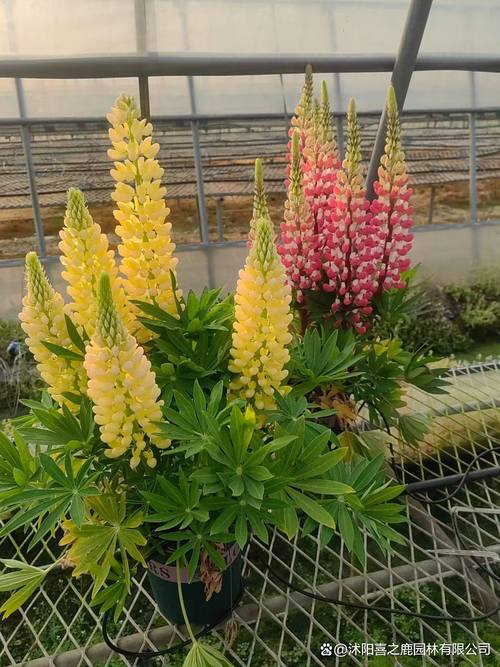
Luice seeds have a “living door” to control moisture, and they are stored for longer periods of time when they are closed under damp conditions, when they are inaccessible, when they are dry, when they are open with waxy skins. According to some, the luice seeds have been alive for 40 years. In general, at a temperature of 11 per cent and 13 per cent of water content, stored at 15 °c ~ 20 °c, seeds have a lifetime of 5 to 8 years, and the lower the temperature of storage, the longer the seed life. In 1967, canada reported the discovery of more than 20 arctic ice florist seeds in a rat hole in the heart of the green ken river in north america (the arctic ice florist is a very cold-resistant type of bean in which, in the very short summer of alaska, the opportunity to take advantage of the short warmth of the ground opens small purple columns, with wild flowers climaxing with distant snow peaks and great beauty). They are buried deep in the ice, measured by carbon 14, and they live long lives. Six of them germinate in seed trials and grow into plantations。
The seed stored is subject to seeding determination. There is a certain hard-core rate for ruby seeds, which varies from year to year, and the warmer the warmer, the higher the hard-fact rate as the seed matures; the lower the hard-fact rate for early seeds and the higher the hard-fact rate for late harvests in the same year: with longer storage times, the hard-fact rate increases: the average hard-fact rate for ruby flowers is 32 per cent. Since hard seeds are sowed that they cannot germinate for a short period of time, when they are detected, they are immersed day and night in warm water of 40°c-60°c, picking out hard seeds and calculating the hard rate. Hard seeds are used as seed-free seeds in the calculation of gerontivity. Inhaled seeds are measured in red ink, red tetranitroazine or gerontological experiments to provide a reliable basis for the determination of seed levels. In general, the lumber rate is around 84 per cent at temperatures around 20°c. When dry seeds are planted, the reference sprout rate for luice is 57. 1 per cent。
1. 3 whole area
The breeding grounds require lax, gas-rich, organically fertile sandy soil, and soil ph is appropriate for 5^6. 8. Extremely poor growth, especially root systems, in over-heavy soils and limey soils, with small roots and small overall growth, cannot serve as breeding grounds. The usual acre application of decomposed organic fertilizers 1500-2000kg, nh, hco, 50kg, phosphorus fertiliser 40kg, which is then pushed down 20 cm deep, shredded, fined, made of mulch, seeding by sowing or stripping。
1. 4 cultivation
Cultivation is a critical technical measure for seed breeding and planting, and sufficient, robust and pure seedlings are key to successful cultivation. In order to reach early, full, full, balanced and strong seedlings, attention should be paid to the following key measures: planting time: luice seed seed sprouts at the most suitable temperature of 20°c - 22°c, with a maximum temperature of 30°c and a minimum temperature of 5°c: the most lumberable moisture is 85% - 95% of the soil water content. At 30°c, the suffocation rate is 18-20%, the sprout rate is about 70%, and the five-day sprouts have been completed, but in six repeated trials, the differences between the different repertoires are greater, the sprouts are very poor, the embryos are weak and the seedlings are weak. At temperatures around 20°c, 10% and 13% of rotors, 81% and 84% of sprouts, 5 days of sprouts, full sprouts, consistent repetitions, high success rates and strong seedlings. Under 5°c conditions, the decay rate is 5-6%, 20 days of gestation, low seedlings and low survival rates. As a result, field planting in the north is possible from august to september, but the sooner, the sooner, the sooner, the longer, the colder, and the sooner, the better. The roman poet gil, in his "agriculture poetry", has been advised to plant the raspberry before growing wheat. However, if a small arch shed is built in winter to protect it from winter, planting can be done in october-november, and the next spring can bloom。
Sowing methods and density: seeding can be done using two types of seeding methods: castout, stripping, and more sowing. New seeds have a growth rate of 80-85 per cent, with a rate of 7-8 g per square metre and a general distance of 10 cm and 6-7 cm per square metre。
Seed treatment: luice seeds have hard skins, hard leaves, difficult to absorb in soil. It can be boiled with open water for 3 - 5 seconds, then cooled with cold water, when the temperature drops to about 50°c, soaks around a day and a night, sowing suffocated seeds, 80% of the seedage after 7 - 8 days。
Post-situation management: luice seeds have high protein content, high water intake, strict soil wetting after sowing, usually once in the morning and night under conditions of no cover, and it is best to keep the topsoil wet so that the seeds can sow, and if the water is not watered in time, it will germinate late, with low or no gestation。
Seeds grow in time and weed. When the seedling is too big or too small, the seedling, the sick, the weak, leaves a strong, stable seedling, which can be carried out two to three times. In general, the one-leave-in-the-sap has been completed in 40 days of age. The soil area of each seedling is more appropriate at 45 - 50 cm2。
A leaf is usually smoked 13-15 days. If the leaf is yellow, growing slowly and can be followed to a suitable level of nitrogen fertilization, it is generally appropriate for each m2-20-25gco (nh2) 2: if it is strong, it cannot be followed by fat, but the water must be watered in a timely manner, with fewer roots and poor water intake. In the absence of rain, water is usually poured every three days to ensure the water supply during the sapling season, usually transplanted at 60 to 70 days of age, 31 to 4 pieces of real leaf and 8 ~gcm high。
Landing, relocation
Lu ice flowers are more popular and can be grown in acres full of organic fattening, 50 kgnh4hco3, 40 kg phosphorous fattening, which is about 40 cm deep, flattening, and then flatting up to 1. 2 m wide. The transplantation is usually carried out during the second half of the spring, preferably in the middle of the afternoon, which is 30 cm x 40 cm, with a distance of 2-3 cm each, and then watered once. Luice has 7-10 days of slow seeding, during which the root system has poor capacity to absorb water, and water is in principle wet rather than dry. Water is sprayed once a day in the afternoon within one week of the general transplantation, and water can be poured around the seedlings every evening, with a survival rate of over 95 per cent. Many of the information presented on lu ice floss refers to the straight roots of lu ice florist, which cannot be easily transplanted, but in the practice of seeding in the north, lu ice flowers can be transplanted naked. The survival rate can reach more than 80 per cent, regardless of whether it is large or small, and the larger it is, the higher it is。
3. Long-term management of nutrition

Long-term nutrition refers to the period between planting and the beginning of flowering. The task of this period of cultivation is to increase the area of nutrients and to establish an adequate nutritional base for the chromatology of flowers, so the technical measures for this period are to ensure the availability of water and fertilizer. Fertilizer is generally applied every 10-15 days, mainly on nitrogen fertilizer, in conjunction with phosphorus fertilizer. Luice has its own nitrogen-fixing effect and a high use of phosphorus fertilizers in the soil, which are low phosphorus-resistant plants and are generally able to apply pure nitrogen 8-9g, p2o5 12^-13g per square metre; water is poured in due to weather conditions for about 10 days without rain, and is expected to be ploughed in a timely manner to ensure that the soil is abated and promotes the growth of the root system。
4. Cultivation and flowering management
Cultivation is the shift from simple nutrient growth to nutritional growth and co-existence of reproductive growth, the task of which is both to ensure the healthy growth of plants and to promote the separation of buds. Thus, the technical application of phosphate-based potassium fertilizer, combined with nitrogen-based fertilizer, is still applied every 10-15 days at a rate of 24-25gk20, 17 ^-18gp205, 5-6gn per square metre, a period of malnutrition that tends to divide the base flower into small leaves or stop development. When the luice flower is grown up to 8°-9 leafs, proper drying contributes to the transformation of nutritional growth to reproductive growth. However, water scarcity also leads to incomplete separation of small flowers in the flowering process, while water scarcity during the flowering season results in poor pollination of plants and lower yields. Therefore, water should not be scarce for this period, and when it is not rain, water should normally be poured once for 10. 15 days to ensure that soil moisture is above 75 per cent。
5. Fruit maturity management
The water requirements are higher in the course of the true maturity of the rubicon fruit. As a result, water is also not available for this period and soil moisture is appropriate at 75-85 per cent. The application of 0. 5 per cent of kh2po4 on a one-week leaf during this period can contribute to the abundance of seeds. The period is characterized by a long sequence of rough, but medium-sized, draughts, and should be characterized by catastrophic weather events, such as wind and stormy rains, resulting in the breakage and fallout of the bouquets, affecting the production and quality of seeds. Note that the maturity of seeds is inconsistent and should be collected in batches during the yellow season。
6. Pest management
Luice flowers are highly resistant, with very few pests and pests. During planting, they can be sprayed up to 1500 times with more than 50 per cent fungus humid powder, or with 40 per cent of the oxen oxidized omelet lotion lotion when they are hazardous。



