


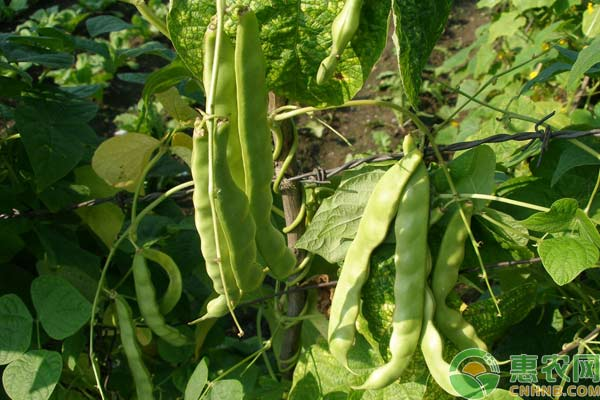
The low production of beans notwithstanding, counter-season bean prices are high, economic efficiency is high and greenhouse cultivation continues to expand. In order to prevent such disruptions, greenhouse-beans cultivation is generally done under tomatoes, thus creating a technology model for the cultivation of tomatoes (in autumn and late evening) and beans (in the early spring), which is summarized below。
1. Passage pattern
Tomatoes were planted in early july, planted in mid-august and picked up between early november and early january; beans could sow before and after the spring of each year, or directly during the remaining one of the tomatoes, or during the harvest period between mid-april and late may。
2. Choice of varieties
The selection of infinity growing varieties requires that the main chickens grow by more than 2-3 m, and that they grow by a large length, grow by a strong branch, withstand low-temperature and weak light, bean horns by a small number, fibre by a good quality, resistance to disease and abundance, be able to turn back and harvest for long periods, such as green dragons, bean king series, etc。
3. Cultivation patterns
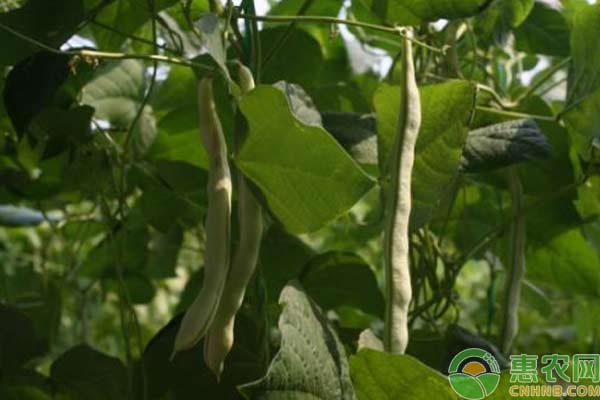
The seeding takes place when the upper tomato is covered with a sap, and it is also possible to sow before and after the spring, with a range of 28 to 30 cm in the middle of the two tomatoes, two to three grains per lacuna; it is also possible to sow beans when they reach the age of 25d and are grown, and then fill 50% of the mass by 500 times the mass of more than 500 ml. 667m2 with 3000 dens and 6,000 units. The depth of the cave is consistent with the size of the sap, and it is inappropriate to go too deep to prevent endemic diseases. The soil moisture is suitable for water use, such as micro-spray water from a dry hose。
4. Field management
4. 1 temperature, light management
In the preceding period, temperature was maintained at 25-30°c during the day, at 15-20°c during the night, at 15-25°c during the day and 12-15°c during the night. During the daytime of the chicken season, 22 - 28°c, at night, 15 - 20°c. When the beans enter the flowering season, they reduce the temperature, promote the shears, during the day, 22 - 26°c, at night, 15 - 20°c, enter the shearing season and later, and the external temperature rises gradually. It is important to improve ventilation and protect against high temperatures. In the early spring, it is necessary to keep the shrub clean, to increase the radiance rate, and to cover, as early as possible, the curtains or cotton cover, subject to meeting the temperature of growing beans. In the event of a snowbath, the plant should be gradually lighted in the form of a “flower curtain”。
4. 2 fertilizer water management
They shall plant them before they bloom, and they shall control the water, and they shall not be dry or watered, lest they should grow. After having sat on the acupuncture for up to 4-5 cm, the acupuncture of the acupuncture is followed by the first fertilization in the morning by a combination of water, which is applied to n per 667 m2 per day: p:k-15:15:15 composite fertilizer 7. 5 kg. After the harvest began, the nutritional and reproductive growth went hand in hand and the underlying tumours were formed in large numbers, at a time when the most fertilized water was needed and the photocolyt formed during a boom, and the second fertilization was carried out in conjunction with the 2nd water supply of 667 m2 with urein 5kg, diammonium phosphate 2. 5 kg with phosphate and potassium sulfate 8kg. Water should be watered in accordance with the principle of “no flowering” and not so much water should be poured and soil moist (relatively 60-80 per cent soil). Sprayed on the leaf, per 0. 2-0. 3 per cent of the mass per 7-10d, from the early stages of the condensation, is potassium phosphate or squirt. In particular, in the later stages of the acupuncture, field management should be strengthened in order to promote the emergence of new branches and the quality and production of acupunctures. The percentage of a leaf spray of ammonium molyte of 0. 01 to 0. 03 per cent, 300 times potassium hydroxyphosphate, 200 times urea and dyson zinc, among others, has resulted in the second peak of acupuncture and increased yields。
4. 3 plant adjustment
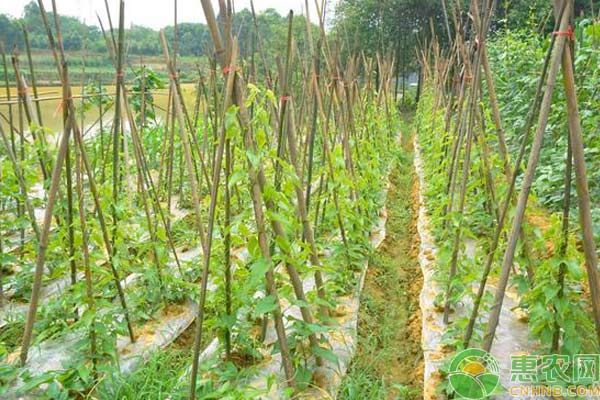
The wire that is attached to the rope is placed on the top of the plant. One leash per lavender, and the chicken will be strung up in time after smoking. Crunching at 1. 5-1. 7 m height, boosting the side of the chicken and leaving two leaves behind the side of the chicken. When the harvest is near, the next leaf should be removed and the side branches should be encouraged to grow. At the end of the flowering season, old leaves, yellow leaves and sick leaves can be removed from the ground up to 45 cm to further improve ventilation in the fields, and water can be poured up to one-two times to fatten the plants, causing new branches to be pumped out, flowers to continue to grow, harvest periods to be extended and total greenhouse production to increase. In addition, the solar greenhouses are easy to grow and must be chemically controlled, specifically the application of phosphate-based potassium phosphate of 30, 50 and 70 cm, respectively, and of 0. 2 per cent of the mass; it is also possible to spray acetic acid and boron fertilizer on flowering leaves in order to increase sitting rates。
4. 4 protection from falling flowers
The rate of soybeans is generally only 20-30 per cent and not more than 50 per cent, and visible flowers are an important factor in limiting the high production of beans. They are associated with both their own flowering habits and with temperature, light, water, fat, pests and diseases. First, it's rational to plant it in such a way that it's radiant. Second is the application of less fertilizing before the flower, the appropriate amount after the flower, the re-application of the balconies, the application of noxious fertilisation, and the increase in the application of potassium phosphorus. Third, timely harvesting, reduction of nutrient consumption and two to three follow-up fertilization exercises after harvesting can boost the growth of beans, extend the harvest period and increase production. The fourth is during the flowering period, with 15-25 mg/kg acetic acid or 30-50 mg/kg anti-depressants sprayed with flowers, with beans blooming in batches for treatment and multiple spraying to prevent the falling of flowers from falling better. Fifth is the timely prevention of diseases and pests。
5. Pest management
Greenhouse diseases are mainly asymptomatic and bacterial diseases, and the pests are mainly soybean and pheasant, which must be combated with a comprehensive approach, using highly effective, low-toxic pesticides, ensuring that pesticide intervals are met and that beans meet the green hazard-free requirements。
Collection
The soybean harvest usually takes place 10-15d after the flower has fallen, affecting production prematurely, with late quality declining, with chicken varieties ranging from sowing to harvesting about 60-70d. The safe intervals for pesticides must be observed during harvest。
The above is a summary of greenhouse-beans cultivation techniques. It's important that the greenhouse grow the beans。



