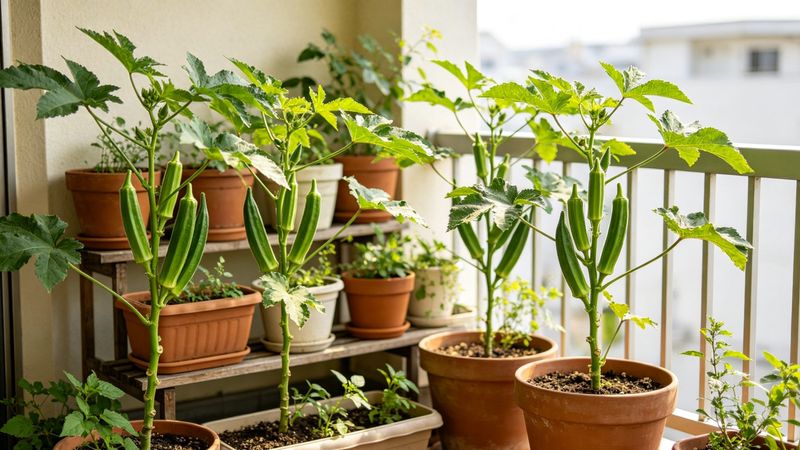
In most people's minds, tomatoes are a relatively small plant, usually not more than one metre high。
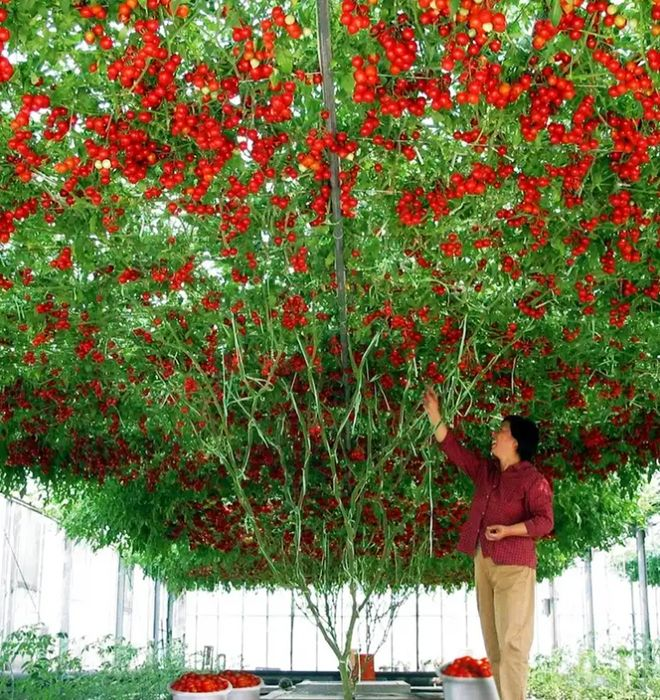
But the tomato trees have been on fire recently, causing a lot of discussion among netizens. And that's when, at the shandong sunshine fair, a tall tomato tree succeeded in drawing the attention of a wide audience。
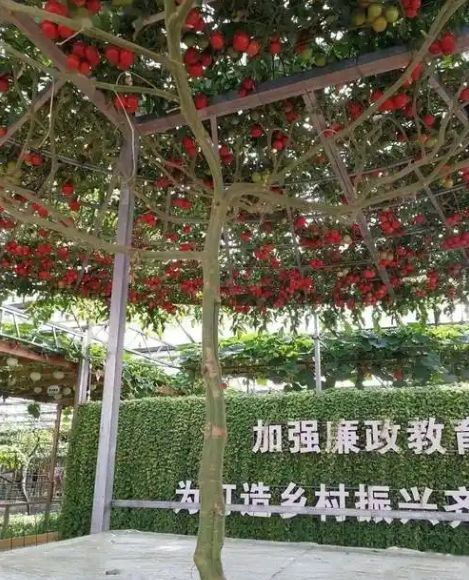
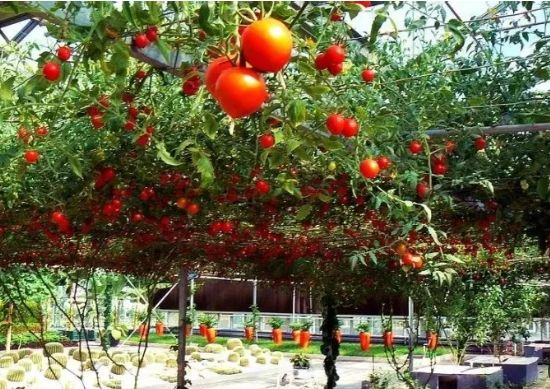
A tomato tree is grown here, growing as tall as a tree, with a crown area of 150 square metres, and is said to produce 6,000 pounds per year alone, with one characteristic: it grows indefinitely, with only one tree on one shelf。
Such a unique crop makes one wonder what kind of plant is the tomato tree? Can i grow it in my country? Are farmers fit to plant it? Let us lift the veil of the tomato tree together。
Subversive cognitive: the difference between tomato trees and ordinary tomatoes
Tomato trees, known as woodburn tomatoes, are not our usual one-year grasshopper tomatoes, but multi-year tomato plants。
It has a large plant that can normally grow up to 2-3 metres, or even higher, and is far away, as a small tree with a puddle, which is very different from the image of a low field of ordinary tomatoes。
And where it's great, it's woody, it's grown over the years, and it can be harvested many times。
In terms of fruit, ordinary tomato fruits are small and round, with most colours red and yellow, and common varieties such as cherry tomatoes, large tomatoes, etc., usually between 2 and 10 cm in diameter
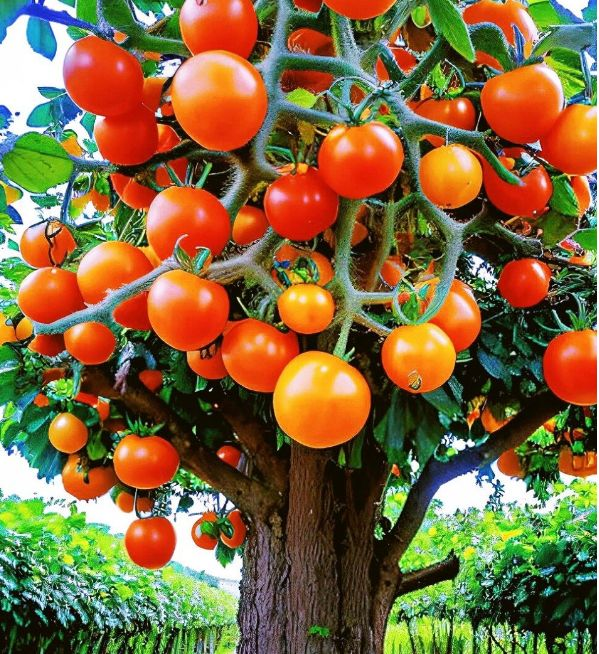
The fruit of the tomato tree is elliptical, with a larger head, with a single fruit weight of 100 - 200 grams, a colour dominated by orange red, and more like a mini tomatoes。
Taste, ordinary tomato acid is juicy, suitable for raw food and cooking; the fruit of the tomato tree tastes sweet, with a light fragrance, and is often used to make jam, juice or dessert。
In terms of growth cycles, ordinary tomatoes are born for more than one year and need to be sowed every year; tomato trees, which are multi-year plants, can be grown over a period of years, significantly reducing the human and material costs of replanting。
High productivity efficiency: significant advantage of tomato trees
The most striking feature of the tomato tree is its high-yielding properties, with an acre production of up to 6,000 pounds, far beyond ordinary tomatoes。
Thanks to its strong capacity for results, a tomato tree can produce hundreds of fruits, with long durations and even four consecutive seasons a year under suitable conditions, giving growers a steady yield of up to 20 years of harvest。
Tomato trees also perform well in terms of adaptability. It is less demanding for the soil and can be grown in fertile soil with laxity and good drainage, and is more resistant to infertileness。
At the same time, tomato trees have a certain resistance to pests and diseases, and are less vulnerable to common tomato disease, white lice, etc., and reduce the cost and labour intensity of pesticide use。
In addition, tomato fruit can be stored, transported and kept at constant temperatures for about a week, and in low-temperature cold-storage conditions the shelf life can be extended to one month, facilitating long-range transport for sale and expanding market space。
As for the question of whether tomatoes can be grown in our country, it can be said that, although they originate in the andes mountains of peru, chile, ecuador, colombia and bolivia, they are also highly adaptable and can be planted in all areas of the country where they can be grown。
How are the tomatoes grown
Tomato trees are suitable for growing in a warm, wet and well-lighted environment, with the most suitable growth temperature of 20-30°c, in the southern part of the country, such as yunnan and guangxi, in good conditions of field cultivation, and in the northern part of the country in greenhouses, in order to guarantee the need for temperature and light。
Prior to planting, high-quality seedlings are selected for a healthy, pest-free year. At the time of planting, the plants were kept at a range of about 1. 5 m x 2 m, were dug up, were applied to base fattening, were based on decomposed organic fats, were accompanied by a suitable amount of compound fat, and provided sufficient nutrients for tomato tree growth。
Fertilizer management is essential in day-to-day management. Tomato trees grow and require large amounts of water to keep the soil wet, but avoid water accumulation in order to prevent their roots from rotting。
Every 15 - 20 days during the period of growth, thin liquid fertilizers are followed up, mainly by nitrogen, to promote the growth of the leaves, and phosphorous potassium fertilizer is increased during the flower season to increase the seating rate。
In addition, the tomato tree is growing rapidly and needs to be fully trimmed in a timely manner, with the retention of the backbone and 2 - 3 strong side branches, the removal of the excess branches of weakness and disease, and the installation of ventilation and light for the development of fruit。
Prevention is the main focus of pest control. Regular clean-up of garden weeds and leaves and maintenance of a good ventilation environment; when pests and pests are detected, priority is given to biological or physical control methods, such as the use of insect luminescence and the rational use of pesticides when necessary。
But it also has disadvantages, such as the fact that the fruit of the tomato looks no different than that of the ordinary tomato, but it has a hard skin, which you have to eat, or it doesn't taste good. It's like eating oranges to skin。
For farmers ' friends, tomato trees may be a new option for growing wealth if they have access to scientific planting techniques, combined with local climatic and market conditions。
Before deciding on planting, however, it is important to fully investigate market demand, learn from crop management experiences, and avoid risks so that tomato trees can truly become “cheap trees”。