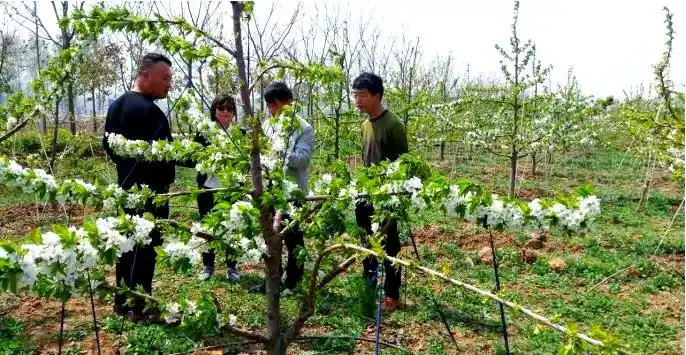
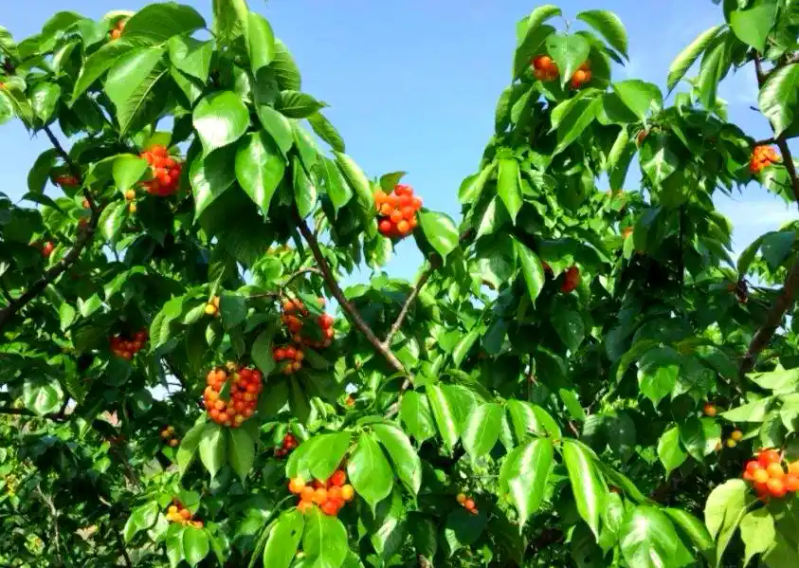
01 overview of chinese cherry cultivation
By the end of last year, china had grown more than 2. 7 million acres of large cherries, and produced more than 700,000 tons, a steady global priority. Its cultivation has also been gradually extended from the former ring gulf region to the interior, even covering the 25 autonomous regions of the southern coast, the western high altitude and the north-eastern high cold. Of these, shandong, liaoning and shaanxi provinces are the main cherry-growing provinces, with the largest area cultivated, especially in shandong province, accounting for half of the country's mountain area, with a high output of 60 per cent. However, as the cherry industry flourishes, many challenges remain for the farmers in the management of cultivation, and to this end i have prepared a systematic overview of the technical aspects of the management of the cherries' anniversary, with a view to providing valuable reference for a wide range of farmers。
The anniversary management of the great cherry garden
Early november — critical to nutritional reserves period
At this stage, large cherry trees begin to go into hibernation, and nutritional reserves are particularly important. Farmers need to ensure that trees have sufficient moisture and nutrients to support their safe winters. Care should also be taken to combat pests and diseases and to lay a solid foundation for harvests in the coming year。
Late november to mid-february — hibernation management
During this period of hibernation, the cherries tree, though dormant, is managed without neglect. Farmers need to continue to focus on the replenishment of nutritional reserves to ensure that trees survive the winter safely. At the same time, care must be taken to combat the root causes of the disease and to avoid the spread of the disease as a result of inappropriate watering. During this hibernation, the management of the cherry trees is equally critical. The farmers need to focus on the clearing of gardens, the removal of dead leaves and branches of disease, and the taking out of the gardens for destruction or deep burial in order to reduce the winter base of pests and diseases. In addition, the bleaching of trees is a necessary measure not only to mitigate the freezing but also to remove insect eggs from winter. The formulation of the platinum is proposed to be 10 limes, 1 sulfur powder, 40 water, plus two fresh soy milks, evenly mixed and painted on the trunk. At the same time, freezing water is an important part of ensuring the safe passage of cherry trees. For heavy orchards of shellworms, their shells can be brushed with iron, thereby killing the winter worms。
Mid-february to early march — pre-emergence management
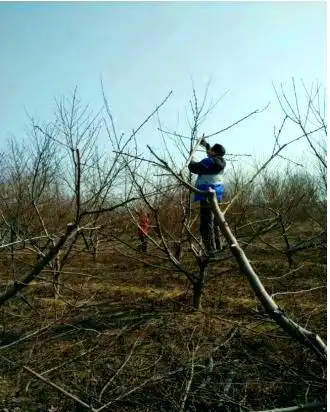
With the end of the hibernation period, the cherry tree is about to enter a new growth cycle. During the pre-emergence period, the farmers need to pay close attention to the state of the tree bodies and to prepare adequately for the upcoming growing season. First, it is important to continue to clean up the park and ensure that it is free of dead leaves and sick branches in order to reduce the probability of pests and diseases occurring. Second, the whiteting of trees is also an essential link that not only enhances the resistance of the trunk to freezing, but also further removes potential eggs. In addition, measures such as fertilizing and watering are needed prior to the chrysanthemum to provide adequate nutrition and moisture for the growth of cherry trees. These careful management efforts will lay a solid foundation for a healthy growing season for the big cherry trees. In the period between the flow of fluids and the pre-emergence period, trimping is essential. In the case of larvae, the main objective is plasticization, with the angle of the branches adjusted by pulling, generally reaching 70° ~ 80° for the three main branches and 90° for the supporting branches. At the same time, short cut-off is appropriate to facilitate tree expansion. For the first fruit tree, the cutting strategy is mainly slow, with emphasis on controlling the growth of the back branch and the upper branch, as well as nurturing the outcome branch. In the case of fruit-bearing trees, it is necessary to focus on rejuvenating and updating the branches of the outcome to promote the growth of the internal branches by inhibiting the growth of the upper part and the outer part, and to avoid the emergence of thick and bald outer parts。
Mid-april — cherry blooming season
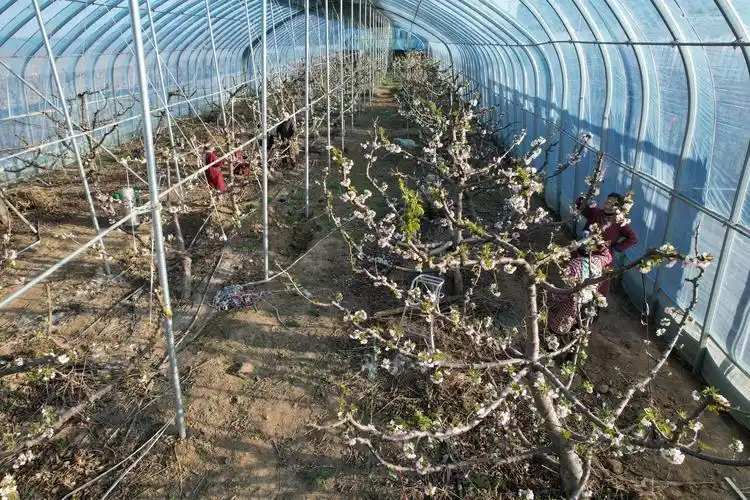
This stage is a critical period for cherry growth and requires close attention and management measures. Focus on anti-frozen and pollination measures and water before flowering, e. G. Before frosting, which can delay the duration of the three to five days. In the event of freezing, temporary smoke is recommended to protect the flowers. At the same time, in conjunction with pollination work, sprayed impregnant impregnant i. E., 2116, and 300 times more urea and 0. 3% urea or high-quality potassium phosphate to increase pollination success. In addition, bee-laying in orchards is an effective method of increasing pollination rates, especially in orchards that lack pollination trees. For artificial pollination, large bells can be collected, two pairs of flowers can be removed from petals and florists, and only flowers will be kept, then baked to dry for 24 hours, and flowers will be removed. Usually, 500 grams of flowers meet the pollination demand for an acre of land。
Later management measures
In response to the problems of early childhood, which often occur at this stage, attention is paid to fruit and soil moisture in conjunction with the pursuit of fertilizers. In particular, with regard to the control of fibrosis, the soil moisture needs to be maintained within a range of 70 to 80 per cent to avoid large fluctuations in soil moisture. At the same time, sweet cherries vary from one species to another in terms of their resistance to fissures, so the selection of highly resistant varieties is one of the key measures to prevent fissures。
Post-harvest management and pest control
Water management after fruit extraction
At the end of the sweet cherry harvest period, we need timely fertilization to ensure that the tree body can quickly recover and store sufficient nutrients. At this point, it is recommended that one third of the annual fertilizer be applied to the soil, mainly choosing high-quality potassium sulphate compound and biobacterium fertilizer. At the same time, in order to supplement the nutrients of the tree body, we also need to spray the leaves, and potassium phosphate is an effective option。
Integrated pest management
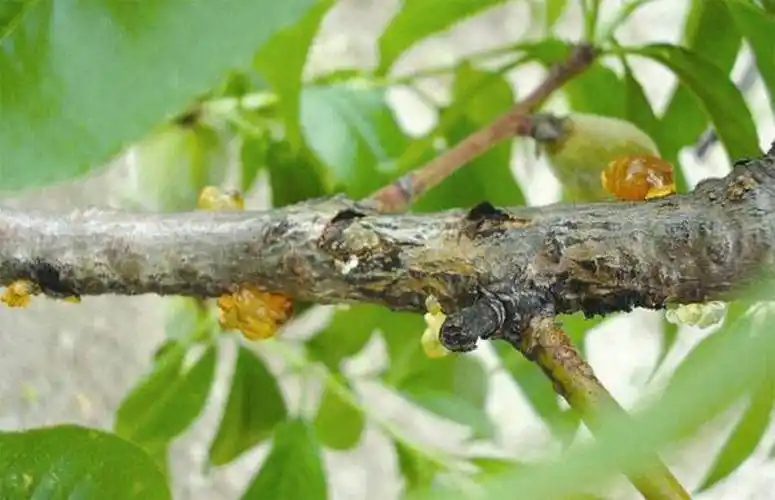
At this stage, we should focus on combating potential pests and diseases. For pest and disease control, it is recommended that drugs be sprayed every approximately 20 days, but the frequency of specific sprays needs to be adjusted flexibly to the actual rainfall, increasing the number of sprays when rainfall is high and decreasing when rainfall is low. With regard to pesticides, we can choose to use poisons, pyrophosphate, benzophthalms, larvae, scyte and trichomethrin, while for microbicides, there are options such as polybicides, dison zinc, dysen manganese zinc, flusilicate, peptoxol, leaf beryllium and scathin。