


Construction of greenhouses
The greenhouses can be used as “a 40-type solar greenhouse” with high permeability, high temperature and low construction costs。
The greenhouse is 80m east and west and 18m north and south. The greenhouse is 5°-100° south-west for light. The rear wall of the greenhouse is 2. 8 m high, the base width 4. 5 m, the width of the top 2 m, the next seat 0. 7 m, the highest point of the east-west wall 3. 5 m, the wall is 2-3 m thick and the greenhouse is 7. 25 m wide. The construction of greenhouse walls can be done mechanically, 40 to 50 cm per mat, 6 to 8 times, or approximately 4 to 5 floors, and then manually repaired to keep the interior wall straight and the outer wall slopes steady and solid. An iron arch is placed every 1. 5 m each, which is supported mainly by a central pillar and a fixed post, with a projection of 0. 8 m in the back of the house and an angle of 45°. A 1. 2m deep anchor ditch is dug on both sides of the greenhouse, with 23 anchors on each side, and the back and back slopes are made of an 8-lined zinc barbed wire, with 16 forward and 7 back slopes. Backside slopes are 30 cm thick corn swirling, and corn is covered with 30 cm. The front ramp string is fixed as an arch pole with a 7-m bamboo pole, refilled with a polychlorinated ethylene diaphragm, then pressed with a pressure line, covering the early winter with 4 cm thick grasshoppers, covering 150 per cent, four layers of oxen paper in january-february, covering 110 per cent, and one layer of old membrane in snow savannah in case the grass is wet。
Ii. Cultivation
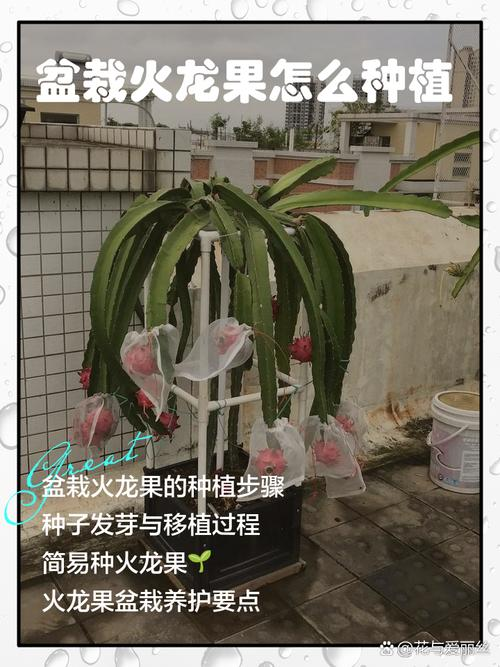
Pyramid fruit is a cactus cactus in vines and must be planted on a shelf for its climbing. In the first instance, 1. 3 m high cement stakes were laid at a distance of 1. 2 m in the greenhouse and 305 at a distance of 1. 5 m, with two seedlings of pyroclastic fruit per cement stake. Fertilizers of 12 cubic metres were applied to each greenhouse prior to planting, and 50 kg of ammonium phosphate were used to produce bottom fertilizer, which was filled with water。
Iii. Cultivation management
Watering
Dryon fruit is a drought-resistant plant with a relative water content of 70 to 80 per cent in the general soil, but less water-resilient, if the roots accumulate on a long-term basis, causes a decline in production or death, and the principle that water should be watered in a way that is dry or dry and that is ingrained. In addition, water is not watered when the fruit is not sitting while growing up, but when the fruit grows to the size of the egg, it is generally appropriate to water 15-20d times。
Fertilizing
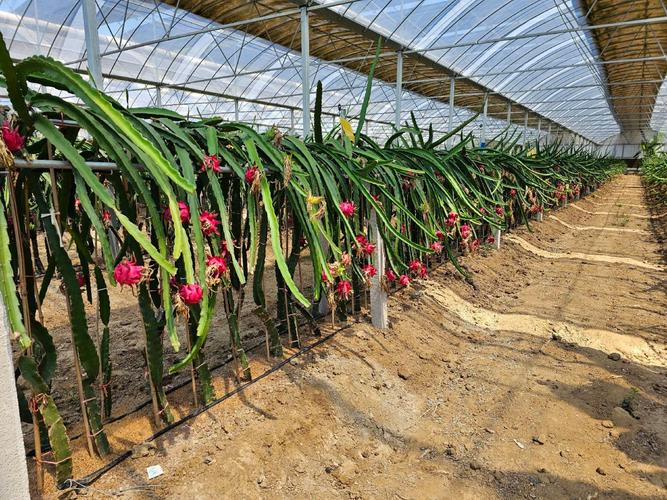
Because of the booming flamingo and the outcome of the anniversary, there is a need for more fattening, and in order to ensure the quality and production of the fruit, the principle of organic fertilizer, supported by fertilizer, must be upheld。
In the case of pneumatic fertilizers, every 15 to 20 d is followed up once, with attention to the cross-fertilization of organic and chemical fertilizers. Care must be taken to balance the application of fertilization, to ensure that it is fully nourished and to adequately meet the demand for nutrients. There are a number of methods to catch fat, such as loop-like, radiometric, irrigation-based and leaf-faced。
Unlike other fruit trees, the roots of the flamingo are not strong, they are stylized and they are shallow, and they are largely distributed on the surface of the soil, so special care should be taken not to damage the roots in the pursuit of fat。
3. Whole branch
The seedlings of the flamingo seedlings can be fertilized and grown rapidly after 15-20 d. The growth process breeds many sproutings, forming disorderly branches, and failure to trim them in time affects the normal growth of plants。
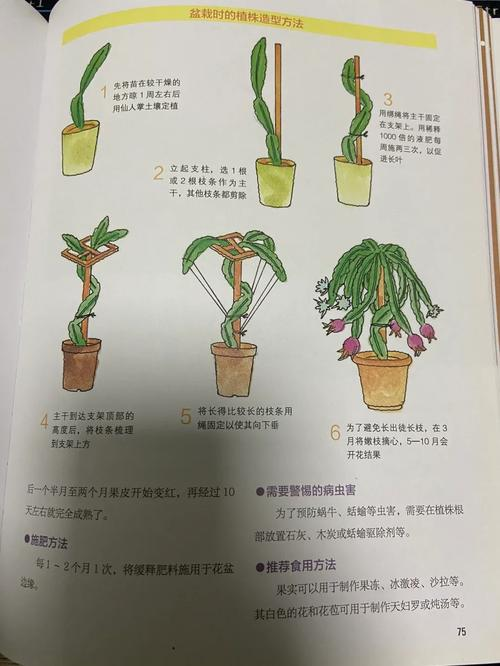
The whole branch of the flamingo fruit leaves only one backbone, and the other branches are cut out to ensure the proper growth of the main branch. The branches are the result when the main branch reaches 1. 3 to 1. 5 m high (about 1 m when it is grown as a pelvis flower), and they are forced to produce the side branches by hitting them. Depending on the condition of plant growth and environmental conditions, the result is around 20 branches per plant. One result branch is appropriate for three outcomes. If the seating distance is less than 15 cm, one of the weak shall be removed to ensure the normal growth of the other fruit. After the ferocious period, all the fruited branches shall be cut off in order to reduce nutrient consumption。
Iv. Pest control
Despite the wild state of origin of the pyroscope and its strong resistance to disease and pests, which have been introduced into the country, serious pests and pests have not yet been detected, but snails and snails regularly chew on their twigs, which have an impact on the growth of the pyrologous fruit and can generally be combated by the application of plastering methods, such as bait bait when the infestation is high。
When the fruit matures, the fruit fly tends to lay the eggs in the skin of the fruit, creating cracks and rotten fruit. The response would be to hang sticky paper on a branch, trap it into a fly, or spray it with a bioplug “kilogram” of 800 times more liquid than desirable。



