


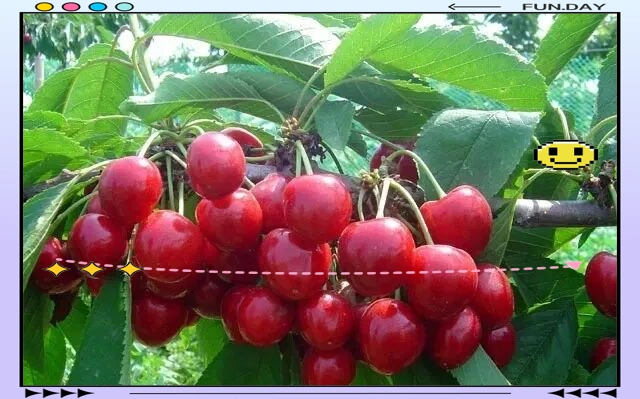
Panorama of big cherries in greenhouse 01
The greenhouse cherries are of high quality, and the market is more favourable. In recent years, large cherries have been admired in the market by their attractive appearance, abundant nutrition and unique fruit flavors. Through greenhouse cultivation, large cherries can achieve their anniversary production and provide consumers with a continuous supply of fruit。
Greenhouse 02 design
Greenhouse design is particularly critical in the pursuit of high-yield and high-quality large cherry cultivation. Through carefully designed greenhouses, large cherries can be provided with a suitable growth environment to ensure healthy growth and efficient output。
Site and orientation selection
Land is chosen for the construction of huts in areas that are backwind, sunward, flat and fertile, permeable and capable of dry and irrigation. To ensure good light and temperature protection, it is proposed to set the greenhouse direction at 5 ~10° south-west or east-east, i. E. North-south, east-west。
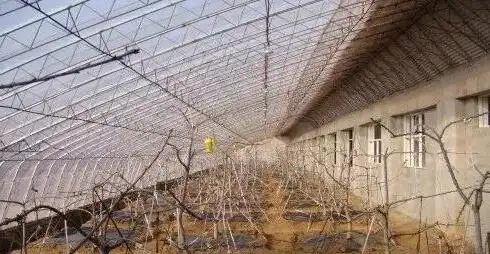
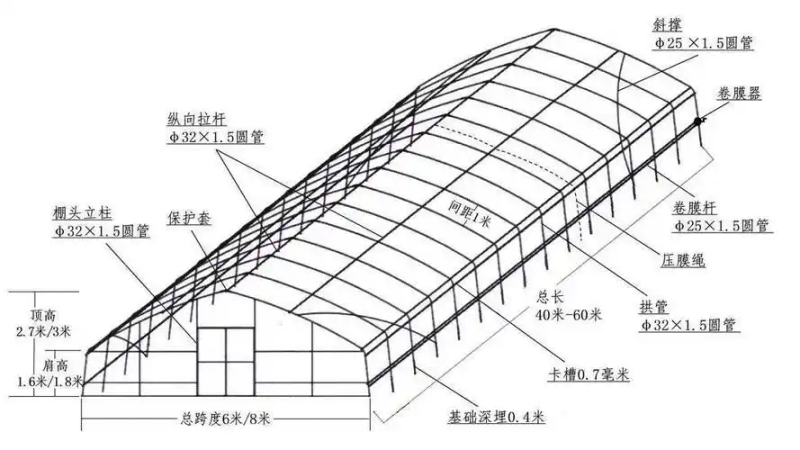
Greenhouse structure design
The greenhouse structure can be one-sided, half-turned or half-turned shed structures, with pillars and no-pillared sheds typically span 9-10 metres, with a back wall height of 3 metres and a mid-ridge height of 4. 5 metres. The length of the rear slope is controlled at 1. 7 ~ 1. 8 m, the rear side corner is 65 ~ 70°, the front side is designed to be semi-arc and the horizontal angle with the ground is 70 ~ 75°. In addition, the rear slope wall is required to pile 2. 5 to 3. 0 metres of cold soil, or to choose not cold soil, and to build 50 to 60 cm directly on the outer side of the wall, with a foam sheet to keep it warm. At the front low corner of the greenhouses, 70 cm wide and 60 cm deep cold-proof ditches are excavated, filled with heat-preserving materials such as straw, leaves and rice shells, and can also be used to build a pole biological reactor. These measures are aimed at preventing cold air intrusion outside the shed and ensuring that the temperature of the shed is balanced and the season is consistent. In general, greenhouses should be kept between 80 and 100 metres in length。
03 species and neptunium selection
Following the completion of the selection and construction of the site and greenhouse, attention will need to be paid to the selection of the varieties of the large cherries and the lumber. This link is also essential for achieving high-yield quality cherries。
Varieties selection
Premium, red light, sandy beans, etc.:
Pure selection
It is equally important to select the right aluminum, and to select the tree when considering its properties:
04 plantation technology
And then we're going to explore the planting techniques of big cherries。
Plantation methods
Two or three rows are used for double- or three lines, with a range of 4 m x 4 m or 3 m x 4m, and single-line for larger tree crown varieties. The cherries planted in greenhouses are usually grown from 8 to 10 years old. In order to ensure survival after planting, it is necessary to ensure that tree belts are sufficiently root-growing, before planting, the roots should be trimmed, root tumours removed and fungicide treated。
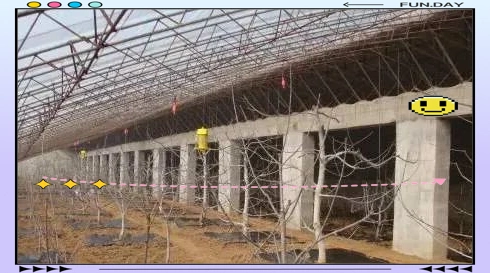
After the planting has been completed, sufficient water is required. Thereafter, before the bulge and after the leaf, organic water soluble fertilizer should be painted on two to three occasions and organic water soluble foliage on two to three times in conjunction with spraying in order to improve tree nutrition and environmental resilience。
Fertilizer management
Rational application of base fats, bud fats, pre-flower fats, fertilizing and picking fats to improve cherry quality:
Water management
The seven periods during which cherry trees need to be watered are before heating, before flowering, after flowering, during hard core periods, during fruit expansion, before harvest and after harvest. It's nice to have warm water and be careful to be wet. Water-filling should take place in the middle of the sun, with attention to the wind to reduce humidity. Especially during the ripening of the fruit, water should be poured under the membrane. At the same time, the use of well water should be avoided when water is pumped in order to prevent the lowering of the temperature from affecting root growth。
Integrative trim
In the cultivation of cherry trees, the use of evacuation tectonics, hammer-shaped and happy-shaped cutting techniques is used to increase light utilization. In the growing season, plastic shears are performed, while in the hibernation period, they are performed lightly or largely uncut. The following tree formations are used mainly: evacuation stratification, hammering and happy。
05 temperature management
Next, we'll look at the temperature management aspects。
Hibernation and flower management
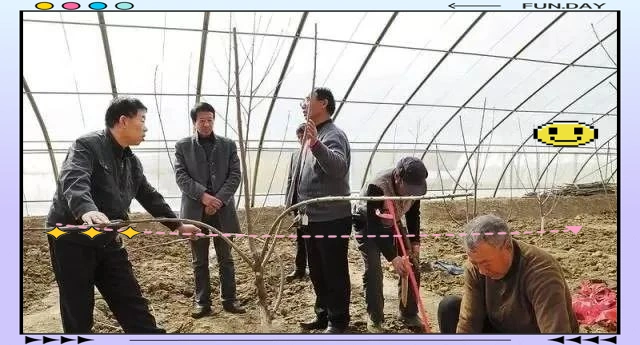
The hibernation period and strict temperature regulation of the flowering period of the large cherries are essential. In general, when temperatures reach 2. 4 ~ 7. 2 °c, large cherries become dormant. In order to induce the early hibernation of the large cherry, 7-10 per cent of urea can be sprayed in mid-october. At the same time, the temperature in the shed can be controlled by covering the sheds with straw curtains or cotton, during the day and at night, so as to reach the required low cold hibernation temperature。
06 auxiliary pollination and fruit management
Auxiliary pollination and oozing
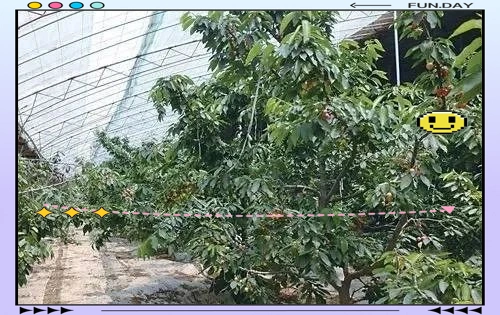
During cherry growth, pollinating trees, using bees or artificially pollinating, are used to reduce nutrient consumption by vasectomy. The ratio of pollination trees to the main plant species is 1:4, ensuring that cherry trees are fully pollinated when flowers bloom。
Growth regulation and pest control
In order to further increase sit-in rates, the spraying of boron fertilizer and sea elf biostimulants can begin during the prime flower. At the same time, in order to protect the health of the fruit, attention must also be paid to combating the occurrence and spread of pests and diseases, such as adhesive diseases, ashilosis, anthrax, etc., and diseases, such as salwarms and pheasus。



