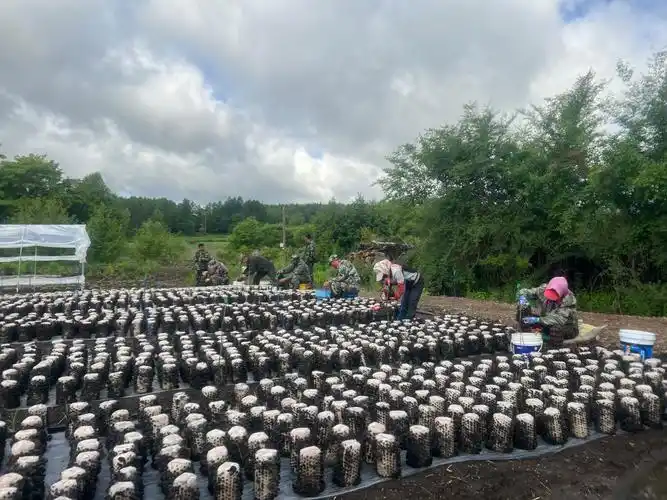
Earstick cultivation technology
Pick the tree to the sun
The choice of tree species and the timing of logging is crucial in the growth of the black moor. Selection of locally appropriate tree species and logging during the “go 9” period to ensure quality raw materials for ear sticks. For example, other tree species, such as platinum and scabs, are well suited for the planting of wood, except for economic trees containing pine resin, oil, alcohol and ether。
When cutting trees, the age of the trees, the size of the rods and the manner in which they are cut have an important impact on the growth of the ears. The traditional practice is that of cutting during the “in ninth” period, that is, between yellow leaves and the onset of new leaves. At this point, the trees are in a state of “sleeping” and the nutrients accumulated in the poles are abundant and less hydrogenic, which makes the cut bark closely bound to the wood, which is not easily released, thereby facilitating the growth of the black wood。
The cutting process should ensure that it is low, 10-15 centimetres above the ground, and that the axes from both sides of the pole are formed into a “crawling mouth”. Such an approach would not only facilitate the renewal of the new sprouts of old trees, but would also prevent sprouts and multi-sprouts. At the same time, the use of pumping rather than scavenging logging contributes to the protection of larvae and soil conservation。
It is very important that on the trees that have been cut down, branches are duly removed. The retention of branches helps to accelerate the evaporation of trees and contributes to the rapid drying of poles. When cutting a branch, sharp machetes are used to level the trunk from the bottom to the top and to form the shape of a “copper-money scar” or “bottle-eye” but be careful not to be too deep to hurt the cortex. The cut scars should be painted with lime water to prevent fungus intrusion and water accumulation。
In order to facilitate follow-up earstick management, harvesting and the prevention of bacterial infections, too long trunks need to be cut into short sticks. Hand-saws or oil-saws should be used to intercept poles, the trunks should be cut together and lime water should be painted for microbacterial treatment。
Finally, good eardrums need to be tanned in high-season, ventilated and well-soiled places. The aim of the tan was to allow the earsticks to die quickly and thus prepare for subsequent vaccinations. During the tan, the earsticks should be flipped regularly to ensure that they are evenly dry。
The ear field chooses the harvest
The location of the ear field is essential for the growth of the black ear. Earfield sites need to be luminous, luminous, close to water sources and easily drained. The ear field shall be chosen in a mountain south of the back, protected from wind, where the light is sufficient, the temperature of the day and the night is small and the humidity appropriate. At the same time, the site should be close to the water source and have good drainage conditions. Before planting, the site should be cleaned up and disinfected with insecticides and disinfectants。
The inoculation is the planting of artificially developed strains of fungus on tanned earsticks, which develop and grow in them. Inoculations are carried out at appropriate vaccination times, with strict sterilization. The stacks are designed to maintain the appropriate temperature and humidity conditions and to promote the growth and planting of mysis in ear sticks. The site should be selected and the weed removed. When the inoculated earsticks are pushed up and stacked into “well” fonts or “fish backs” piles, they are carefully covered with plastic sheeting and are regularly rolled over to ensure a balanced distribution of temperature and humidity。
When the fungus grows an ear stick, work is done on the stacks. The purpose of the rehearsal is to snort the ears and receive sunlight and fresh air from nature. The management of temperature moisture is key. Care should be taken to maintain appropriate spacing and rod management to avoid bacterial infections in the setting。
The stand-up management is used to meet the needs of the black muir into the consolidation phase. When ear buds grow full of ear sticks, stand-up management is required to reduce the impact of unadapted fungs and pests. Voltage is managed by making beams with long poles and leaning on them to form a “human” font structure, with care to regulate temperature and humidity, air and light conditions。
Take care of the weather when harvesting and select the appropriate timing for harvesting in order to be able to dry in time to maintain the woody ear quality. The harvested wood shall be put on a sunstand and dry once in a while, so as to be careful not to overturn in order to affect the quality of the fist. In the event of a rainy weather, recovery measures are required and care is taken to prevent damage caused by the continued raining of grown wood。
New technology for black wood ear replacement
The development of modern technology has led to the introduction of modern materials, such as plastic bags, and fast-growing bacterial species in alternative farming techniques. This has not only changed traditional wood use, but has also significantly increased wood-ear production in a single cycle. After approximately 40 days of inoculation with planting (plastic bags), after approximately two months of nurturing, the planting bag (plastic bags) opens holes and the ear bud begins to form within 7 to 10 days. After 15 to 20 days of maturity, the first harvest can take place. Thereafter, every 10 days or so, ear buds are re-emerged and collected after a maturity period of 15 to 20 days. This process will continue until the third time the ear bud is formed and mature。
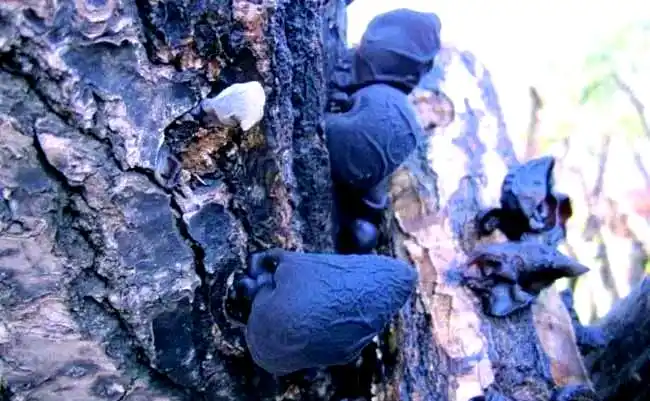
Plastic bag planting process
In substitution cultivation, bacteria need to select species that are fast growing and resistant to impurities. The appropriate planting age should be between 30 and 45 days to ensure its vitality, reduce bacterial contamination in the process of cultivation and enhance anti-fouling capacity. In general, bacterial filaments should be selected for rapid growth, robustness, rapid inoculation, and short production cycles, high yield, large wooden eardrums, thick meat and dark colours。
North china plantation techniques
In shaanxi and the surrounding provinces, the planting arrangements for black muir are usually divided into spring and autumn. Time nodes have important implications for production. The spring planting process began in early january, followed by planting in early february, and the planting bags began in mid-march, with ear buds expected to form and mature during april, may and june. Cultivation began in mid-august and, after the months of september, october and november, ear buds also went through the process of formation, maturity and harvest。
There are a variety of formulations available for the matching and use of cultures, and it is important to refine the ingredients to ensure that they are produced. The following are common culture-based formulations for information:
During the actual bagging process, different bagging methods can help to increase the intensity of the culture and the success rate of the edifice, and provide a stable environment for the growth of the ear. Ensuring the success of culture through bagging techniques is also an important step in improving the quality of ear sticks。