Cherry, with its early ripening, colouring, nutritional enrichment and economic efficiency, is increasingly gaining popularity. Today, the cultivation of large cherries has become an important means of increasing farmers ' incomes. Unfortunately, however, many fruit-farmers lack the necessary management skills, resulting in limited yields and poor returns for the cherries, which not only discourages them from growing the cherries, but also affects their economic income. In order to upgrade the technology of fruit-farmers and increase their economic benefits, this paper will provide information on the system for combing key technologies for high-quality, high-yield cherry cultivation. First, we start with the variety。
Choosing the 1st big cherry varieties
Miyuki
The fine type of miyuri was introduced from the united states in 1988 by the dalian city institute of agricultural science. The fruit is similar to a wide heart, even in size, with an average of about 12 grams per fruit and a maximum of 20 grams. The fruit is red, fully matured and turned to purple black, with bright light (see figure 1). The meat is hard and hard, the fruit handle is short, it's very durable. In addition, the soluble solids content is about 18 per cent, with moderate aroma and high quality. However, in the process of terrestrial cultivation, fissures sometimes occur when water is poorly managed or weathered。
Brooks
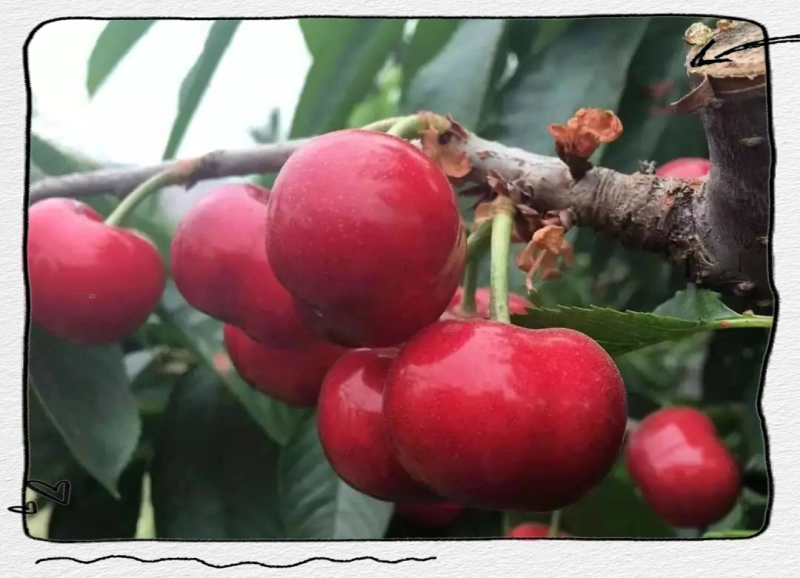
Brooks, this american breed, shows its unique fruit. Its shape is flat, with an average of about 10 grams of single fruit and a maximum of 20 grams. The skin is thicker, red is thick, while the base colour is light yellow and the whole is luminous (see figure 2). When the fruit is fully mature, the face becomes dark red, occasionally with stripes and spots. It's purple red, it's thick and small, it's hard and it's thin. At the same time, the fruit handles are thick and very durable for storage. In addition, the soluble solids in brooks are as high as 19 per cent, giving them an excellent taste. However, when water is not properly managed or affected by climate fluctuations during terrestrial cultivation, brooks will also experience figs。
Fukuma
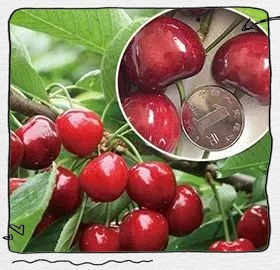
In fukuma, this pre-cooked species, which was carefully nurtured by the yubuki institute, successfully passed through experts in june 2012. The fruit has a heart form, which is larger, with an average of about 9. 7 grams per fruit and a maximum of 11. 7 grams. The skin is red, the meat is light red, the overall appearance is attractive and it is luminous (see figure 3). And the flesh of the good morning is strong and brittle, and it is strong for storage. In addition, the solubility of solids is as high as 18. 7 per cent, giving consumers a good taste. It is worth mentioning that the early and productive early morning is not only premature, but also promising. However, if poorly managed, the species may also experience premature decline。
Fortune
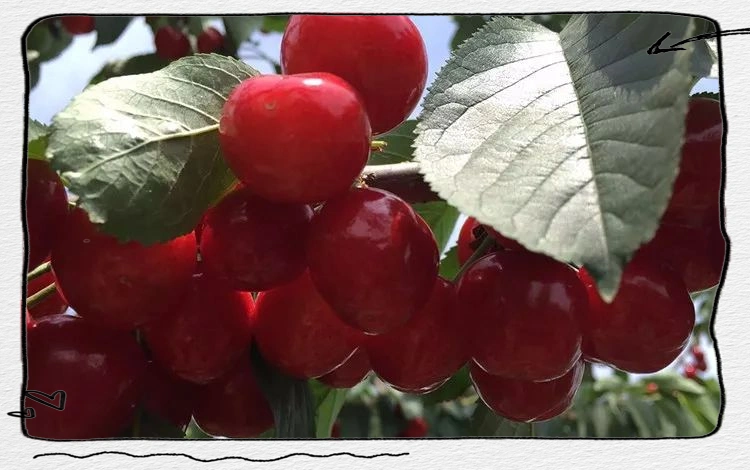
The fukusung species, also carefully developed by the fruit tree institute of the yotai agricultural college, was officially displayed in 2013 and was validated by the shandong crop varieties validation commission. Its fruit is heart-shaped, medium-sized, with an average of approximately 11. 8 grams per fruit, with a maximum of 14. 3 grams. The skin is red, the meat is red, the whole looks good, and it is luminous (see figure 4). The flesh of fortune is hard and hard, and the fruit is thick, and it is well suited for long transport and storage. In terms of taste, fukueng is also performing well, similar to early beauty, but pre-maturity and abundance are better。
Russia 8
The russian species no. 8 is also known as fragrance, with a wide heart shape of the fruit, with an average of 12. 9 g of single fruit mass and a larger fruit. When it matures, its fruit colour will gradually change from red to black and purple, its skin is thick and strong, its meat is thick and fresh, its juice is abundant and its taste is excellent. In addition, soluble solids contained as much as 18. 9 per cent and matured slightly earlier. Russia's 8th is also characterized by strong resistance to cold, early flowering, early outcomes and early production。
02 plant key technology
Park planning and tree selection
In the planning of the park, it is proposed to select one to two main plant varieties and to combine two to three pollination trees, the ratio of which to the main plant species should be four to one. When choosing pollination trees, care needs to be taken that there is no mutual pollination between species of different genetic types, such as red lamps and early-to-be-ss, which cannot be successfully pollinated. At the same time, consideration needs to be given to the sequencing of the flowering periods of the varieties in order to ensure that pollination varieties match the flowering periods of the main plant varieties, or are one to two days in advance, so that the best pollination opportunities are not missed. In addition, the choice of neptunium is crucial. Although in the past cherries were grown with a focus on eardrum varieties only, it has been shown that aluminum has a key impact on the success of cultivation. Currently, the wood used locally includes the gisella series and the blue leaf。
Cherry cultivation and drying
The optimal planting period is mid-march, with a distance of 3-4 metres and suitable 33-56 plants per acre. The depth of the planting should be appropriate and equal to the earthmark of the trees in the nursery. Water and membrane cover after planting and triangulation for ventilation. For the prevention of cancer, detoxification trees are recommended, and before planting, k84 is required for root treatment. Since then, two to three times during the period from april to may, water has been poured on the basis of soil stings. The fixed dry height is 60-80 centimeters。
Orthopaedic shearing and soil management
In order to ensure ventilation and reduce labour intensity, a fine, long hammer-shaped method is widely used. The specific integrative steps are as follows: before the first year of growth, the growth of the new branch is stimulated by sprouts and grafts. During the growing season, when the main branch is about 50 cm in length and above 60 cm above the ground, it is pulled at an angle of 70 ~80 °. For the main branch below 60 cm, the method of opening the branch is used to promote thickening of the main work. Soil management needs to ensure aerobicity, especially with a high respiratory intensity of the roots of the large cherries and a high demand for soil penetration. Soil management of the cherries is particularly important, with major measures such as den conversion and ground cover。
Fertilizer and water management
The fertilization characteristics of the big cherry trees vary according to the age of the tree. For young trees with less than three years of life, mainly in crowning, the main focus should be on fast-acting nitrogen fertilizer; for trees with four to six years of life, the primary focus should be on organic and compound fertilizer, and attention should be paid to controlling the application of nitrogen fertilizer and increasing the application of potassium phosphate; for trees with seven years of life and above, attention should be paid to post-harvest fattening, in addition to autumn-based fertilizer and pre-flower fertilizer, to increasing the application of nitrogen fertilizer. In one year, rational fertilization is also required based on the growth phase of the large cherries. Since the root systems of the large cherries are shallowly distributed and neither flood-resistant nor drought-resistant, the principle of numerous small amounts of irrigation should be followed。
Flower fruit management and pest control
The management of flowers is an important part of the production of large cherries. The graft work is carried out during the budding period, removing the late buds from each bud and retaining three full buds in each sequence. The fruit, however, shall be performed after the fall of the physiology, so as to remove the circulatory fruit, the twin shoulder nuts, the deformity fruit and the small fruit of the branch, which shall normally leave five to eight juvenile fruit per bouquet. In addition, there is a need to focus on the pest control of large cherries. The appropriate microbicides and insecticides, such as copper acetate, antxian, zinc, etc., are periodically sprayed before and after the onset of growth in order to combat the diseases of soft decay, asphyxia, anthrax, and pests such as caterpillars, leaf leafy. At the same time, attention is paid to the timely application of amphibicides such as amphibian or triazine, based on the occurrence of the mites. For trees with severe cancer, direct extraction may be considered, while for minor cases, k84 can be used for rooting and increased organic fertilizer. After the harvest, microbicides and insecticides will continue to be sprayed in order to combat later diseases such as early foliage, bacterial perforation and pests such as shellworms and caterpillars。