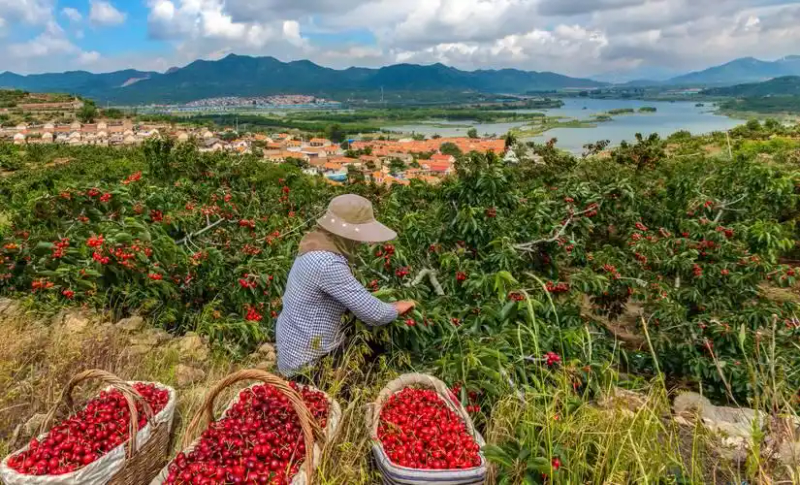
Overview of technologies for the management of big cherries
In complex agricultural production, the management of large cherries appears to be incomprehensible. However, as long as we capture the key technical points of the growing season, we can easily cope. Now, let's explore the management secret of the cherry growing season。
Soil, fertilizer and water management
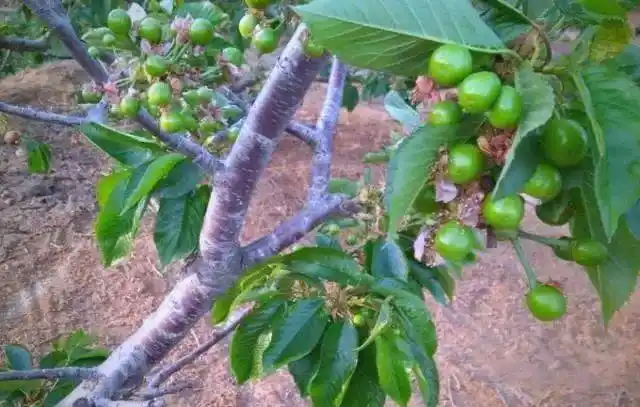
The growth of big cherries is closely linked to the fatty water of the earth. During the growing season, we need to pay close attention to the state of the soil to ensure that it is loose and organic. At the same time, rational fertilization is essential, not only for the provision of sufficient base elements such as nitrogen, phosphorus and potassium, but also for the addition of trace elements such as iron and zinc. In addition, appropriate water management at the right time is essential to sustain the normal growth needs of the cherries。
1) orchard and grass management
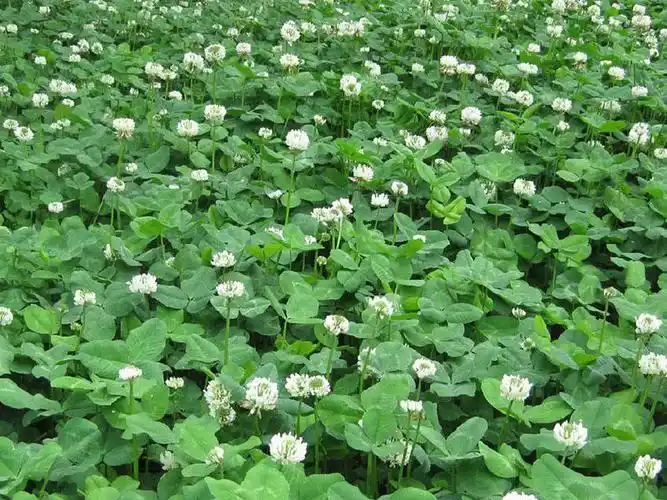
It is recommended to plant white three-leaf grass and to perform one to two cuttings per year. Or choose natural weeds, i. E. Weeds grow in the garden, without shoveling and spraying herbicides, while ensuring that the grass is not more than 20 cm high。
2) fertilizer management
Fats should be followed immediately after flower metabolism, with 1 kg of potassium sulphate complex fertilizer applied for each 5 kg of fruit produced and adequately watered. After harvest, it is recommended that approximately 4 kg of bio-organic fertilizer be pursued and watered for every 50 kg of fruit produced。
Water management
The cherries are drought- and flood-prone, and water is therefore essential. In addition to synchronizing water during fertilisation, budding and frozen water, respectively, are required during the bud and freeze periods. The soil should be kept in a suitable humidity at a critical stage, from flowering to maturity. During the rainy season, irrigation needs to be carried out in the light of the rainfall, especially to prevent the adverse effects of the rainy season on the large cherry trees。
Flower fruit management
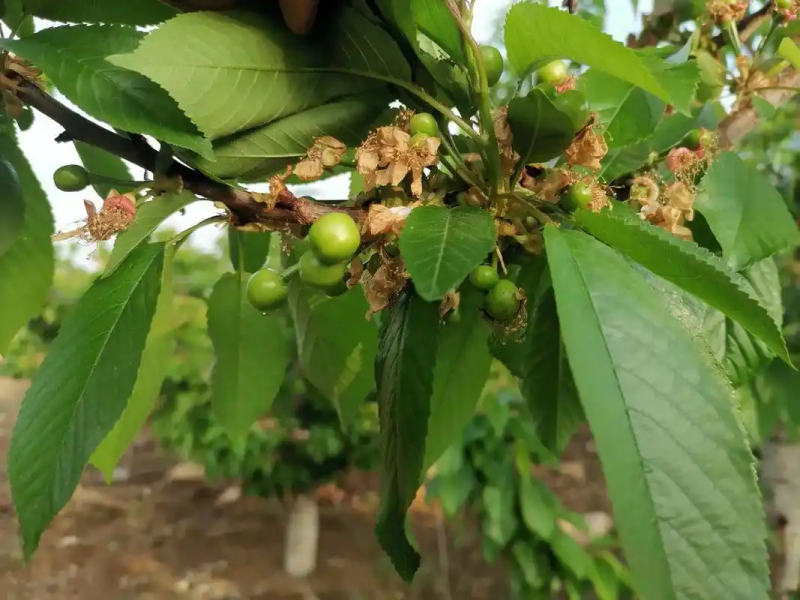
During the cherry growing season, some weak buds are duly removed, while bees, bear bees or bees are placed to ensure pollination success. After the fruit, the healthy growth of the fruit can be facilitated by the pursuit of fattening and trimmed, and care can be taken to remove the deformed fruit so as to ensure that each tree produces a quality fruit。
Pest control
The cyclical control of pests and diseases using a variety of pharmaceutical agents, such as methyl tobuzin and americium, is an important measure to ensure that large cherries are protected from disease. Specifically, a mixture of 1,000 times methyl tobuzin and 1,000 times an aphid or lice can be sprayed after the stinging of flowers and then every 10 days a thousand times an agricultural chain carcinogen. After harvest of the fruit, a mixture of 500 times the polybacterium and 1,500 times the larvae-3 can also be sprayed for prevention。
Continuous trim
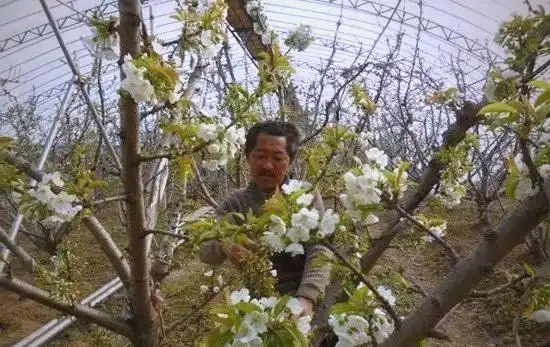
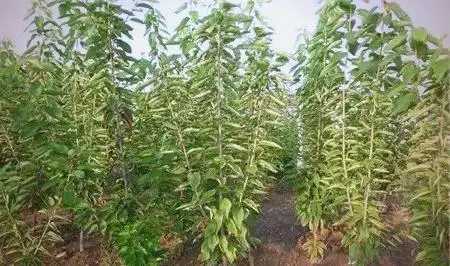
Through regular trimping, the morphological beauty of the cherries can be maintained while also contributing to the production and quality of the fruits. We should remove the weak branches, the sick branches and the overstretched branches so that each tree can be supplied with sufficient sunlight and nutrients。
1) pull the horn
Usually in june, the response of the big cherry trees was relatively stable. We suggest that the pull angle be contained at around 80 degrees, which would help adjust the structure of the tree and promote the growth and development of the fruit。
2) caretaking and shortness
For growing large cherries, care is taken when the trunk extends to 50 cm. When the main branch is as long as 40 cm, the same 10 cm shall be removed, provided that the eye is preserved。
3) leasing and retaliation
Summer is a good time for estrangement, which can improve the ventilation and lighting of the inside of the canopy and facilitate the healing of the wounds。
4) twirling and latching
During the period from late may to early june, spasm operations were carried out when the new stakes were not fully wooded. By mid-july, successive softening of the upper branches of the tree crown。
5) demolition and stripping
The invisibility branch, long branch or useless bud should be removed in a timely manner. A large cherry tree can also be circumcised to facilitate the separation of the buds, but care is taken that the width of the circumcised tree is within 0. 5 cm。
Prevention of rift
Precipice fibrosis is closely linked to calcium deficiency in fruit. Calcium is the key to preventing fibrosis. Spraying of calcium amino acid, or a mixture of calcium hydroxide and calcium chloride, starting 14 days after the flower, is carried out twice to three times。
Timing of harvest
It is essential to determine the timing of the harvest of the large cherry. Best quality and production should be ensured in accordance with the maturity of the fruits and market demand。
Through these management techniques, we are better able to improve the production and quality of big cherries, to be adequately cared for and reasonably managed during the growing season。