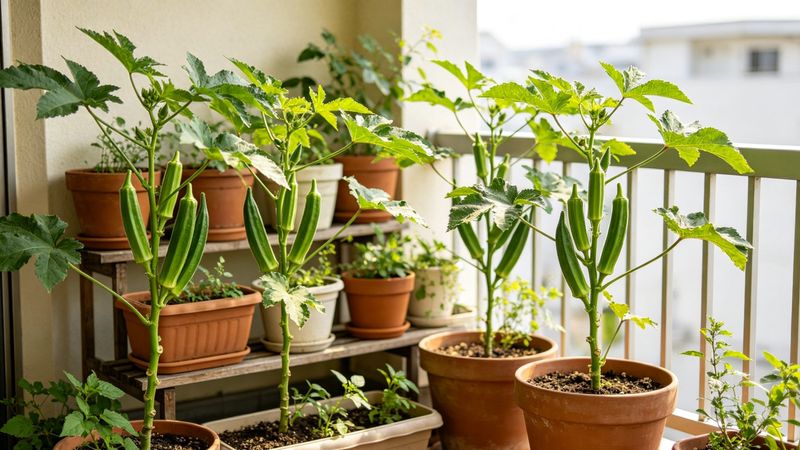
What's wrong with cherry root? Land
Cherry, this fruit, which has been dubbed the “first piece of spring and dawn”, is very much appreciated in its colour, comprehensive nutrition and excellent taste. In the north, large cherries are one of the most economically efficient fruits because of their pre-maturized characteristics. In practice, however, large cherries often face the challenge of low sit-in rates, poor quality and insufficient production. It is therefore particularly important to upgrade the high quality of the cherry and optimize the techniques of cultivation management. If you find a problem with the root of the cherry, try using the wegan soil, which may help you。
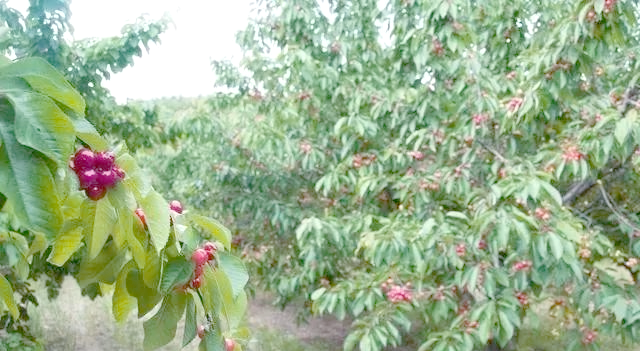
1. Developmental resolution of the big cherry tree
(i) temperature demand: the big cherry tree prefers the warm environment and is not patient with the cold. The ideal cultivation temperature range is between 10 and 15 degrees per year. At different stages of growth, the resistance of the big cherry trees to cold temperatures varies. For example, a cherries tree with a curvature of less than 15 degrees is vulnerable to freezing; during flowering and charades, the temperature should not be less than 5 degrees. Therefore, too cold an environment should be avoided when choosing where to plant the large cherries。
(2) water demand: the wood catheter of the big cherry tree is thick and the demand for water is high. Its leaves are large and thin, it has less of ablaze, it has a large skin hole and it has a strong branch, which leads to rapid water evaporation. At the same time, due to the shallow distribution of root systems, the big cherry trees are afraid of both drought and flooding. Therefore, when planting the large cherries, there is a need to ensure an adequate water supply to maintain its quality and production。
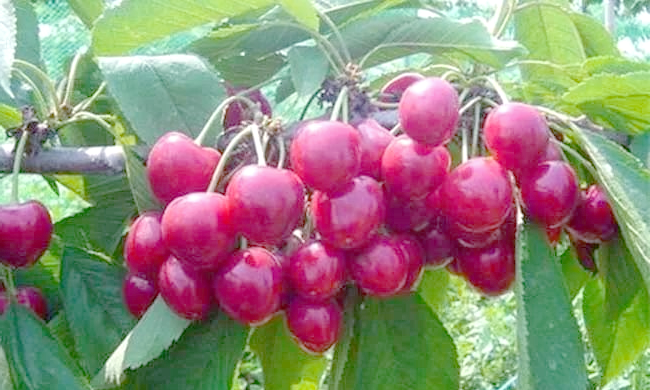
(3) light demand: the big cherry tree is a typical light tree species. Its tree body grows stronger with ample light and its life is extended. At the same time, the rate of fruit is higher and the fruits are more full of quality. Inadequate light leads to lower sit-in rates and delayed maturity of the fruit, which in turn affects its quality. Therefore, in planting large cherries, it should be ensured that they receive sufficient light。
2. Selection of park
The choice of the horticulture and variety of the cherries, which are grown over many years, has a decisive impact on the development, yield and quality of their entire growth cycle. Therefore, the establishment of high-standard cherries is key to achieving high-yield and high-quality cherries。
In the selection of sites, priority should be given to backwinding, low groundwater table, deep and permeable soil, sandy or gravel border soil with ph values between 6. 0 and 7. 5. At the same time, since cherry tree water is welcome, it is important that the irrigation water sources and conditions be fully taken into account in the planning of the cherries, ensuring that the cherries lands are close to the water sources and have water-water facilities。
In addition, given the concentration of cherries in maturity and their poor sustainability, the selection of orchards should be as close as possible to the place of sale, with easy transport conditions. Common high-quality varieties such as renier, early red, pioneer, rabins, etc., are usually recommended for variety selection. In order to ensure pollination, the ratio of the main plant species to pollinating trees should be maintained at 3 :1 and, if the cherries are small, the two varieties may be divided in separate rows or plantations。
3. Science layout
The planting density of cherry trees is an important factor influencing their growth and outcomes. Cultivation can lead to congested tree crowns and poor ventilation, which in turn affects the quality and productivity of the fruits, while underplanting leads to waste of land resources. Therefore, a reasonable and dense layout is essential. In moderately fertile soils, 4 m x 4 m range is recommended so that 500-650 cherry trees can be planted per hectare. At the same time, in order to ensure adequate sunlight for the big cherry trees, a north-south orientation is recommended. This would not only improve the lighting performance of trees, but also contribute to their healthy growth and high-quality fruit output。
Integrative branches
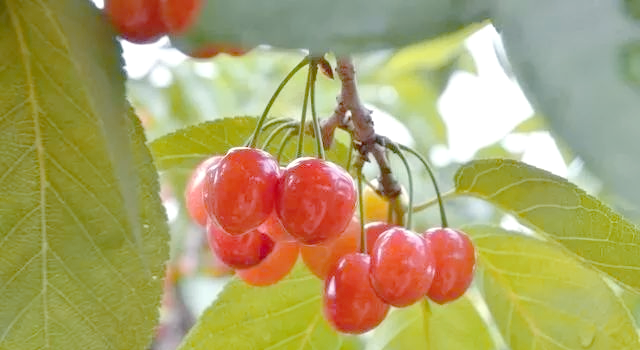
In order to take full advantage of the high budding and branching rates of the large cherries, at the larvae stage, a combination of shearing and summer shearing strategies should be used, accompanied by promotional measures. In order to prevent excessive fragmentation of branches, emphasis should be placed on technologies such as graft, sprouts and pull. These measures not only accelerate the shape of the tree, but also improve the light conditions of the inner chamber, thereby achieving a slowing effect. When trimmed, the objective is to produce tree formations such as natural pixie, natural bush shapes or free-swipe shapes。
When the cherry tree enters the poignant season, the strategy should be to trim it, combining a clean-up approach and abridgement measures. It is important to maintain a rational structure of trees and groups while maintaining their robustness. Special attention should be paid to the fact that the removal of the large branches should take place immediately after the harvest and avoid the winter. At the same time, branching must be thorough, the wounds must be polished, razed and carried out in batches to ensure that the tree position is not disproportionately weakened。
Typically, the means of maintaining the tree position and structure include increasing the length of the stem and the short length of the branch. Short-cut locations should be found in abdomen sprouts above 2-3 leaf sprouts in the base so as to maintain the nutritional vitality of the lead branch。
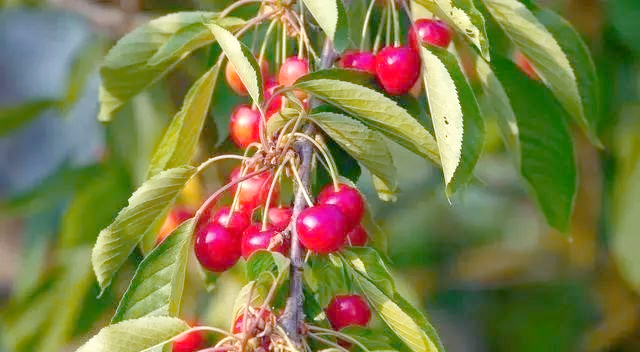
The second approach is to reduce the length of the two- to three-year-old branches at the front end of the bone branch, which can effectively facilitate the transformation of the bouquet-like branches to the medium-sized branch. The last approach is to trim the two to three-year branches of the front end of the multi-year outcome group, which will fully stimulate the growth of the branches and further enhance the overall strength of the cherry trees. At the same time, it also increases the proportion of sprouts in branches, thereby restoring and enhancing their growth and outcome。
5. Importance of fruit management
During the high-yielding cultivation of cherries, the management of flowers is considered central. This link is not only fundamental but also has a crucial impact on overall production and quality. Therefore, in-depth knowledge and mastery of flower fruit management techniques is a compulsory course for every cherry grower。
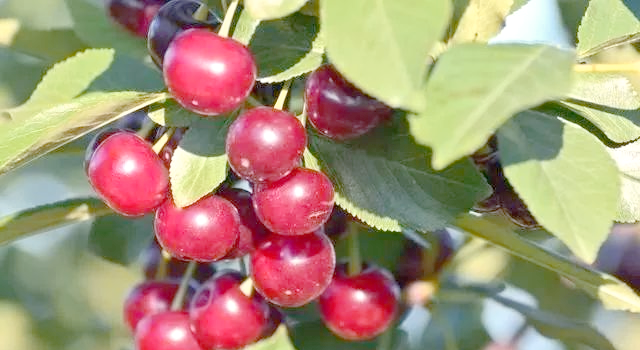
(1) zorie and zorie: for large cherries, lorries are usually carried out before flowers are blooming, with the aim of removing small and deformed flowers from the thin branches and ensuring that only two or three full and robust buds are kept for each bouquet. The fruit, however, is carried out after the physiological fallout, with the aim of removing the small fruit, the deformity fruit and the poor colored downfall, so that three or four fruits, up to a maximum of five, are preserved for each bouquet。
(2) promotion of the colouring of fruit: on the basis of the chrysanthemum period and the reasonable integrator and trim, all the leaves that are shielded from the fruit shall be removed, but it shall be noted that the leaves on the branch are essential for the fracturing of the flowers, and therefore the leaves shall be moderate. In addition, 10-15 days before the harvest of cherries, the presence of reflector film enhances the bathing level of the fruit, thereby contributing to its full colour。
(3) prevention of fissures: in order to stabilize soil moisture, the water content of the soil at 10-30 cm depth should be stabilized at around 12% for the period from the hard core of the cherries to the second speed. At the same time, calcium salt sprayed prior to harvest is an effective measure, requiring one application of 0. 299 per cent calcium chloride per week and three to five consecutive sprayings, which not only increases the soluble solid content of the fruit but also significantly reduces the rate of fissures。
6. Manure water management
In the case of cherries, the first priority is to level the land in order to provide a good growth environment for the plant. Based on the variety characteristics of the large cherries, it is necessary to dig up the cleavage and ensure that its depth is between 70 and 90 cm. In addition, in order to ensure that large cherries receive adequate nutrients during their growth, it is recommended to lay about 40 cm of crop straw at the bottom of the established ditch and cover it with a suitable soil, together with the application of potassium nitrogen phosphorus compound fertilizer as the base fertilizer for the cultivation of cherry trees。
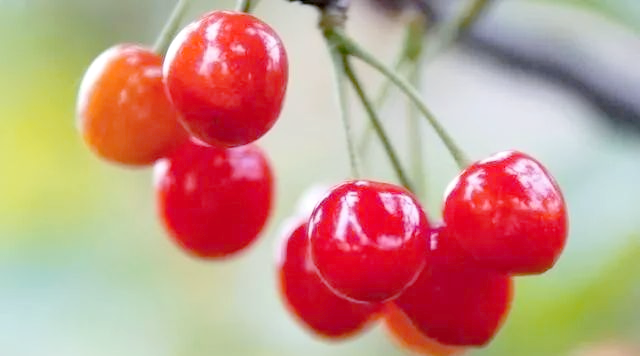
Because of the high demand for moisture from the cherries tree, it is important to ensure that the soil is fully hydrogenic in order to minimize water scarcity in the growing plant. At the same time, fertilization strategies need to be adapted flexibly to the differences in the growth of the large cherries over different seasons in order to improve their effects and hence their quality and productivity。
7. Disease prevention and treatment
Cherry may be threatened by a number of diseases in the process of planting, the most common of which is viral disease, which affects quality and yield most. In order to effectively combat the cherries virus disease, there is a need for a combination of measures, including enhanced management of water fertilizers to increase tree orientation and disease resistance, supported by drug treatment to increase resistance. Specifically, “sea-like 818” leaf fattening and “alophate” algae may be sprayed immediately after fruit harvesting and combined with 0. 3% potassium phosphate solution. It is recommended that spraying be carried out every 10-15 days, approximately three consecutive times。
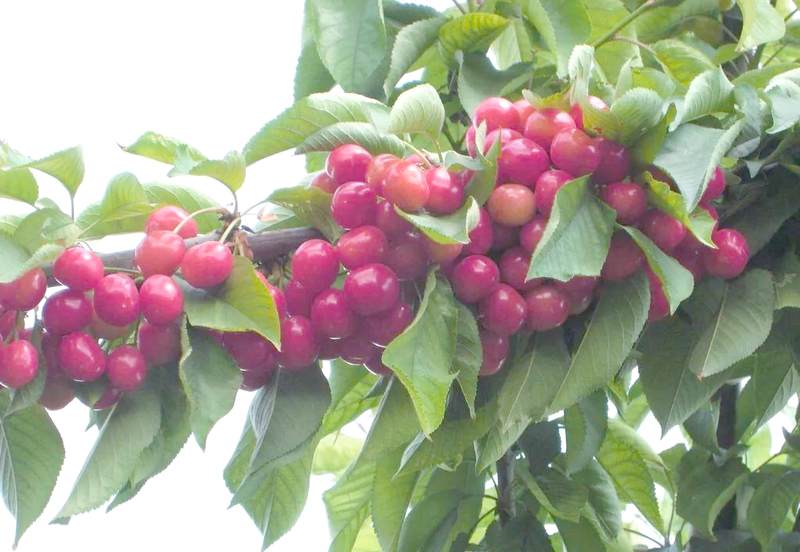
(2) in the month following the harvest of the fruit, the process of fertilizing is carried out. Each tree uses an organic inorganic mixture of algae. If conditions permit, the use of 2 kg of algae micro-organisms is recommended, combined with the digging of cyclopedias or radioactive trenches, to ensure that the depth of the trenches does not exceed 30 centimetres。
(3) once the fertilization has been completed, the water is pumped. To the extent that the water is permeable and the soil dries slightly, the middle tillage industry is divided into 10 cm to avoid excessive depth。
(4) spraying of branches and trunks in accordance with the previously described application method, when spring buds begin to start. Spraying every 10 days and three consecutive times。