


It is known that as most people grow black ears in the spring, but because of the environmental effects of this, many of the farmers suffer economic losses as a result of the growth of black ears in the spring. Today, the editor-in-chief of hinonnet told the growers that black ears can be grown in the autumn, and that the new technology for the development and cultivation of black ears in the autumn, which was compiled by hinon, is now in place
In recent years, the gradual rise in temperature and the inevitable high temperature and humidity during the management period have resulted in a large number of severe effects such as thinning, yellowing, ejection of shrubs (white hair on the abdomen) and rotting ears throughout the area. It is also common for blackwood ears to dry during dry seasons, with poor wood ear shape and quality. As a result, the production of black wood in the spring is prone to many difficult problems for many growers, resulting in high input and low output. The question of how to achieve low input, high output, black ear and high economic efficiency in the black ear industry is an important one for our country's technology staff. After years of deep-seated research and hard work, technologists managed the success of the autumn autumn management in 1997. The invention of this new technology has produced great economic, social and ecological benefits and has great potential for development. Here's some of the autumn moot ears technique that weiner has compiled
Autumn planting time for black wood
Autumn solids were produced in the north-east at mid-march-end of april, in mid-may-end of may, in large parts of the south at mid-may-end of june, and in mid-july-early august. In the north-eastern region, the mid-july cut-off of late-birth varieties, the end of july cut-off of mid-premature varieties, and not later than 10 august (10 august to 20 august) at the latest, if not before the end of the freeze season. In the south, large medium- and late-born species cut their mouths in early september-mid-september; in mid-september-early in the middle of october, they cut their ears; and on october 10, the long-casted bags opened their ears。
Autumn planting production and scientific microbacterial management key technologies
1. Autumn plant production attention
Specific blends, bags, sterilizations, vaccinations, etc. Are essentially the same as spring planting. The difference is that the time when the acoustic ear is grown in good summer, the temperature is high, the air flow of fungus spores is high, the addition of white ash powder and plaster powder in the mix should be 0. 2 to 0. 25 per cent more than in the spring, and the production of a thin pellets of sawdust (0. 6 cm thick) is best, with a 2-minute particle sawdust and a 1-minute sawn. Particle sawdust must be immersed in internal water, and sterile operations should be strictly controlled, such as sterilization and vaccination. Mycelitis cultivation is appropriate for a stereo-chamber bag, which has the advantage of low heat and low bacterial contamination. During the fungi period, indoor temperatures must exceed the temperature grown by mybs during the day, when open windows are prohibited to cool. Instead of reducing indoor temperatures, open windows are ventilated by higher external temperatures, resulting in rapid rises in indoor temperatures, long-term high temperatures in planting, the degradation of bacterial species, the risk of a high volume of yellow water to anaerobic bacterial infections, the deterioration of bacterial species and their low yield or failure。
2. Key technologies for scientific microbacterial management in the autumn
At present, the greater the daytime temperature, the more open the window, the more the fungus culture is in place. The opening of windows in rain or rain conditions allows for the internal circulation of external air and naturally creates a high temperature and humidity. In this environment, large amounts of fungus contamination are rapidly occurring in the black wood ear cultivation, resulting in a reduction in the production rate of cultivation during the fungus or in the contamination of whole batch cultivation. This is also one of the major reasons for the current failure of blackwood autumn farmers everywhere. If the autumn autumn cultivation has been successful, the first is whether there is a long-term high temperature (which must meet low-temperature conditions). The second is whether the high temperature and humidity (which must be achieved in low temperature and high wet ear environment) during the urchining period, and therefore the cultivation period should be carried out strictly in accordance with the above management procedures. Once the mycelium is fully packed, it continues to grow for a week and is transferred to oral ear-cutting。
3. Management techniques during autumn wood ears
(1) bacillus bed stake construction and disinfection
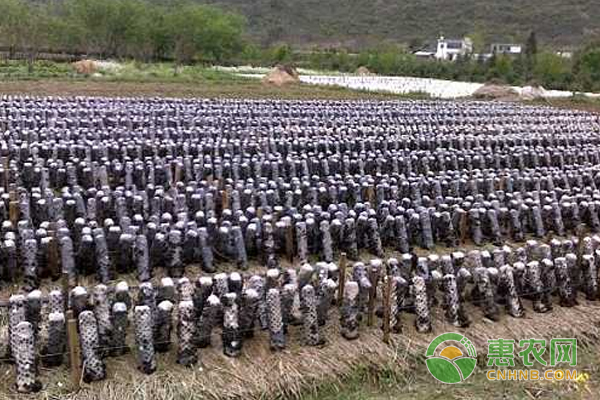
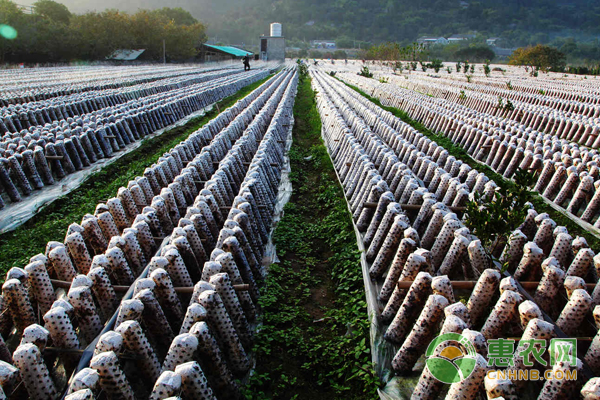
Autumn ears are best managed from outdoor concentration, and due to the short duration of the fall planting, it is necessary to adopt a high-yield management model (i. E., it takes about 60 days from opening ears to wood harvesting), during which scientific management is achieved, which is directly determined by the high and low rate of black wood ear production and bacterial pollution. First, a stake is nailed every 3-4 metres on both sides of the planting bed, which is appropriate to leave the ground at 0. 8-1 m. After that, a line was drawn on each of the stakes and fixed. Each centralized ear-bed centre is slightly higher, each side is slightly lower, and a micro-nozzle supervisor or micro-jet belt is installed. The spray surface is down and fixed with barbed wire no. 8 every 3-4 m. Before opening, the bed surface was sprayed with water once, 5% platinum water with 15 ml permeant or 35% of the net algae content (basket powder) with 0. 8% of the solution (with an additional 45% environmental special osmosis powder in 3 bags, 5 g each) and then drenched with a bag (no white powder on the bed, which is not effective after years of observation of the fungal bed and is easily blemished)。
(ii) temperature measures for a fungus bag with plastic membranes and sunnets after opening
The distance between the bag and the bag is 3 cm and requires that the plastic membrane be placed directly on the fungus by opening the mouth and then placed on the wooden stakes on both sides of the fungus bed (with 6 needles thick and 80 per cent shade) and that it be tightened up with a barbed fork, creating conditions for planting bags to cool away from the sunnet. A microspray belt equal to the length of the bacterial bed was then placed on the sunscreen. In combination with natural artificially controlled gutters on both sides of the bacterial bed, the sunscreen net cooling directly enters the plastic membranes inside the bacterial bed, forming a cooling-stabilized climate suitable for the best climate rapidly formed by the black ear base。
(3) management of the original base formation period
Ventilation is prohibited when the temperature in the bacterial bed is not above 24°c for five days, mainly to keep the temperature cooled and wet to heal the lesions of the ectoplasm. Five days later, the whole bed must be humidly watered every morning, midday and night through the micro-jet belt inside the bed (this period prohibits direct water spraying of the bag to avoid contamination of the fungus). Water is poured every other day, morning, middle and evening, so that the ground is evenly wet. Rain-day water is distributed every two to three days in the morning, medium and evening, so that the ground remains evenly wet. Under these management conditions, the internal air of the bacterial bed can reach a relative humidity of 85 per cent, and small holes can be seen to be fast and smooth. At this point, plastic membranes on both sides of the bacterial bed are ventilated and dispersed after 5 p. M. Every day, stimulating the rapid formation of the foundation. In general, 8-10 days after opening, cocoa is open to all-open management of plastic membranes and sunnets, in the event of dark or light rain. When sunlight is sufficient, plastic membranes on both sides of the fungic bed should be lifted during the day to cool the cover of the sunnet. Every day after 5 p. M., plastic membranes and shades are fully opened, water is evened after 21 p. M. With a micro-nozzle, water is poured in the middle of the night, depending on the circumstances, such as five minutes at night, three minutes at night, 30 minutes at night, and no rain, usually 14-16 times at night, and the air is guaranteed a relative humidity of 85 per cent, after 5 a. M. The next day, water must stop, all-lighted management patterns and tan packs during the day。
(4) sub-entity split management
The management of the bag is essentially the same as that of the original foundation, wetting, increased ventilation, opening of plastic membranes and sunnets at night, allowing the foundation to receive fresh air and humidity from nature. At the same time, micro-jet aerosols are sprayed with magnetic water at intervals of 1 to 2 times per night (the absorption, accumulation and enhancement of nutrients by long-term magnetic spray, which increases the base (ear buds), stimulates the growth of ears and increases the total production of black wood ears) at temperatures appropriate to 18 to 24°c and maintains a strong dispersive light. For about 10 days, bed management began when the eardrums were split into small headsets of about 0. 5-1 cm。
(5) sub-entity growth and development management
This period is covered by bed management, where the bacterial bed is sterilized and a black perforated plastic membrane is laid. The distance between the fungus and the fungus is 10-12 cm, and when the ear buds grow and spread, the air moisture requirement rises to 90-95 per cent of the length of the earpiece, making manual control management a bed of fungus that covers the sun and cools the lower part of the net that is wet and ventilated and suitable for the favourable conditions of rapid growth of the black ear。
The growers have a chance to earn money, and the above fall black-mule farming technique is definitely dry



