


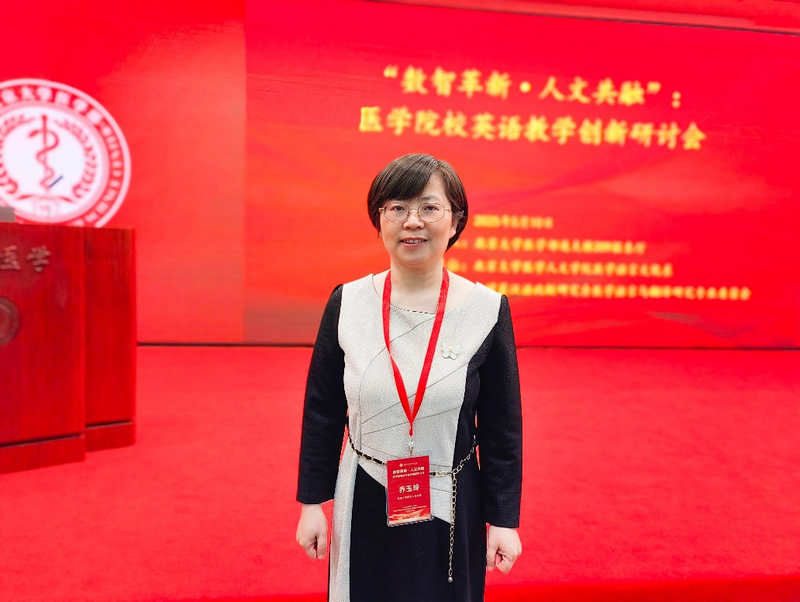
On 10 may 2025, a seminar on “intellectual innovation — human integration: innovative teaching of english at medical colleges”, organized by the faculty of medical humanities of beijing university and the china society for comparative studies in chinese and chinese language, was re-opened in the 209 reporting hall of the fufu house of the medical department of beijing university. More than 120 specialists from the people's university of china, the shanghai university of transport, wuhan university, the chinese academy of sciences, the university of electronic science and technology, the university of conciliation and medical sciences, the wahshi hospital of sichuan university, the beijing university of chinese medicine, the capital medical university, the university of south medicine, the university of medicine and the university of medicine of fujian, among others, have gathered and held in-depth discussions on the subjects of ait-enabled foreign language teaching, integration of medical humanities and foreign language courses, global health governance and international competence development, development of english-language medical professionals and international dissemination of chinese medicine。
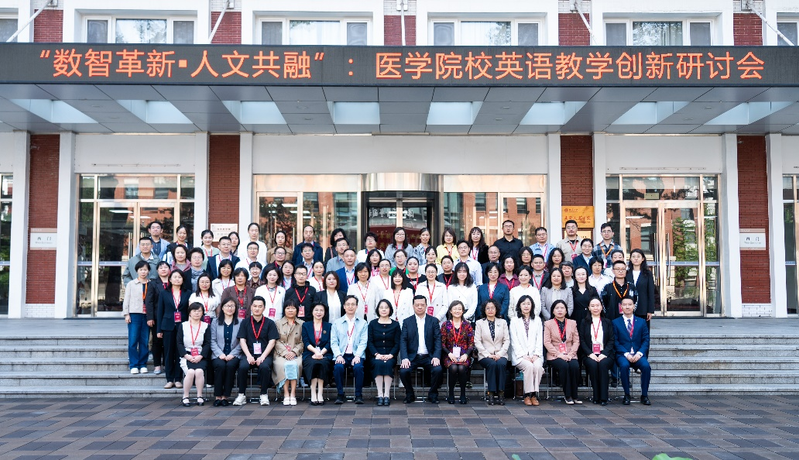
Opening ceremony: anchoring of education and mapping of integration
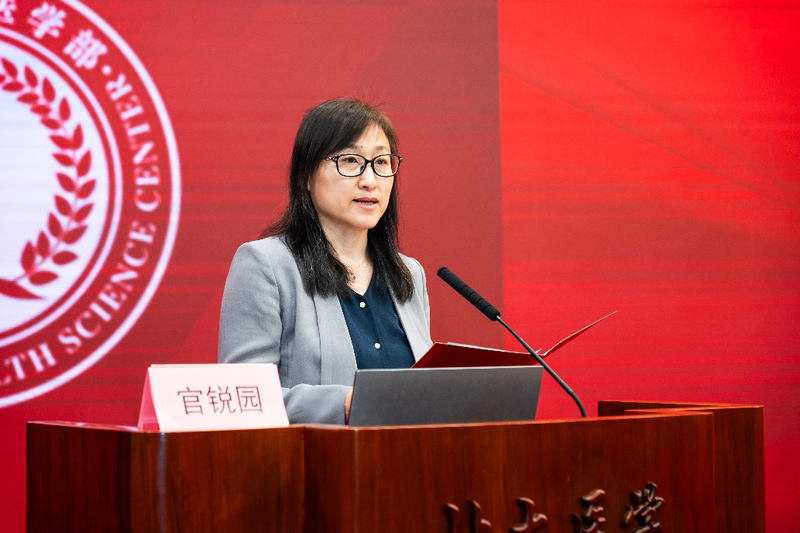
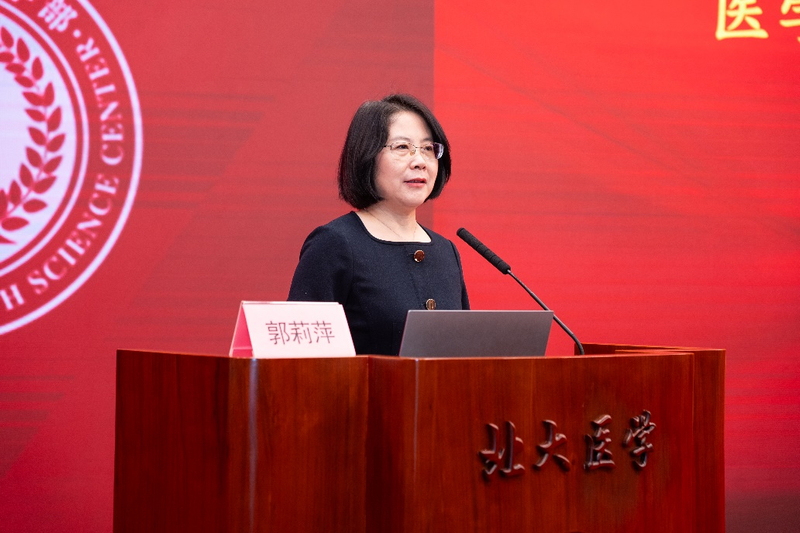
The opening ceremony was presided over by professor uramoto, assistant director, faculty of medical humanities, beijing university. Professor guo lipin, dean of the faculty of medical humanities at beijing university, began her presentation by extending a warm welcome to the expert teachers who had come from afar and outlining the academy's layout and distinctive advantages in the field of medical humanities education. In the ensuing message, mr. Guo noted that english teaching in medical schools is currently faced with the dual challenge of technological hierarchies and human heritage, and that we should place greater emphasis on the existence and value of “humans” in the technological age. Ai should not be an alternative tool for teachers, but rather optimize the teaching process and release teachers ' creative assistants. She called on teachers to actively embrace technological change, to adhere to the human ethos of teaching and to explore new avenues for innovative teaching reform in medical schools by actively promoting inter-school cooperation。
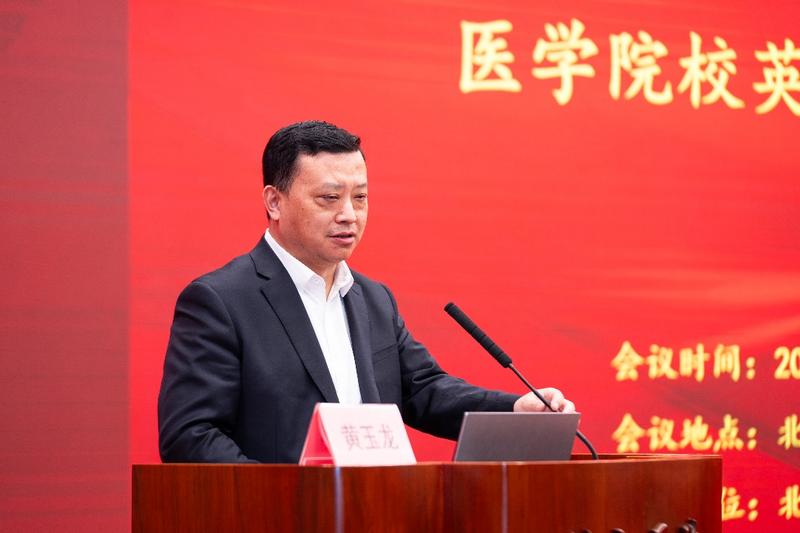
In his message, huang yulong, vice-president of the chinese association of translators and director of the institute of translation of the chinese foreign service, focused on the three key words “cultural outreach, talent development and digital innovation”. He stressed that promoting a chinese medicine culture was an important mission of medical education in foreign languages, and that china's medical wisdom needed to be understood by the international community through the accurate translation of chinese medicine's classic theory and clinical practice in order to be able to spread it in a healthy manner. With regard to talent development, huang yu has proposed the development of a high-end composite matrix of “medicine + language + translation + intercultural communication” and a two-wheel-drive model of “professional education + translation skills” based on the characteristics of medical institutions. At the technical application level, he called on industry to accelerate the standardization of medical translation, promote the deeper integration of ai technology with translation teaching, use smart tools to improve the efficiency of medical text processing and build better language bridges for global health cooperation。
Keynote address: collapse of multidimensional perspectives, building consensus on pedagogical reform
The programme of the round-the-clock seminar was very tight, with four 20 reports on “technology innovation” and “human integration”, from theoretical to practical innovation. With regard to the academic english teaching model for medical students, professor deng yong-hyeong from wuhan university described in his report the relationship between mastery and the development of esp teachers, as well as the importance of mastery teaching for academic english competence development for medical students. Other experts made presentations on the use of language libraries in the teaching of medical dissertations, on the use of online hybrid teaching in the writing of biomedical papers, on the role of group literature co-reading activities in the construction of postgraduate academic status and student development. These reports have provided valuable inspiration for the improvement of students ' academic capacity and the innovation of the english-language teaching model。
On the subject of the enabling pathways of ai technology to teaching medical foreign languages, professor lu fengxiang from the university of medical sciences in the capital demonstrated at a macro level the opportunities and challenges faced in teaching english in the course of the ai era, noting that the use of the ai personalized learning system and hybrid teaching can increase the efficiency of teaching and achieve complementarity between online resources and the humanities of the underline. Other experts explored in depth the use of data-driven learning in english language teaching, the practices of aai teaching assistants in academic exchange settings and the effectiveness of smart tools in the translation of multimodular health information, both recognizing the role of technology in enhancing teaching efficiency and academic communication and emphasizing the centrality of “human synergy” teachers in value orientation。
With regard to the development of disciplines and the development of human resources, prof. Tauri, from the people's university of china, presented the international competency development model for the integration of teaching-teach-teach-assessment, based on the “yun-tai-tai-tai-tai-tai” resource platform of the chinese people's university foreign languages institute. Professor lee qinghua of the university of medical sciences of the south pointed to the need to respond to national strategic needs for the development of disciplines and the development of a composite wide-calibre language service for english + medicine in the medical english-language profession, reflecting the concept of excellence in classification by teaching. Other experts also provide excellent reports on the orientation and curriculum of foreign language disciplines in medical schools, international academic communication skills development for students, translation skills in secondary hospitals, internationalization and global health governance. Experts agreed that foreign language education needs to be closely aligned with the need for “new medicine”, reinforcing the distinctive directions of “special use of medicine in english” and “global health governance”。
In the field of international communication and humanities, prof. Zhang peng, from shanghai university of transport, shared how criticalometrics based on language banks could be applied to symbolic construction and dissemination mechanisms to explore national images. Professor hemin of the university of electronics and technology has, from a literary point of view, combed the history of artificial intelligence in american science fiction, focusing on how human beings, as agents of the whole civilizational process, can reasonably face the relationship between human beings, nature and technology. Other participating scholars demonstrated how language courses could be an important vehicle for developing the humanistic care of medical students, cross-cultural communication skills and awareness of the dissemination of traditional cultures, taking into account practices such as the international pathways for the international dissemination of chinese medicine culture, the development of international standards for chinese medicine terminology and the development of a medical think-tank abroad。
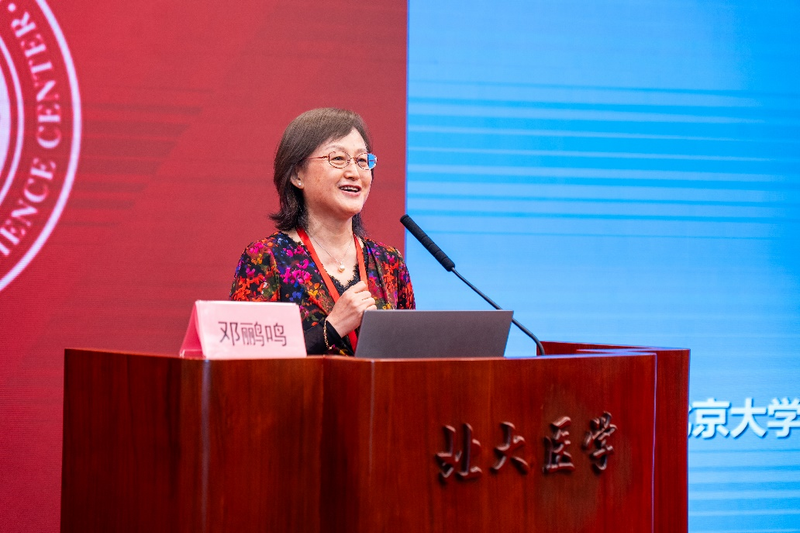
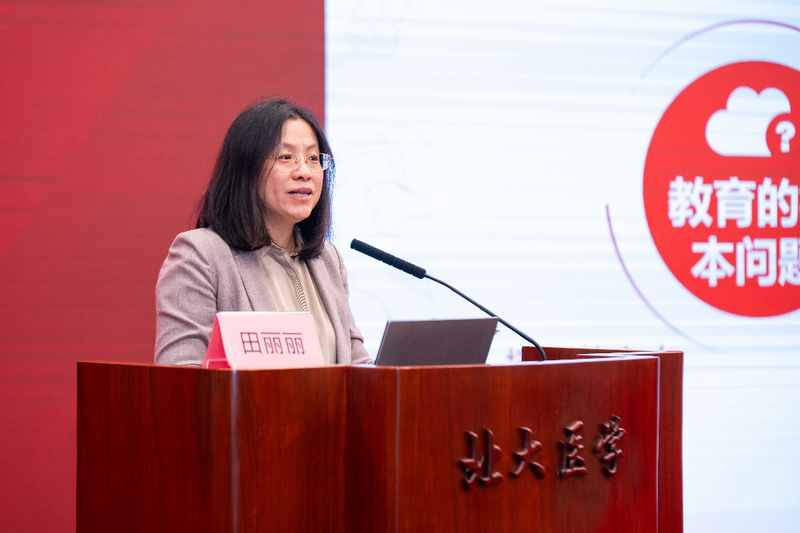
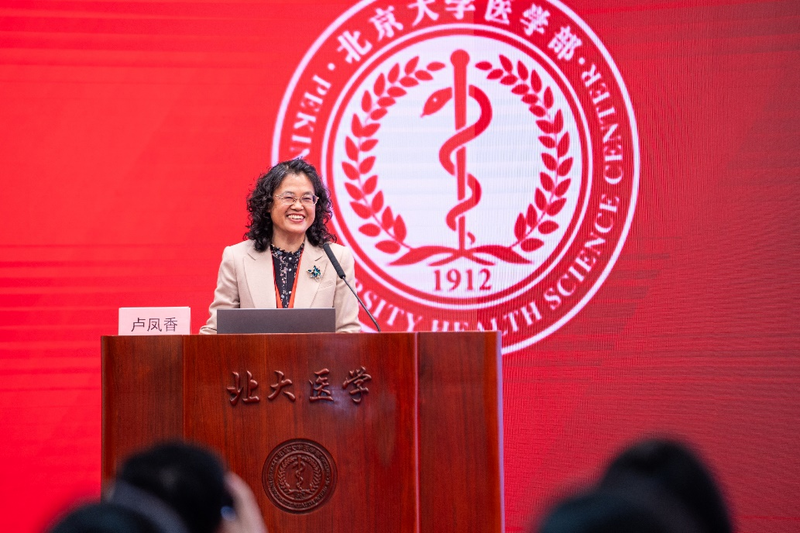
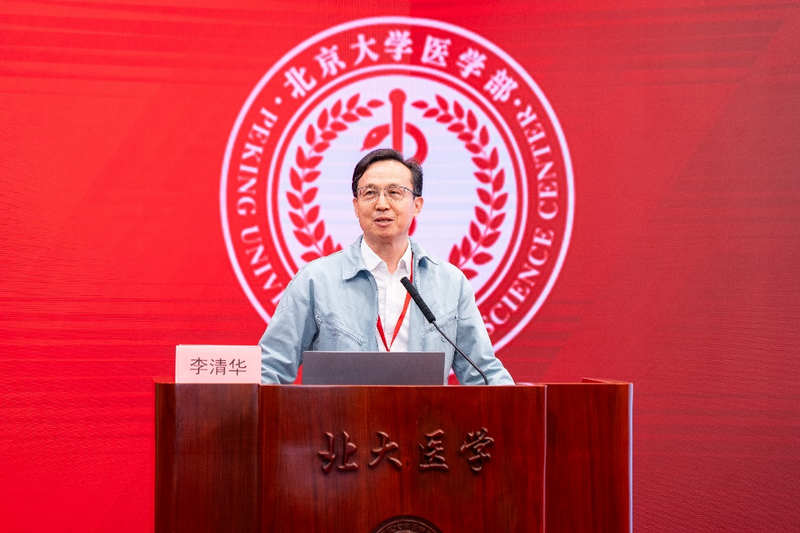
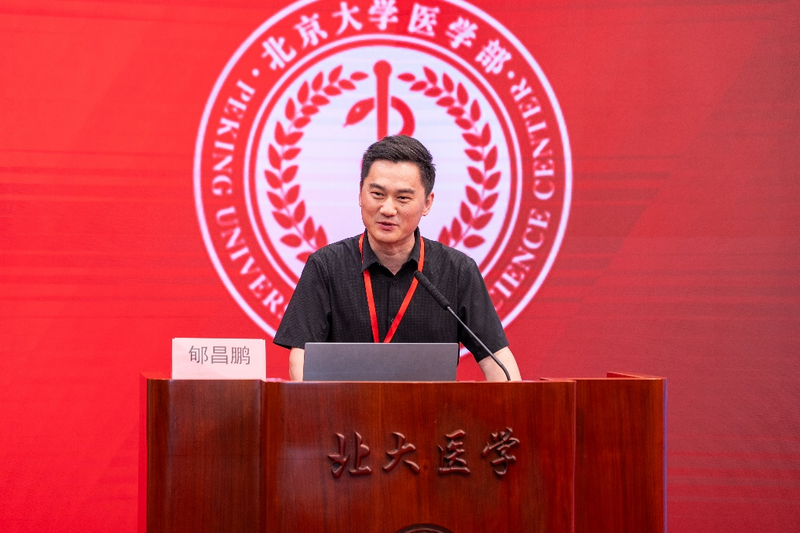
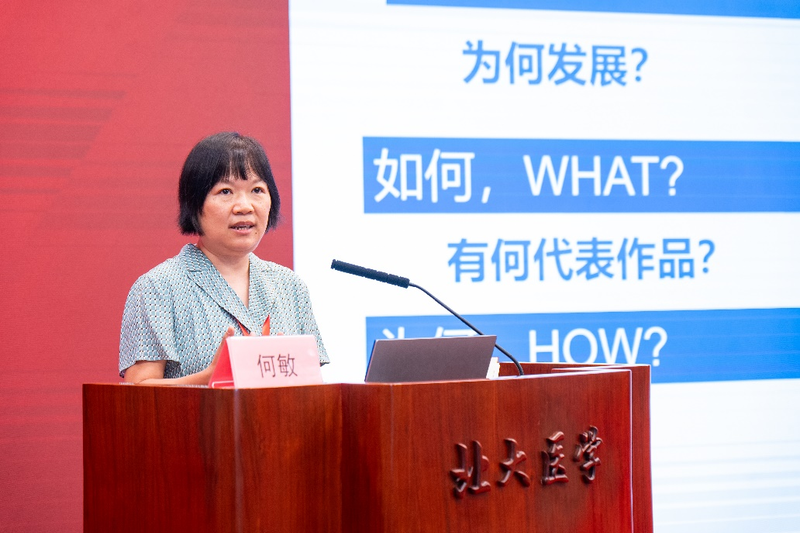
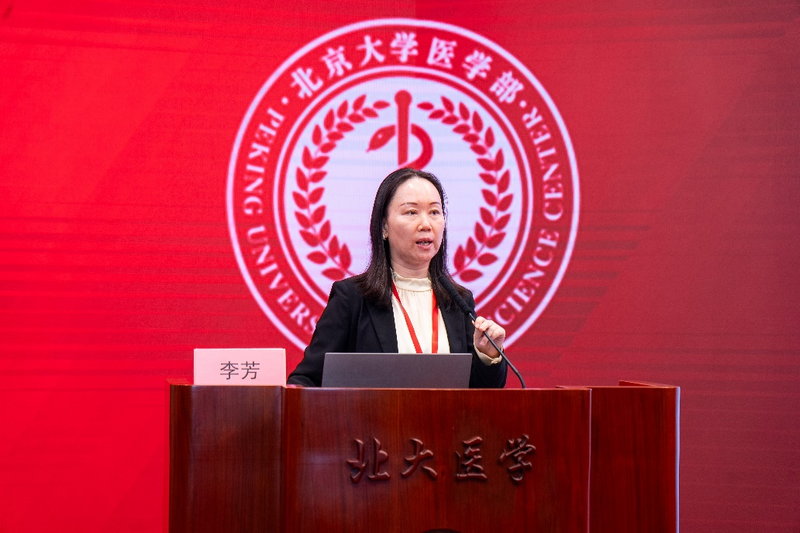
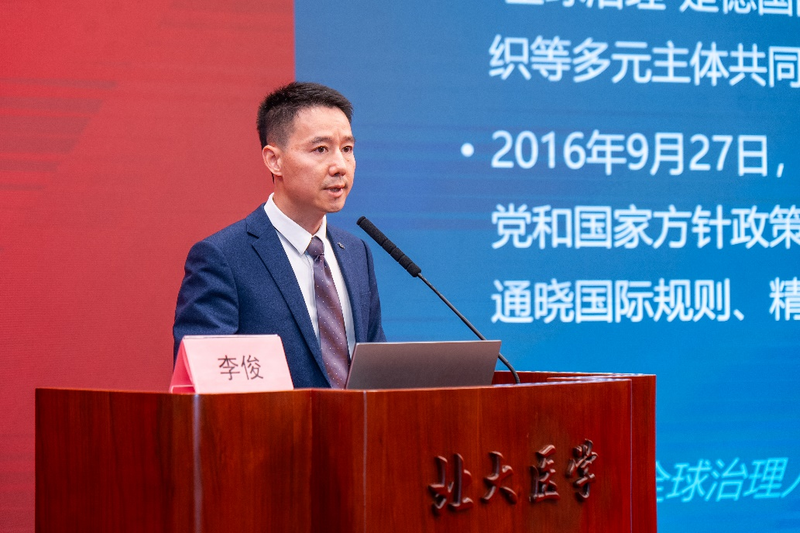
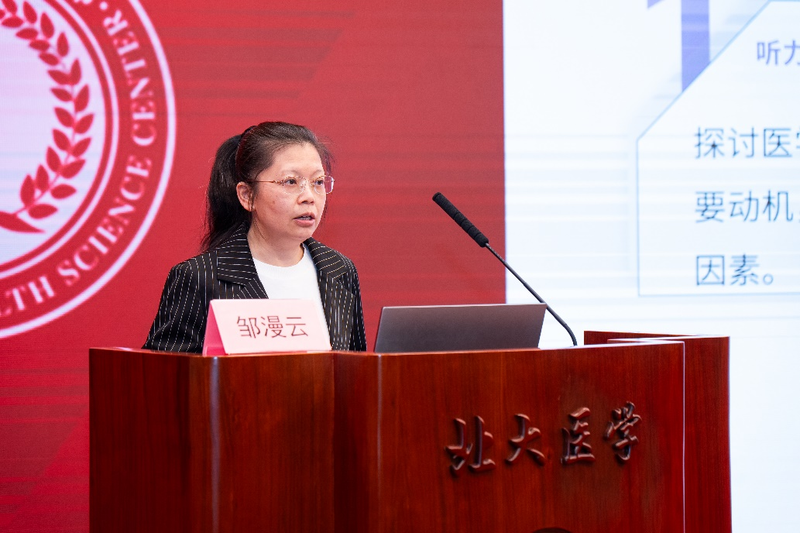
Teachers from the faculty of medical language and culture of the faculty of medical humanities also shared their respective research and studies at the congress. Adjunct professor cho yu ling demonstrated how knowledge mapping and ai teaching assistants could be applied in the course of “english language academic conference exchange”; associate professor li fong described the use of pain clinic talk sessions to promote communication and care for patients and patients; associate professor lee joon described the unique contribution of the english faculty of medical sciences to the development of global health governance; associate professor zou yun and ma xu published their latest research on the change of motivation of medical students in english during the ai era and students' acceptance of ai language learning tools. The report of the faculty of humanities of medical sciences was highly evaluated and endorsed by the experts and teachers who attended it, and it is hoped that they will work with their colleagues at the brothers college to make their due contribution to the development of english language teaching innovations in medical schools。
Closing vision: building an innovative ecology that empowers the future of medical education
At the closing ceremony of the conference, professor cho yu ling, vice-professor of the department of medical language and culture, faculty of medical humanities, beijing university, summarized the full-day seminar, noting that it was a practical, efficient and warm conference with a theoretical and more practical focus. It is expected that this seminar will contribute to “technologically decrypting the pains of teaching to make the classroom more intelligent; humanizing the beginning of medicine to make education warmer; and working together to bring innovation together to make the future more sustainable”。
The successful organization of the seminar was a solid step forward in the integration of the teaching of humanities into the intellectual transition of foreign language education at the faculty of medical humanities of beijing university. It was agreed that in the era of “new medicine” and the rapid development of ai technology, we should use today's thinking to achieve tomorrow's journey by working together to write a new chapter in english language education in medical schools
(medical humanities institute)



