The relatively simple use of black wood under the forest and the fact that it does not occupy agricultural land is an effective way of addressing land constraints, increasing the efficiency of forest land use and increasing market ownership and supply of agricultural products in the context of our social development. As a result, the specific planting techniques and care of black muir are being explored in depth on the basis of its cultivation in the woodlands. The use of wooded land for the cultivation of black moor can serve both to further the role of wooded land and to promote its co-growth with wood, thus effectively reducing the cost of planting black moored wood, allowing for the efficient use of idle woodland resources for the purpose of promoting sound economic development and preserving social and ecological benefits。
1. Arrange for planting
Black moot is a cold-resistant plant that is medium-temperature in bacteria. In case of high temperatures, there is a high risk of disease, insects or ears. The temperature of the black ear is 12-28°c. In my country, black-mule cultivation can be broadly divided into spring and autumn seasons. In the spring, black muir will need to begin bagging in mid-march and be heard from may to mid-june; in the autumn, bags will need to be prepared in early july and best in mid-september。
2. Making fungus bags
2. 1 the production of culture-based formulations uses bags to plant black molluscs, the raw material in the fungic bags being the primary source of 11 maize cores, cotton seed shells and crumbs, supported by rice and wheat. At present, there are more reasonable types of culture-based formulations, such as: 40 per cent of wood crumbs and corn cores, 12 per cent of wheat plaster, 1 per cent of plaster powder, sugar and perphosphate calcium, and 5 per cent of maize flour; 90 per cent of cotton seed shells, 2 per cent of plaster powder, 8 per cent of wheat curd and 1 per cent of sugar. Whichever formulation you choose, the internal content of the formulation needs to be around 60% and the ph is to be contained in 5. 5-6. 0. 2. 2 the fungus shall normally be made of 17 cm x 33-35 cm low pressure polyethylene contours. Planners should mix the raw materials and the auxiliary materials with water first, and then pack the bags after 1 h is suffocated. In the case of bags, the flatness of the pockets is required to facilitate the subsequent placement of the bags. In a sealed bag, three seals can be used with a neck coop and a plastic rope strap and a wooden stick. Upon completion of the bagging work, the planters are required to perform normal and high pressure sterilizations of 8-10 h. Inoculations are carried out in inoculation rooms or kits when the sterilization is completed and the bag cools below 25 °c. 2. 3 cultivation of the fungus, which have completed the vaccination process, needs to be placed in the culture room in time for the infection to be performed. At this point, the temperature in the culture room is best maintained at 20-25°c and the relative humidity in the air is best at 55% - 65%. Under these conditions, approximately 45 d fungus can be filled with black wood。
3. Selection of planting sites
Planners should choose woodland that is clean, ventilated, water-friendly, drainage-rich, preferably fast-growing trees that have been produced from 4 to 5 a. If trees are of a relatively young age, they need to be protected in high-temperature weather, and if they are older or have smaller distances between trees, they can lead to poor ventilation and light during the growth of black wood ears, affecting their quality and yield. The selection of planting sites will require the construction of ear sites. An eardrums should be paved and drains needed on both sides. In front of the official bag 2d, a thorough watering exercise is required, followed by a spraying of insecticides and herbicides。
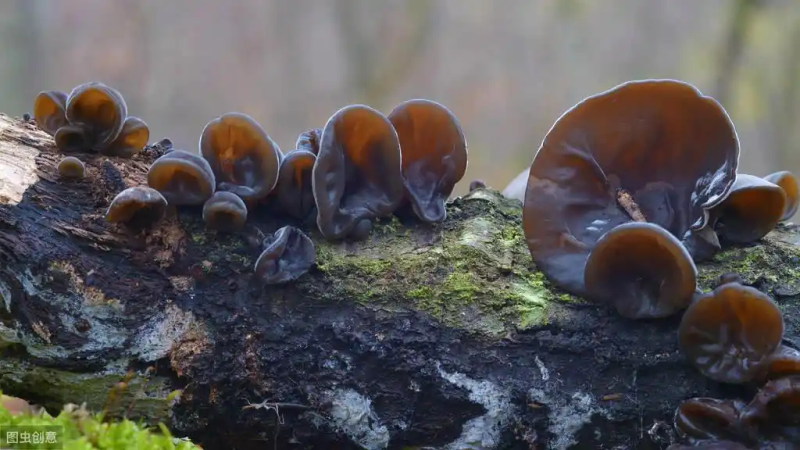
4. Open-ended alarm
When the fungus is full of mybs, 10-15 d of culture can open their ears. Before the formal opening, the planter needs 2% potassium permanganate solution to disinfect the bag and wait until the solution is dry before opening. An open hole can use a homemade blade or a wallpaper knife. In general, each fungus requires 12 “v”-type cuts, which are evenly distributed around the bag in a “good” font. Among them, the distance between the bottom and the stabbing needs to be kept above 5 cm to prevent earpieces from reaching the ground when they grow. At the same time, the cut depth reaches about 0. 5 cm inside the culture, and the length of the tilt should be around 2 cm, with an angle to be controlled at 45°-55°. When the fungus are open, the bags must be poached in the first place, and in order to ensure the production and quality of the black molluscs, there is a need to set a gap of 3 to 4 cm between each bag for easy ventilation. In the course of a tremor, if the air is less than 80% wet, the planter needs to spray the ground in time. In addition, when white fungus are found at the opening, the amount of water spray can be reduced appropriately. In sum, the planting of black moor in wooded land allows for the full use of forested land resources and plays an important role in promoting ecological and socio-economic harmonious development。