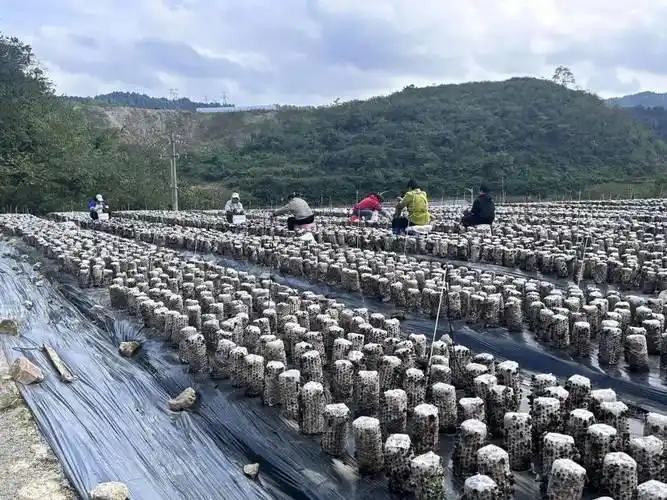
01 promotion of the chinese fungal industry
By bringing together within the industry, the edible bacteria industry promotes the development of new technologies for the cultivation of edible bacteria and improves the quality and production of products to meet market demand and contribute to the sustainable development of industries. It is committed to promoting the prosperity and progress of china's bacteriary industry, by pooling its efforts within the industry to explore new technologies and new methods for the cultivation of bacteria, continuously improving the quality and production of products, meeting market demand and contributing to the sustainable and healthy development of the dynamic industry。
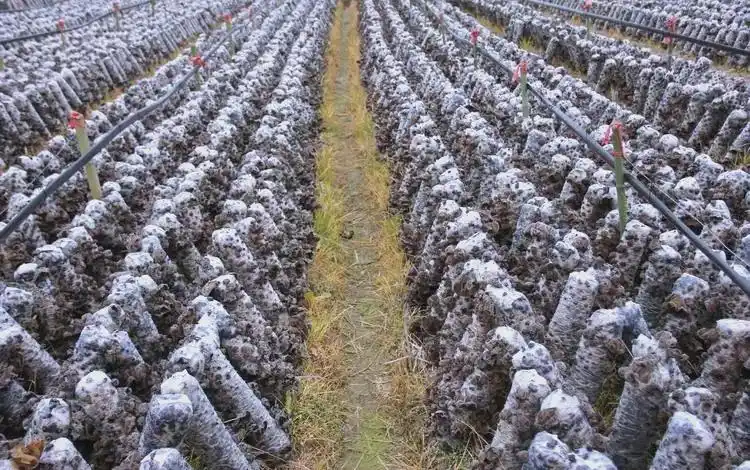
Summary of planting techniques for 02 nemur
> black muir cultivation season
In the north, the black moor is grown in spring and autumn, while in the south, which is dominated by one season, the plant can be cultivated one to two months ahead. In the north, the production of black moor is usually divided into spring and autumn. The original seed production of spring ear, which usually took place between november and december, began in mid-february and early march, after growing for one to two months, and completed full growth in mid-april. After that, according to local climatic conditions, chun ee-il was moved to an open-air site between late april and early may for bagging and catharsis. Autumn production usually takes place between march and april, with the production of a fungus bag starting in mid-june and the initiation of a low-level sprouts in early august。
In the south, due to different climatic conditions, black moor production is concentrated in one season. Cultivation is usually carried out between june and july in the southern-producing areas, with vaccination bags to be carried out from early august to late september, followed by rehearsals between mid-october and mid-november. Finally, from december until april of the following year, the southern-producing region entered the hearing phase。
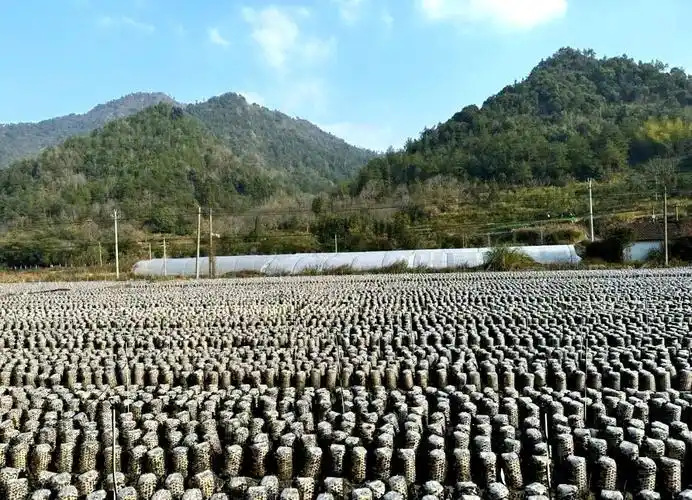
> cultivation mode of black muir
In the north, the “little hole rod full-light membrane planting” is used, and in the south the “little hole long stick full-light membrane cultivation” is used. In the north, black-mule cultivation is mainly based on the “little hole rod full-light memorization model”, while in the south, the “little hole long rod full-light memorization model” is used. Both models are technical in character, but both aim to optimize the growth environment of the black moor and to improve production and quality。
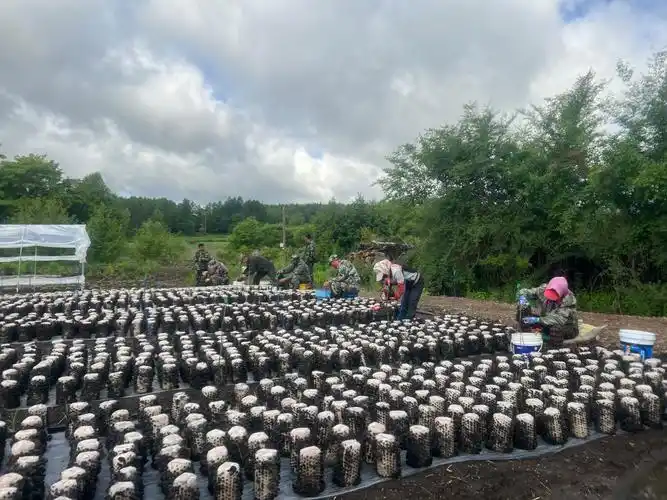
> varieties and stock selection
In selecting the black-molecular species, the characteristics of each species and the local growth environment need to be taken into account. Cultivation in different seasons should be based on suitable cultivation models and on high-quality varieties that have been reviewed (identified) or registered (filed) by non-main crop varieties at the national or provincial level, or that are high-quality, high-yielding and resistant to local cultivation, in order to achieve efficient cultivation。
A high-quality fungus with a healthy, age-appropriate and non-contaminated fungus should be selected. The production of bacterial species must strictly follow the prescribed standards for edible bacterial species, including the gb 19169-2003 black molybre species, ny/t 528-2010 technical protocols for the production of edible bacterial species and ny/t 1731-2009 good practice guidelines for edible bacterial species. At the same time, the production of fungi is subject to a licence for the production of fungi。
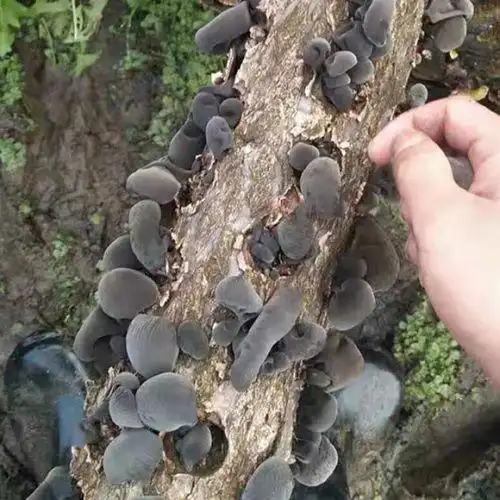
> plantation bag production
(i) common cultures and formula choices:
Wood crumb culture: the main component of tree crumbs of broad leaves is 86. 5 per cent, adding 10 per cent of rice or wheat crumbs, 1. 5 per cent of beans, 1 per cent of lime and 1 per cent of plaster, and regulating water content to 58 per cent ±2 per cent。
Screech cotton hull culturer: the screech of broad leaves is mixed with cotton hulls at a rate of 63% and 15%, adding 20% of wheat lumber, 1% of lime and 1% of plaster, also regulating water content to 58% ±2%。
Cotton-shell culture: the cotton-shells are the main source, accounting for 78 per cent, supported by 20 per cent wheat, 1 per cent lime and 1 per cent plaster, and appropriate water content。
(ii) sterilization and cooling:
Once the planting bags have been filled, they need to be sterilized immediately. High pressure sterilization is recommended and high pressure-resistant polypropylene material is selected for planting bags. Using a common application, the short-stick planting bag would have to be at a temperature of 8-10 hours at 100°c-105°c, while long-stick planting bag would have to be 12-14 hours. When sterilization is completed, the bag is moved to the disinfected cooling site for natural cooling。
(iii) vaccination operations:
Inoculations need to be carried out in strict compliance with sterile practices to ensure the reduction of pollution and increase the success rate of bacteria. For the cultivation of short rods, a sponge block is usually used to seal it, when vaccinations are carried out, the seal is removed, access is provided to the original species of black wood, and it is sealed with sponge blocks. The original species would be suitable for a “spread” strain, with one in each bag. Pump-to-pore vaccinations are used for long stick cultivation, with four inoculation holes per straight bag and seals with bags, wooden plugs or stickers. When the strain is full, the outer bag should be removed to ensure the survival of the strain and reduce the pollution rate。
(iv) bacillus management:
Post-vaccination planting bags are subject to microbacterial management. Microbacterial management requires regulation of temperature, humidity and light. Temperature management can significantly improve the quality of bacterial species through the application of temperature change management in the substitute planting of black wood. Air moisture is a key factor and should be kept within 50-60 per cent limits. Lighting is also an important factor, and it should be developed in the early stages with complete shade of light, and at the later stages with proper light. In addition, maintaining air flow is essential for the growth of the black ear。
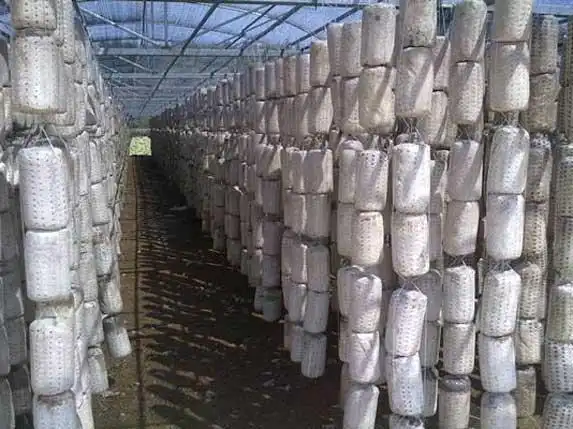
> ear management
(i) speeches
The black molybdenum rods are then ripe for oral intervention. Special tools or machines should be used to ensure the sound density of small holes. In the process, the surface of the bag needs to be sterilized to ensure that the mouth is clean and clean。
(ii) drumbing
In the process of hearing, appropriate seedling measures need to be taken in accordance with local climatic conditions, maintaining about 80 per cent humidity, temperature ranges between 15°c and 25°c, and indoor or outdoor seedling may be used in different regions。
(iii) earnings
After a tremor, it is possible to perform a sorting operation. In field cultivation, the space space and proper ventilation and light should be fully utilized, taking into account weather conditions, and the space space of the bag and the structure of the frame should be reasonably planned. Facility cultivation places greater emphasis on the rationality of space layouts。
> harvesting and post-harvesting
(i) timing of harvests
The harvesting should take place during the natural roll-out and softening of the earpiece, with particular attention to the colour and qualitative changes in the earpiece, and when the earpiece is fully extended and softened。
(ii) post-treatment
Black wood is dried mainly by natural drying and can also be dried using drying equipment. Natural drying is low-cost and easy to operate, while the drying process requires the use of a covered net to maintain sanitation. Throughout the process, care needs to be taken to maintain the health and quality of the product in order to obtain a high-quality commodity profile。