


Main planting techniques for three-year sophisticated and efficient cultivation of mussels/beans-beans
Lin lee
Vegetables, green peas and peas, which are the main growing vegetables in the eastern jiang sokang region, are grown over a long period of time, with good quality, good taste, high economic efficiency and high market sales. In order to make the best use of light-temperature resources and to increase land output per unit area, we have summarized the three-year-old high-impact cultivation model of mussels/creas-beans, which is described below。
1 cross-cutting arrangements
Mashed beans were planted between peas in mid-october of the previous year at a den, at a distance of 1. 33 m, and picked up in mid-may; green beans were planted in mid-may on both sides of the mussels, at a distance of 0. 67 m, at the end of august; and green peas were planted in early september, at a distance of 0. 33 m; and green peas were picked up in mid-november。
2 plantation techniques
2. 1 penis
2. 1. 1 seeding
Select the large grain-formulant bean varieties of soybean 5, soybean 9, soybean skin, japan, etc., to sow the sun for 1-2 d. 40 kg of calcium phosphate per 667 m 2 applied as base fertilizer. Digged with shovels between peas at a distance of 1. 33 m and at a distance of 0. 2 m, and planted around 6,300 seeds per den of 667 m 2. In the case of drought and poor soil conditions, water should be poured or subsequently planted to ensure early and whole seedlings. Clean up the straw in time after the ex-beans harvest。
2. 1. 2 field management
(1) tundra protection: before the onset of the cold tide, it can be used to keep the wind warm, either on the west side or on the north side, around 10 cm high. (2) fertilizer water management: every 667 m 2 urea application 7. 5 ~ 10 kg fertilized in late march. (3) fine branches: in the middle of march, large, large and dense fields were sprawled, with the main and old branches, the headless branches and the weak later branches removed, the disease strain removed, and the rate of effective branching increased, with about 50 strong branches left for each of the m-heads。
2. 1. 3 pest management
Vegetable bean pests are mainly chromosomes and aphids, which can be treated with 1 :1 :1 :200 times liquid spray, and aphids, which can be treated with 10 % aphids and 3,000 times wet powder。
2. 1. 4 harvest
In mid-may, soybean drums were full, green and green, and fresh seed grains could be picked up when they were medium。
2. 2 cyan beans
2. 2. 1 seeding
A variety of pre-cooked beans of large grains such as spud 6 and kashin 1. Scrolling ditches on both sides of the bean line, deep at 3-4 cm, with a line distance of 0. 67 m and a den distance of 0. 3 m, with three to four seeds per den. 20 kg phosphate per 667 m2 or 15 kg compound fertilizers are used as base fertilizers for weeding by ground spray of alachlor prior to sprouts。
2. 2. 2 field management
The seedlings are grown up with two saplings, with two seedlings per den at around 6,600 per 667 m 2. Cleaning of the straw in time after the extraction of the pre-blue beans. In the initial flowering period, urea was 7. 5 kg per 667 m2 while urea was sprayed with multiple oscillations of 20-25 g to 30 kg in water, promoting the planting of short plants to resist and increase the rate of ferns; and the bouquet was sprayed with 0. 2% potassium phosphate solution 2-3 times at intervals of 5-7 d。
2. 2. 3 pest control
The soybean pests are mainly soy ashilosis and soybean heartworms. Asphyxia can be treated with 500 times the liquid spray of more than 50 per cent of the filamentable powder, while heartworms can be treated with 200 times the liquid spray of 8,000 eu/mg coli during soybean condensation and once more at 7d。
2. 2. 4 harvest
When the soybeans are fully sized, full of beans, the largest volume, the water content is not reduced and the colour is green, they are picked in time。
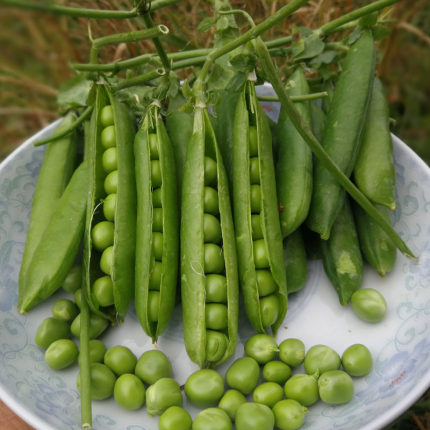
Green peas
2. 3 peas
2. 3. 1 seeding
Autumn pea varieties such as middle pea 6, middle pea 9 are selected. The precipice of the soybeans is followed by the cleaning of the straw, with a uniform application of compound fertilizers of 30 to 40 kg for each 667 m 2, a quality farm fertilizer of 1,000 kg, and 3% a granular agent of thionate of 5 kg as base fertilizers, and then a lean tiller. Radio, 0. 33 m line distance, 30-33 pieces per m line length, 12-15 kg for each 667 m 2 seedling, 48,000-50,000 for each 667 m 2. Ground spray of alachlor for weeding before sprouts。
Field management
In case of high temperatures and drought, seedlings should be ploughed in a timely manner, with a period of pine soil weeding one to two times. For each urea application of 667 m2 from the beginning to the flower season, 10 ~ 15 kg of vasectomy are frequently exposed to high temperatures and droughts and should be irrigated in a timely manner。
2. 3. 3 pest control
Peasy pests are mainly dusty, soybean worms, beet moths, etc. Powder disease is treated with 60 ml aerosols for 9% ethylene ester swarms per 667 m 2; soybean swarms are treated with 200 times more liquid spray sprays during swarms of 8,000 iu/mg souyun swarms and one more time between 7 d; beet night moths are treated with 20 ml leaf sprays for each of 667 m2 with 60 g/lethylidocidal swarms during larvae。
2. 3. 4 collection
Autumn peas are generally taken on the market after flowering at around 15 d, when they are fully sized, full of beans, dark green and small wrinkles on the balconies。



