


The pompous grapes are hybrid grapes with high nutrition and a very good taste. They are popular at the mall. Do you know how planting can make it productive? I don't know. I can learn from the writer
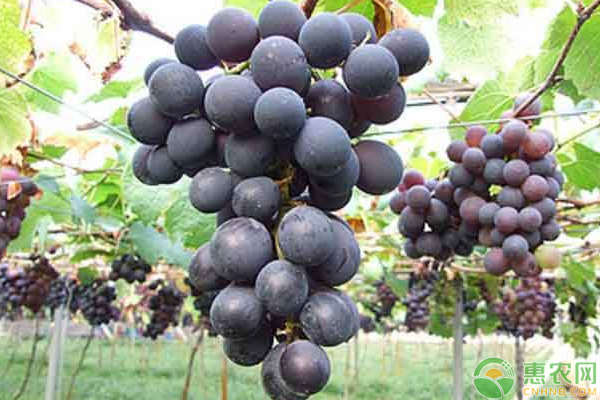
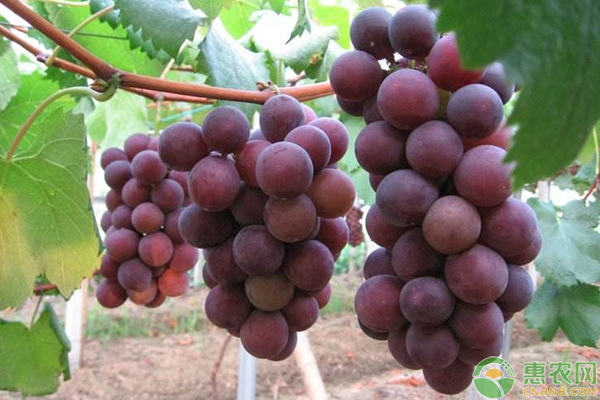
The giant peaks are mixed european-american species, large fruit grains, purple black fruit skins, sweet juicy juicy, smell of strawberry, soluble solids of more than 16 per cent, matured in the middle of july in jianning county, to be a medium-preserved species. The species is widely cultivated in the wet hot areas of the south, with its damp-resistant and productive characteristics. Despite the continuous improvement in the structure of the varieties, the giant peaks are still the main plant for the production of grapes in jianning county. In recent years, the use of expensive labour has become a major challenge in the production of grapes, and increasing labour costs have become important factors affecting the efficiency of cultivation, with some obstacles to the development of the grape industry. Therefore, the development of grape-saving cultivation is a powerful measure to achieve efficiency gains and one of the trends in the development of the grape industry。
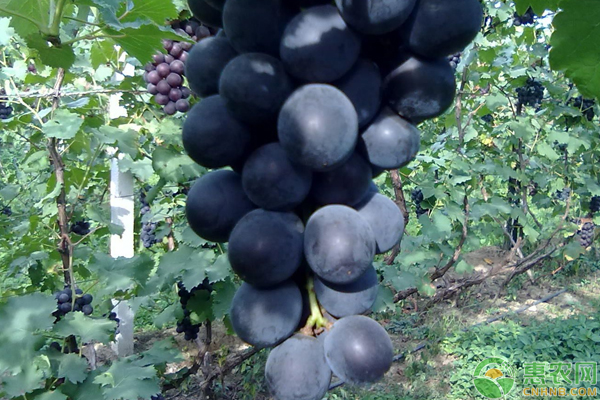
Great peak grapes production technology
1 resilient tree construction
Cultivation is one of the key management elements in the early stages of cultivation. It is based on the development of efficiency plants for the reduction of grapes by facilitating field handling and meeting the growth and development needs of grapes, taking into account human engineering, and the development of ventilation and energy-saving tree formations。
1. 1 t-form tree culture
Use horizontal shed cultivation. In the same year, one of the stubbles was chosen to grow straight up, a stubble was set up to train the backbone, and it was set to grow up to 1. 8 m, and two of the stubs were selected for the opposite direction and the rest were removed. The direction of the main chicken should be vertically oriented to planting, facilitate long distances, facilitate the entry of small machines, such as tillers, and reduce the amount of soil management work and water and fattening, so that the range can be set at 3 m x 6 m. 2 the main chickens are given about 3,000 branches per 20cm of culture and control of about 1,500 kg per 20cm of fruit per 667 m2。
In general, fat water is well managed so that the t-shaped tree can be constructed in the same year, and it can be produced in the following year. As a result, the female branch is distributed along the main chicken in a stabbing form, which facilitates the streamlining of winter cutting by field managers。
1. 2 high-widest tree formation
Using improved y-forming. In the same year, a strong new pole was chosen to grow straight up, along the planting line at a height of 1. 2 m to the ladl-1 barbed wire, until it reached the threshold of the first barbed wire. The selection of the two robust substrates under the heart, the rest of which were erased, was tied in the opposite direction to the horizontal chickens on the first barbed wire. When the chicken grows up to half the length of the strain, it is freshly choreographed, so that the two adjacent chickens are tied to each other. Sets 1 horizontal bar above 20 cm above the 1st bar, 2 at each end of the bar, 1 bar at 30 cm, 1 bar at each end of the bar. The following year, when the main chicken was freshly pumped, it was slashed on two sides of the wire at 20 cm apart, forming a v-shaped leaf curtain, and then the heart grew down to the natural state with the bystand。
The development of high-wide tree formations increases the height of the backbone, widens the opening of new growth, improves ventilation, reduces the incidence of disease and pests in relative terms, reduces nutrient growth and promotes quality improvement, and simplifys the volume of summer management work。
2 rational use of sleeping agent
The xianning county has light and heat conditions that are conducive to the growth and development of grapes, and there have been years of difficulty in meeting the requirements for cooling, and production has often been characterized by sprawl, prolonged periods of delay and uneven flowering, leading to problems of management and continuous work. In the first 20 to 30 d, apart from the top sprouting, the result is the use of single melamine in other winter sprouts, which not only stimulates the early onset of the sprouts but also the emergence of a full-blown chromatology, with essentially the same chronology of the branches of the outcome, which is conducive to the integrated management of fat water, flowers, pests, etc。
3 simplified byput management
Grapes grow in large quantities and are growing rapidly in the summer, and when they grow out of control, they increase the likelihood of falling fruit. The introduction of repeated choreography control in production is labour-intensive and therefore a simplified management of the wiring is necessary. Control of moisture, fertilizer before flowering and during flowering, elimination of nitrogen fertilizer application, and proper application of embroidery, based on the cultivation of mediocre tree positions, with a view to reducing the pressure of fruit and, in the event of excessive growth, the rational use of plant growth regulators to control branch growth and to balance nutritional growth with reproductive growth, in the interest of flowering sit-ins。
4 fertilizer system regulation
Using integrated hydrofertilizer technology, the fertilizers produced by soluble solid or liquid fertilizers are evenly and accurately transported to the root soil of crops, together with irrigation water, in order to achieve system regulation of long-term fertilized water supplies for grapes. The current pattern is a combination of micro- and fertilization. The integrated water fertilization systems combined with drip irrigation include pumps, filters, fertilizers, pipelines for water distribution, water pumps, etc. In which drip irrigation pipes are selected for polyethylene plastics, laid between the growing rows, and the dropholes are determined according to the distribution of root systems. The integrated application of hydrofertilizers is based on the growth and development of grapes in order to regulate fertilizer use, irrigation, and thus achieve scientific and accurate control of fertilization and irrigation water. It should be noted that due to the accurate transfer of fat water to the soil of the grapes, which has significantly increased the absorption of fertilizers, it is appropriate to control the amount of fertilizer used in the application of integrated water fertilization systems at about 50 to 60 per cent of the traditional fertilizer. The combination of mechanization and scientific quantification of artificial fertilization and water distribution in lieu of integrated water fertilization systems has significantly reduced the cost input of fertilizers and reduced field management workload。
5 integrated pest control
The southern wet fever-producing areas are prone to severe diseases and pests in grape cultivation due to their high temperature and rain weather characteristics. The introduction of rain-shielding models can halt the adverse effects of rain on grape growth and effectively reduce the incidence of grape disease and pests, thereby reducing the volume of spraying and the cost of medicines and labour。
The type of shelter construction is varied and can be selected according to economic capacity, business model, etc. A general vineyard of grape production may choose a concrete pillar steel shelter with a concrete pillar and a zinc plating cap with a width of 5. 0 m, top 3. 4 ~ 3. 6 m, shoulder height 1. 8 ~ 2. 0 m, top of the polyvinyl chloride diaphragm. On average, the number of sprayings per year can be reduced by 5-8 times compared to field cultivation, resulting in significant savings in drug control。
Chemical control continues to be the main method of prevention and control of pests and diseases in production, with attention to the selection of low-toxic and low-residual pesticides and to the rotation of agents during their use in order to achieve safe and efficient grape production. Among the most common pests in fujian are asymptomatic diseases, albinosis, anthrax and physiology。
5. 1 ashkilosis
It's mainly a blemish and a blemish. In a damp environment, which is prone to occurrence, the typical symptoms are the presence of a grey rodent. Prevention and treatment methods: 50 per cent of polymixable humid powder 500 times the liquid, 70 per cent of methyl tobutine 800 times the liquid, 40 per cent of aromamine 800 ~ 1,000 ~ 1,000 ~ 1,000 ~ 1,500 > , etc. Can be selected for application before flowering and in the near maturity of the fruit。
5. 2 albinosis
It is mainly for the seed and the chickens, and it is also for the leaf and the fresh, and it is prone to disease during the season of the fruit. Prevention and treatment methods: 50 per cent happiness 1,500 - 2,000 times liquid, 78 per cent kobo 600 - 800 times liquid, or 20 per cent phenyl ether acetate, before and after flowering, 25 per cent dachling 500 - 700 times liquid, etc., can be sprayed at the beginning of the disease。
5. 3 anthrax
Young organizations, such as fresh feet, young leaves and young fruit, are particularly vulnerable to disease in heavy rain and wet conditions. Prevention and control methods: focus on disinfection of trees, which can be immersed in 10% - 15% - ammonium sulfate solution or 3% - 3% - 5% - 3% - 5min; and clean-up of gardens and strengthen orchard management. Before the bud, it was sprayed with pomegranate 3-5 degrees。
5. 4 powder disease
Pre-sprouts can be sprayed with 5° graphite thiomers, pre-spruce and pre-spruce and pre-sprincipal and pre-sprincipal application agents, e. G., fumi, ethylene ring. Physiological burns should be protected in daily management with due regard to the water balance of the soil。
5. 5 pests
Insects such as gold turtles and slashed night moths may use trichlorocypermethrin, americium, americium, esterone, trichlorocypermethrin, high-efficiency cypermethrin, phosphorus, etc. Since the implementation of vitamin-based production depends on key technologies and requires systematic implementation of management measures, vitamin-based cultivation should be a systematic complement and an important direction for future development of the grape industry。
As a form of grapes, giant plume grapes are still popular on the market, with a wide range of market prospects. If you want to grow plume grapes, your relatives can learn how to grow the plume of plume grapes。



