


How do you grow a giant raisin? As the standard of living of the population grows higher and the quality of life is sought, the following is an expert who has been studying and experimenting with ways of effectively improving the quality of the fruit products of the poignant grapes through planting management measures。
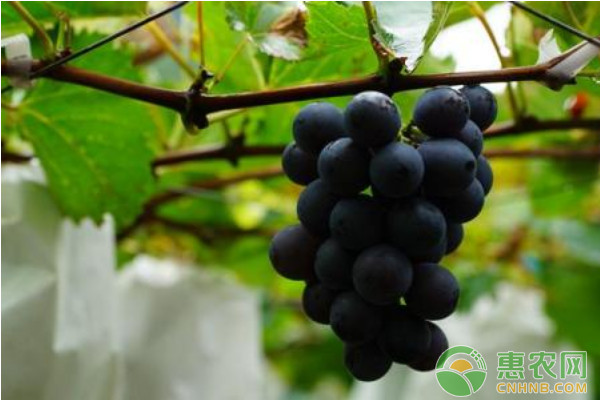
1 fertilizer management
Large-peak grapes are rich and high, but they are also more demanding in terms of fattening water, and there are more stringent requirements in terms of demand, ratio and duration of potassium nitrogen phosphorus, which has proven to be useful in improving the quality of fruit by increasing the application of base fertilizers in the autumn, and in the growing season following the application of leaf noodles。
1. 1 the focus of grape fertilisation is on fertilizer in autumn。
When wei chou's grapes are normally harvested in late september, they are a critical period for the absorption, production and storage of nutrients, when applied to basic fertilizers, which can significantly improve photosynthesis use and increase the storage of plant organic matter, and in this period, commonly known as lunar fertilisation, which complements the nutritional loss of the results of the year and is important for the following year's tree position, flower thawing and early fruit growth, and has an indispensible effect on the production and quality of fruit products. Moreover, autumn fertilizers also contribute to the healing and new roots of the damage to the root system, because at this point, although the branches have stopped growing, the roots are still active, and the temperature during this period is also suitable for the growth of the roots, which will soon heal and produce many new roots, which is important for the absorption of nutrients in the early spring of the following year. Moreover, the high water supply of the autumn shigeki, the high temperature, allows the early decomposition of the fertilizer to be absorbed by the root system, and makes the grapes grow more nutrients for winter and spring growth. If spring uses the base fertilizer, it can delay fertility, and in spring, when fresh and fruit grow in large amounts of nutrients, competition for nutrient growth and reproductive growth is created by insufficient nutrients, lowering sit-in rates, affecting thawing and even increasing fruit, colour and sugar。
The type of base fertilizer is predominantly organic, with a small application of fertilizer; fertilizer application may vary according to the type of fertilizer, with a general organic fertilizer (which is generally based on chicken dung) of about 3,000 kg of acre use; fertilization should be applied by gutter application, followed by water recharge。
1. 2 the pursuit of fat is also essential throughout the fruit of grapes。
On the basis of the application of fertilisation, which is based on early application, diligence and multiple fertilisation, emphasis is placed on four pursuits: 30 kg of urea at grape sprouts; and 45 kg of phosphate before flowering and rapid expansion of vegetative fruit, which can be used to produce microfertilizers such as calcium, magnesium, manganese and zinc, respectively. During the berries coloring period, the acre potassium sulphate compound fertilisation of 40kg, and after each fertilisation, it is best to spray 0. 2% of the potassium phosphate twice on the leaves, a period that is dominated by increased phosphorus, potassium fattening, and strict control of nitrogen fattening, because the taste of grapefruit is a combination of the nature and composition of the countless cells that make up it, and in the early stages of the maturity of the fruit, the cell fluid is almost full of starch and is gradually being watered into glucose, fruit and cane sugar, thereby increasing its sweetness rapidly, but in the case of excess nitrogen fattening, it is conducive to the formation of proteins and hindering the storage of star powder. In addition, too much nitrogen fertilizer, too much new growth, so that the sugar produced by the leaves is consumed by the branches, which reduces the transport to the fruit, and the sweetness of the fruit. The water should also be too small and 20 d before harvest。
1. 3 cropping。
In order to prevent topsailing and weeding, we should plant grass in time and clear our trenches. Note that the use of chemically synthesized herbicides and organically synthesized plant growth regulators is prohibited throughout growth and development。
2 rational load
After four years of observation, it's calculated that giant grapes increase with the number of single leaves, and yield increases, but quality declines with the increase. Looking for the best balance between high production and high quality, based on maximizing economic efficiency, is more reasonable at 3,000 kg per acre。
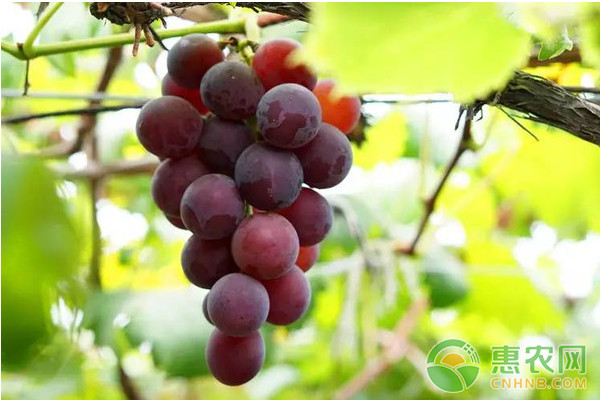
3 flower fruit management
Whether it's a bouquet or a poignant, there's room for room。
3. 1 discretion。
It usually takes the top 10-15 d to stagger, and the by-stealing and graft sequence go hand in hand, and the selection sequence should be two to three times as high as the target yield。
3. 2 episodes。
The oozes should take place about half a month after the blossoming, when the ooze is stable. The determination of the number of lobes per unit area, based on the target yield and variety characteristics, and the determination of the reasonable load, is a key to ensuring the quality of grapes。
3. 3 episode repair。
It's about to be repaired, and it's about to take a quarter to a fifth of the ear, and remove the ear, and it's about 50 to 60 grains per ear, and it's about 600 g when it matures, and it's about the size, size and weight of the ear, and it's either in the box (or basket) or in the freezer。
3. 4 age of maturity。
Large-peak grapes in the maturation of berries, if the water is over or uneven, can create fissures. The conservation of soil moisture and the more even growth of berries is the main method of preventing fissures by ensuring the steady absorption of moisture by root systems through deep tillage, the replenishment of organic matter and rational drainage。
The colour of the raisins requires higher than the normal grape varieties, and the colour content of the fruit sheet is only 30 per cent of the unshield, so care should also be taken to trim the raisins and leaves during the maturation period, promoting the colour of the fruit and making it more beautiful。
4 disease control
Pest and disease management must be based on the principles of prevention, integrated prevention, agriculture, physical control, biological control, and chemical control. First of all, we're going to clean up the winter gardens and spring buds, spray one microbicide before or after the rain to prevent the disease, and we're going to have a few grape pests, mainly to prevent the disease。
5 fruit pack
After pollinating the fruit, packs, which reduce the pest hazard, pesticide contamination and hummingbird injury, and keep the face clean, are usually taken for the first half of the month to remove the bag for the colour of the fruit, and, if more transparent paper bags are used, they can be removed at harvest。
This is what is summed up today with regard to the efficient cultivation of giant grapes, and it is important to know that technological measures to improve the quality of grapefruits are a prerequisite for increased returns. More techniques for the cultivation of different varieties of grapes are found in the network



