


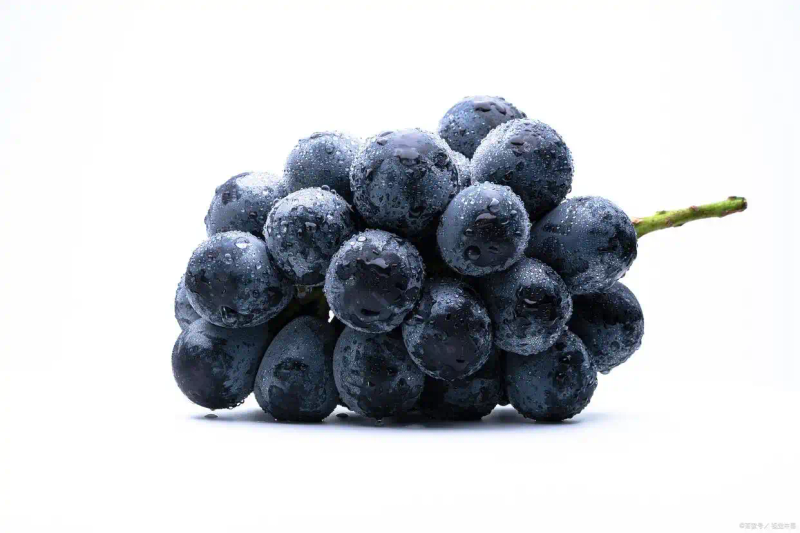
With the expansion of the area of giant plume grapes, the quality of large plume grapes is declining, some of them have poor maturity, different sizes of fruit grains, poor colour, hard and acidic fruit; some of them have brownened, decayed and decayed, seriously affecting the market competitiveness of food plume grapes and causing some economic loss to large numbers of fruit farmers. So, how do you plant the giant raisins? What are the main points of the technology for the cultivation of the giant raisins
1. Park selection
Large-peak grapes require a good ecological environment, with good isolation conditions, easy drainage, relatively high terrain and platforms, ventilation towards the sun, soil fertility, high organic content, suitable for gravel and sandy border soil at ph 6. 5-7
2. Selection and planting of seedlings
The choice of suitable, highly resistant, virus-free, high-quality, high-quality grape varieties is based on a full understanding of local climatic conditions. The planting time of the seedlings is appropriate for february-march of each year, and the density of the seedlings is appropriate at a distance of 2. 5 metres and 1. 8 metres, with 148 plants per 667 square metres。
3 sprung in time, rationalized
When the spring grapes are sprouts, the twin buds and sprouts are removed and the sprouts are preserved. The two- to three-time break-in-the-shows must be taken in time to remove the by-products, so that the nutrients can be delivered more to the plant parts, with the proper removal of some of the bouquets, and with the one-fourth to one-fifth of the last three-and-five days before the flower starts, so that the nutrients can be concentrated on the grains left. In winter, mid-long cuttings are introduced, with around 10 to 15 new steps per square metre of surface, staggered upwards and downwards, ensuring 15 to 25 leaves per ear of grapes, and acre production is contained within 2,500 kg. This will allow the fruit to be soared, the grains to be purified and matured, and improve the taste of the berries and their colours。
4. In pursuit of high yields, many fruit-farmers do not rouble in the summer, and do not slit their ears, thus diverting the nutrient supply and the size of the grains. Small and long cuttings during winter seasons, with extra chickens, result in rapid upswing of the results, which binds the ears to the top of the shelf. Poor nutrition due to overload and uneven distribution makes it difficult to produce quality results。
In order to improve the luminous conditions, reduce the disease, and promote thawing and gravy enrichment, grape harvesting is followed by leaf trim. The removal of over-faced, over-strengthed and under-heavy branches, as well as inappropriately-positioned chickens, reduces nutritional consumption and nurtures healthy chickens, while also reducing air moisture under the shelf to avoid disease。
5. Strengthen management of fertilizers to prevent early tree decay
The requirements for fertilizers are more stringent in the case of giant berries, which usually yield 1. 5 kg of nitrogen per 100 kg of berries, 1. 0 kg of phosphorus and 1. 5 kg of potassium; at the same time, the berries grow with sufficient moisture to increase the grain and increase production. However, if the berries are overfilled from colour to maturity, they are low in sugar, high in acidity, ill in colour, and are prone to fibrosis and late decomposition, affecting the colour, aroma, smell and quality of the porcelain grapes. Thus, water should be filled at an appropriate level, in particular 15-20 days before harvesting。
Controlling the application of nitrogen fertilizers by increasing the potassium fattening of the stuporic acid series of phosphate in schvöh chickens and preventing the growth of a venomous stock, the depression of leaves, poor ventilation and insufficient light, which prevents the normal growth and maturity of grapefruits, the softness of the fruit, the thinness of the fruit skin and the poor resistance to various strains. In this case, the berries should be coloured with 800 times more potassium dihydrophosphate sprayed on the side of the leaves than on the side of the berries, and the quality of the berries would be enhanced by a half-month spread. Following fall of leaves, organic fattening of 5-10kg/acre/sec/acre per acre of spwocher chicken is available. At this time, the temperature is high, contributing to the decomposition of organic fertilizers and the absorption of nutrients by root systems。
6. Prevention and control of pests and diseases
Five waves of thiomers of thiomers were sprayed before the sprouting of the prairie in the spring, combating white powder and fur disease; 200 times the equivalent of bordeaux in the week after the flower was sprayed to prevent black poxiasis; three to four times every 10 to 15 days of degeneratives of 600 to 800 times; and 400 times the acetal aluminum for frostic disease and 1,000 to 1,500 times the 40 per cent fruit-emulsifiable cream control pests such as dust. If a raisin-wing moth is found on a branch, 50 per cent of the diarrhea can be injected into the cavity, then the worm can be enclosed with clay. In order to prevent pesticide contamination after grapes are on the market, spraying should be stopped around the first half month of the harvest。
In conclusion, we hope to help you with the technique of growing grapes, which is a large-scale cropper. Watching for a little bit more good stuff for you to find out。



