


Sugar cane is a quality green feed for cattle and sheep. In recent years, yongping hinghua village, puming valley county, yunnan province, has taken advantage of the wealth of sugar cane tails and surplus labour, taking advantage of national policies to support and bring farming into a period of transformational development opportunities, boosting farming households to raise high-quality cattle and exploring new breeding paths with sugar cane tails as their main feeder。
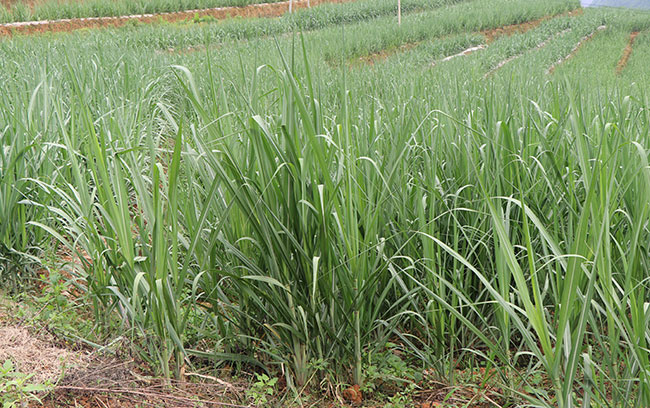
The sugar cane planting base in yongpinghua village, yongpingzhou。
It has been reported that sugar cane has been growing in yongping-hwa village since 1996 and has become the main industry in the village after 26 years of development. To date, a total of 583. 3 hectares of sugar cane have been grown in the village of heunghua, yongping town, with an annual production of 38005 tons and an economic income of 16342. 15 million yuan。
“our village is mainly based on sugar cane, and cattle growers like us can go to their village's sugar cane fields free of charge to pick up cane for their cattle. My family now has more than 20 cows and eats more than 20 tons of cane per year.” chen jing liang, a cattle farmer in yongping-hwa village, says:。
In the past, the treatment of sugar cane tails by sugar cane farmers in yongping-hwa village, with the exception of a small amount used for direct feed to feed herbivores, was mostly in-situ burning and the use of cane cane is low, resulting in waste of feed resources and contamination of the environment. In 2022, the harvest of sugar cane in hinghua village produced more than 8,000 tons of sugar cane tails. While promoting the expansion of the sugar cane industry, hinghua has actively explored new models of industrial development, using cane to raise cattle, which has led to a significant increase in the overall use of sugar cane in hinghua, and has led to the emergence of a circular economic chain of “cane-raising livestock — over-breeding value-added — animal dung back into the field — improved soil”, which not only saves costs for cattle farmers, but also contributes to a large extent to the sustainable development of the rural economy, which has led to a large-scale development of the cattle-raising industry。
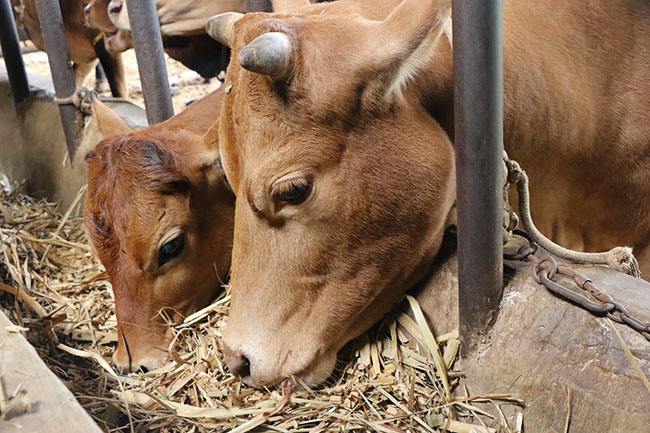
Meat cattle are eating sugar。
At present, there are 115 sugar-cane cattle farmers throughout the village of hinghua, 72 of them using their own cane to feed their cattle. Bounty farming has increased from over 300 in 2018 to over 800 today. Liu rong, a farmer in hinghua village, explained: “my family started with only five cows, then gradually expanded the scale of cattle farming, and now has 14 cows, which are mainly stored in sugar cane, which is not as direct as it used to be, and which is wasteful and inconvenient. Now that sugar cane is stored in the initial stages of exploration, it is planned next year to expand farming further if it is successful.”
The country is not rich and the key is industry. Next, yongping town in the city will actively explore green storage techniques with sugar cane tails as the main raw material and will further increase the use of cane. In addition, efforts are being made to extend the chain of the meat and cattle industry, to promote a circular economy linked to the meat and cattle industry, to accelerate the formation of a large-scale circular economic model, to promote conservation and livestock development and to lay a solid foundation for rural renewal. (jianqia, lee chun yin)



