


The people who grow peas know it's good but hard to produce! Why is there a string of peas and yours? Today, let's talk about all the high-yield technologies from seeding to harvest, and double your pea production
Choose the seed. Take the first step
Peas are very productive, and the selection is the key. Now you're growing much more dry peas and fresh peas. Dry peas are best chosen for the semi-leaveless varieties that are registered by the state and have a strong capacity to combat dusty diseases, which are usually high-yielding and less ill。
And what is the choice between fresh peas on the basis of what they grow — large seed grains and a large number of single grains of fresh seed grains; slurry types; and light-sweet ones。
The planting time is different from north to south. In the south, planting is best in mid-august. The northern region is subject to surface temperature stabilization at 5°c, usually between mid-february and mid-april。
The sowing must also be secured, with 12 to 17. 5 kg of dried peas per acre and 45-60 million seedlings. Fresh peas look at varieties, with 15-17. 5 kg of acreage and 8-12 kg of chickens。
We've got a plan. We've got a plan
Peas are fertilized, base fat is full, post-fat. Fertilization in drylands should be based on the principles of primary, complementary and organic fertilizers and inorganic fertilizers。
The whole area is covered by bottom fertilization, with 1,000 kg per acre applied by farmers and 15-25 kg combined. In the north, all fertilizers are mixed into the soil before seeding。
It is important to catch up with fat during the seeding season, especially when two leafs grow, in a timely manner. At the beginning of the flowering season, acres were followed by 10-15 kg of urea。
The use of integrated water fertilization techniques for fresh peas has been particularly effective and has significantly increased the utilization of water fertilization. If the soil is too dry throughout the flowering period, the water can be filled with a spray facility where it is available. But remember, peas cannot withstand flooding, and never accumulate water。
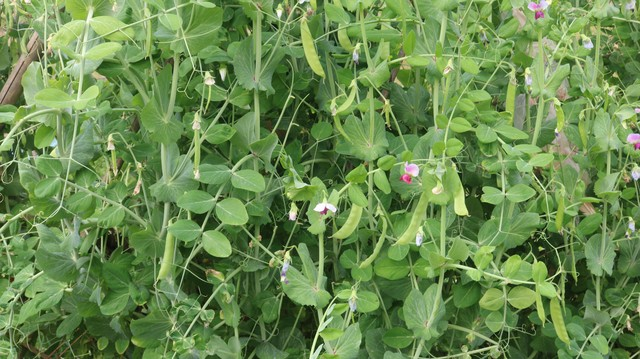
It's a scaffolding. It's a high-plant production. High
The country's folks who grow chicken peas must fight. The low level of traditional shelves and the uneven availability of water fertilizers limit the production and quality of peas。
The high-planting technology now being promoted, with high growth structures, will enable peas and chickens to grow fully, effectively prolong flowering times and increase the number of harvests。
When the seed is 35 to 50 centimeters high, it's on the shelf. Short or half-cranium peas can use the straw of front-cutting crops such as tobacco and maize。
Studies have shown that optimal growth environments can be created through the installation of higher growth structures and the selection of exclusive chicken varieties with green and efficient technologies。
Put the whole thing on top of it
If you want the peas to be much stronger, you can't hit the whole branch. When peas grow up to about 10 centimetres, peas can be supported in their direct growth by a wiring line。
By the end of the flowering period, only 3-4 active branches of the main tubing will be retained to remove some of the high branches, the slow-growing branches and the abnormal branches of the entropy. This allows for a concentrated supply of nutrients, which enables peas to be big and full。
Rational use of plant growth regulators can also control plant long standings, such as the use of 15 per cent polyecstasy, which can effectively avoid the fallout from excessive nutrient growth。
Collect it in time. Lock it up
The timing of harvests is directly related to the quality and benefits of peas. Predium-based varieties are to be harvested when they are fully grown up and have not yet begun to have drums; soybean-type varieties are to be harvested when the drums are full and seed-specified umbilical cord colours are yellow。
In the case of soybean grains, they should be collected when the soybeans are fully drummed and 70 per cent full. As far as possible, the harvest is carried out manually, bearing in mind that the plant is not damaged。
Pest and pest control
The most common diseases of peas are pollinosis, root decay, rusty, brown spots, etc. The pests are mainly aphids and leaf flies。
The prevention of aphids, which usually commences the first treatment when the number of aphids exceeds 1,500, can be administered with a combination of agents such as avil, one treatment per week and two to three consecutive interventions。
Sterilization of seeds before seeding can be effective in preventing disease. If the strain is discovered, it should be removed and burned in time to prevent its spread。
In addition, the storage of peas is a major threat in the dry peas-producing areas of the south, where the harvest is followed by two to three days of drying up in the sun, until the peas' moisture drops to about 12 per cent and then fumigate 5 to 7 days to kill the eggs and bean-like individuals。
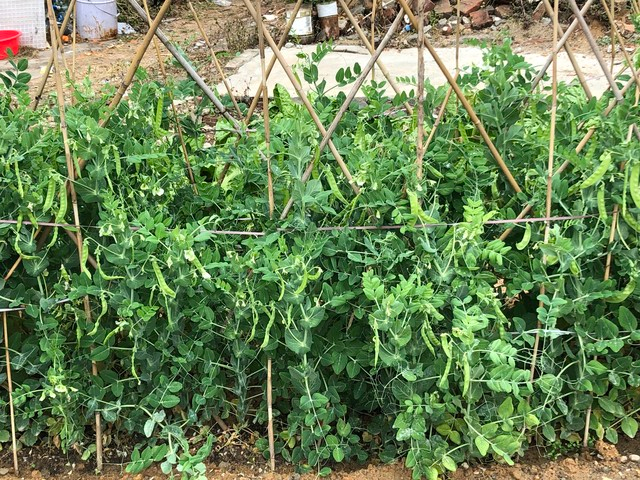
Peas grow is a technical task, but if you master these critical technology links, from seed selection, fertilization, build-up to top-up, harvest-stepping, your peas will have a great harvest
Hopefully these technologies will help growers, and if you have better experience, you will be welcome to share them in the comment area



