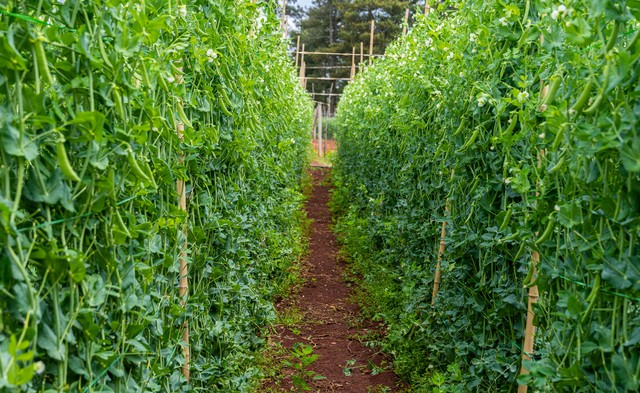
As they say, "spring beans, growing melons," but this pea's a big deal! Many growers thought that they could just dig a pit, bury a spot, and wait for the harvest, with the result that they were poorly grown and produced. In fact, peas do have the know-how to do three-deep, two-soft points, and they have different effects。
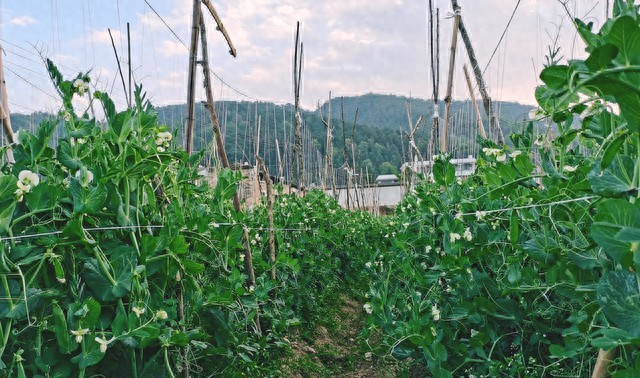
What's a "3 deep"? Deep till, fat and deep
Deep till is the foundation. The roots of peas are relatively weak and tend to defusing the soil environment. Following the harvest of the former crop, it is desirable to have a timely autumn run-off, preferably as deep as 15-25 cm. This step can break down the bottom of the plow, so that the root of peas can be deeper and broader, absorb more nutrients and moisture and reduce the incidence of disease。
Deep fat is the key. Peas have their own nitrogen-fixing capacity, but demand for phosphorus and potassium fertilizer is high. Fertilizers, such as decomposed organic fertilizers and calcium perphosphate and potassium chloride, should be used as base fertilizer for deep application in the soil before seeding. Insisting on the principles of “baby-based, fertilized” and “organic-based, inorganic”, provide a steady “logistic support” for peas throughout their reproductive life。
In-depth broadcasts need to be flexible. The depth of seeding is directly related to the successful seeding of seeds. Seeding is too shallow, seeds are easily “drinked and unsaturated” to affect the growth of gerbils; seedlings are too deep to sow soil. The word “deep” reflects the need for flexibility in the light of tact. In general, sowing depth is appropriate at 6-8 cm. If the soil is sandy and ill-favourable, it can be duly fertilized; if the soil is adhesive and wet, it can be duly soaked。
What's "two shallows"
It's a light cover. After seeding, the thickness of the land is so detailed that it requires consistency. This layer of “bare soil” ensures close contact between seeds and the soil, absorbs moisture and does not cause excessive resistance to seedlings. Timely repression after the soil has been covered will ensure consistency and consistency。
Light watering and flood control. Peas are crops that fear flooding. The principle of “slight watering” is to be borne in mind throughout the growth process, especially during the flowering period to the beginning, when soil moisture is insufficient and water recharge is necessary. Spraying is the best way to fill water, and if flooding is used, the water should immediately be drained from the gutter immediately after it penetrates the surface, and the inundation in the fields should be firmly eliminated. It's a "lightness" to keep the roots from breathing, and to prevent the dead。
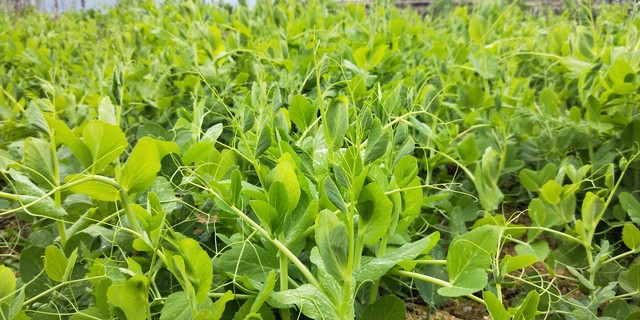
What are the best ways to increase production beyond 3d2
“3d2d” alone is not enough, and these details will have to be kept up if production is to be high。
One is the right species. Based on your planting purposes (dry beans or fresh food) and local climatic conditions, it is important to select the best varieties registered through the state. For example, drought-resilient varieties can be selected in arid areas of the north, while the south needs to focus on resistance to diseases such as pollinosis。
Two is rationally embedded. The numbers per acre are not constant. For dried peas, the average acre is 45,000-6,000 seedlings, while fresh peas are adjusted according to the type of varieties (dwarfs, half-cranium, chickens), ranging from 36,000 to 60 thousand. Line spacing and range configurations need to be reasonable to make full use of light and ground power。
Three are scientific weeding. Weeds compete with peas for nutrients and sunlight. There is an efficient “closed weed + long-term application” model that effectively controls herbs and is less costly. The application of pre-breeding herbicides within three days of seeding, which is followed by artificial or mechanical weeding combined with pine earth。
Remember, agricultural technology is improving. As demonstrated by the qingdao agricultural institute, the mae 123 high-yielding cultivation technique has achieved a full seedling, whole-way grass control, and accurate fertilizer, which has significantly increased the efficiency of pea cultivation. We have to embrace new technologies to grow good harvests
Concluding remarks
The peas are simple, but they're fine. Keep in mind the core of the “3d2d” trick — deep tillage, fattening, insinuation; shallow land, shallow watering, and working on good seed choices, rational planting and scientific management — so why can't it be hard to keep the whole seedling, the whole seedlings up and not to get high