Title: technical highlights of the process of managing high-quality high-yield cultivation in watermelon facilities, text:
The development of facilities has led to four-season cultivation of watermelons, but production has been limited by such problems as pollination, whole branching, inappropriate management of expansion periods, which has led to low yield rates and cracks. It is recommended that growers focus on these core elements to strengthen scientific control, implement the technical elements of planting at all stages, avoid problems from the source and improve the efficiency and quality of watermelon cultivation at the facility。
At the beginning of planting, the focus is on temperature
The seedlings must not be too deep at the time of planting, and the ground surface of the watermelon shall be slightly higher than 1-2 cm above the plume, or 1. 5 cm thick of the soil to be planted, and the water shall be ploughed. Watermelons have a suitable growth temperature range of 15°c-35°c and are prone to cooling at below 10°c, which affects the sprouts. Thus, for watermelons planted early in the spring of winter, the main task of the seedling period is to keep warm and long. When the watermelon was planted, the membranes were covered and small arch sheds were built to keep it warm and cold. Cultivation of early spring watermelons in high-temperature sheds requires only four layers of membranes (with 1 layer of membrane); the aqueous cavity requires six-seven layers of membrane cover, with the upper three layers of membranes, i. E., the membranes, the diaphragms and the trims, mainly supported by the cams; the membranes are two-three layers of membranes in the middle; and the membranes are at the bottom. Unventilated one week after planting, raising the temperature in the shed and promoting fast and slow seedlings of watermelons. As watermelon seedlings grow, the temperature in the shed is above 30 °c to ventilate and wet, so that the temperature is not higher than 35 °c, so as not to affect sit-in rates。
The early defense has shifted nutrition to the bud
When the watermelon is in the cranium stretch, it is important to keep an eye on the strength of the plant and to ensure its strength. Pre-growth watering can be combined with the application of products such as crustaceans, algae acids and biobacterizers to nurture strong roots. The upper part of the ground should be properly controlled, the temperature of the day and night should be increased and the plant should be avoided. If plant longs are detected, control plants such as chlorophyll and chlorinated choline can be sprayed for long periods of time, facilitating the transfer of nutrients to chromatoma and ensuring good flowers. In addition, full-nutrient foliage, crustaceans, thaphthalate, etc. Are sprayed on the side of the leaf, both to supplement the nutrients and to promote the chromatoma. In the middle of the day, care should be taken to supplement the nutrients, which can be combined with a full-nutrient leaf fertilizer, sugar, crustaceans, amino acids, etc., and can be used to spray or root the nutrient deficiency in the plant and to ensure normal separation of the buds。
The whole chicken is in place and the watermelon is "one and the same."
If the watermelon is to be “one-size-fits-all”, growers should do more on the whole chicken。
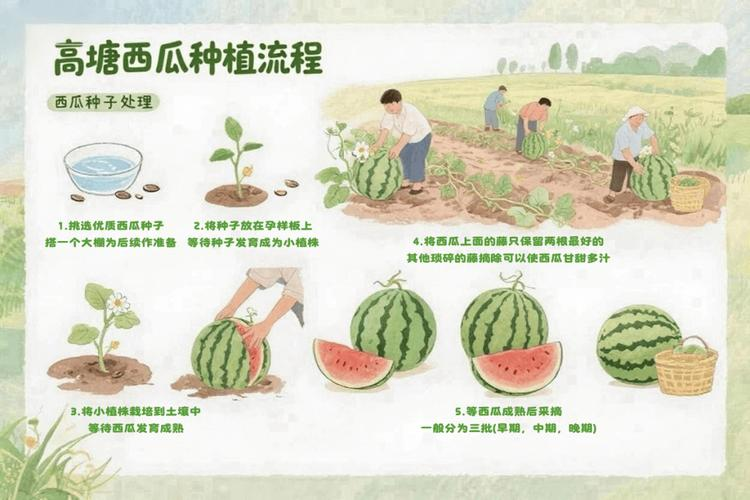
- the whole chicken needs to be on time. When the watermelon is of up to 40 cm or more, the first adjustments to the cocaves and the supporting chickens are initiated, and the whole chickens are first rounded around the tuber's base, reeling the chickens and ensuring that the second female is in a suitable position to pollinate. For a strong and weak plant, the chicken should be light, without affecting its normal growth. Watermelon sprouting, which has a relatively high growth capacity, should be strung early. Attention should be paid to the long shape of the plant, in particular to removing the side buds in a timely manner after they exceed one metre, in order to avoid excessive nutrient consumption of the side buds。
- the whole chicken way is appropriate. Generally, at least two chickens are to be provided with organic nutrients. At the same planting density, the medium-sized or large-bearing watermelon is kept with one melon each, leaving three or four of the larger ones; and the small-bearing watermelon is kept with more than two melons each, leaving three or five of them。
Well-nourished, early deformations
In the middle and late stages of watermelon growth, the management of this period directly determines the production and quality of the watermelon, in particular its adequate nutritional supply, which guarantees its high quality。
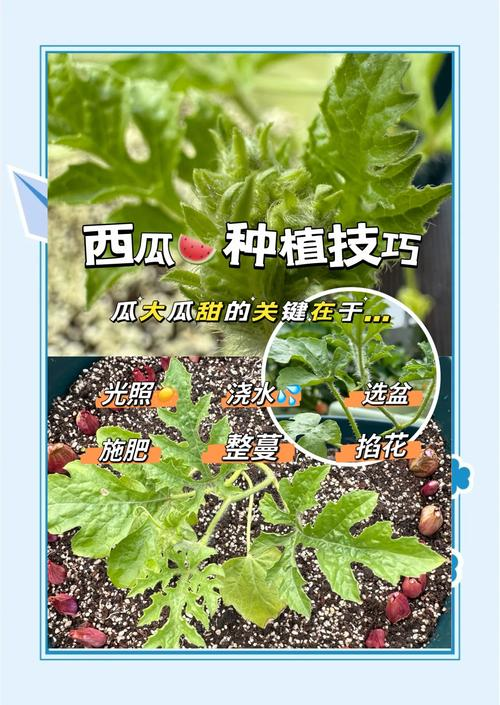
In the case of the application of base fat, a small amount of one or two times of fatting from seeding to the flowering period in order to give rise to trees and chickens; a week before the opening of the female flower to control the fatty water for the seating melon; and an expansion period during which water is required at a critical point, it is essential that this water be ploughed. When pollination is done, water is not watered when the watermelon is grown to the age of the egg, and when the guacamole is defoliated, the water is extended in a timely manner, in conjunction with the water to catch up with the fat, and at a later stage a small amount of the fat to keep the plant strong. In order to enhance the resilience of the skin and reduce the amount of cracks, care should be taken to increase the application of potassium phosphorus and micronutrient fertilizers such as calcium and boron. Attention should be paid to the application of micro-elemental foliage, such as calcium, boron and zinc, during the birth period of the watermelon, to promote the fusion of flowers and to reduce the number of cracks。
Artificial pollination should be done within seven days
The watermelon is the same crop for females and males, and natural pollination is vulnerable to weather, insect numbers, etc., the rate of sitting is unstable and the rate of fruit malformation is high. Artificially assisted pollination increases the rate of siting, but ensures sufficient and even pollination, otherwise it is prone to malformations。
— rational selection of the place to be reserved. The 2nd or 3rd female pollinator is found around one metre from the root, usually in sections 15-25. The late-cooked varieties and the chicken-swidthed branches are kept at a reasonably high level; the pre-cooked varieties are kept at a lower level than the ones that have planted the small chickens. The fruit is stunted if the seat is low and leaves are insufficient; if the seat is high, it is prone to deformity, such as coyote and head。
— accurate control of pollination time. The watermelon pollen rises at the most suitable temperature of 23°c-27°c, with a relative humidity of 70%-80%, so it is chosen to pollinate at 9-10 a. M. This is done by using well-developed males to flatten the pollen on the female's tri-poles, which are operated in such a way that their hands do not touch the handles and sub-houses, let alone the poles, and the paint is comprehensive。
In order to ensure that watermelons are collected properly and centrally, the pollination period should be completed within seven days. A combination of flowers and sprays should be used to ensure sit-in rates in the event of a cloudy day. Five to seven days after the pollination, the female development is observed, and if the sub-house starts to swell and the flower handle bends down, the success of the pollination is demonstrated; if the sub-room is not expanding and is shrinking, the reasons for the pollination or screening need to be filled in time. Within 10 days of the success of pollination, no highly concentrated pesticide is sprayed to prevent early development of the fruit。
- control the temperature during pollination. When pollination occurs, conditions are also required for pollinators to develop and complete fertilization, and the temperature should not be too high. During pollination, the temperature in the shed does not exceed 30°c during the day or 15°c at night, which facilitates watermelon pollination and melon use and reduces deformity. When temperature reached 30°c in the shed, the temperature was reduced by timely ventilation。
Prevention of invertebrates in due course
The late expansion of the melon was the most critical time for sugar on the watermelon, with the spraying of potassium dihydrohydrophosphate or sugar solution on the leaves to improve the taste of the watermelon and prevent its premature decay。
Water control began about five to seven days before a watermelon was taken, both to boost the accumulation of sugar and to reduce the risk of cracks。
When the watermelon matures, it is prone to the failure to harvest in a timely manner, i. E., the massive reversal of nutrients and moisture in the melon into the seeds and into the melon, leading to the dissolution of the melon tissue。
The maturity of the fruit is determined by the date of pollination and by the characteristics of the species, usually 28 to 32 days after pollination, 35 to 40 days for medium- and 45 to 50 days for late-cut varieties. Therefore, according to the growth of the watermelon, the buyer should be contacted in advance to ensure that the watermelon is successfully collected and sold before it becomes fully available。
(the manuscripts were collated by the chinese journal of agricultural science and technology, china agricultural news network, journalist tung wen lan, referring to the north vegetables newspaper, the national agricultural technology promotion network, etc.)