


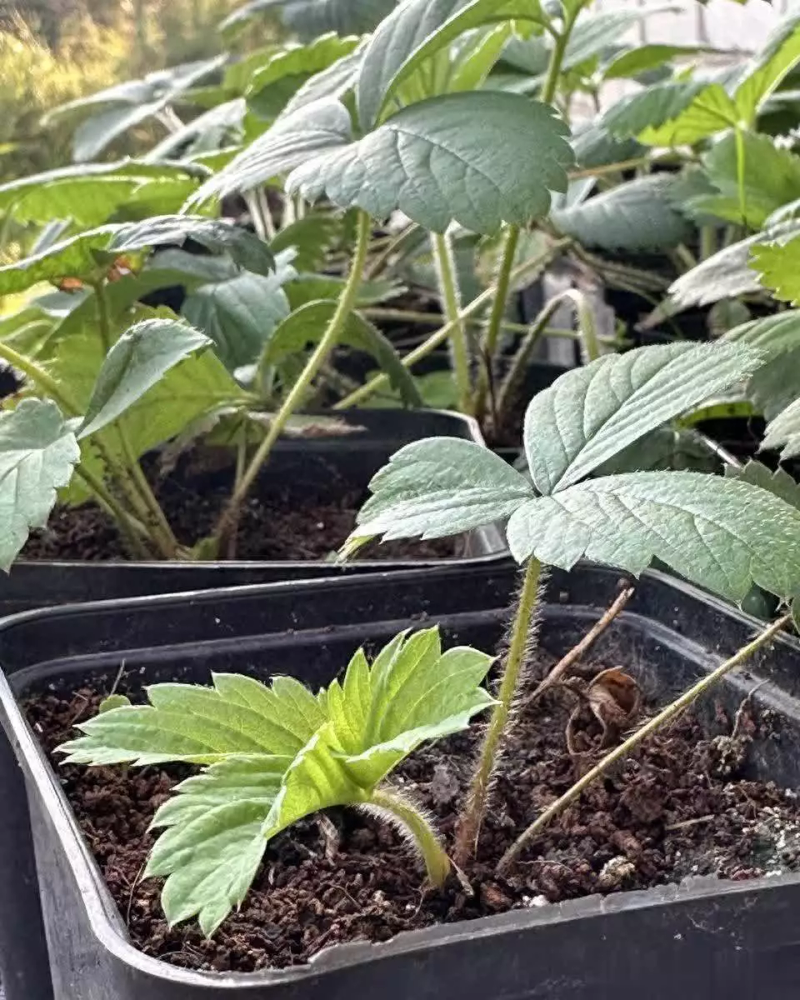
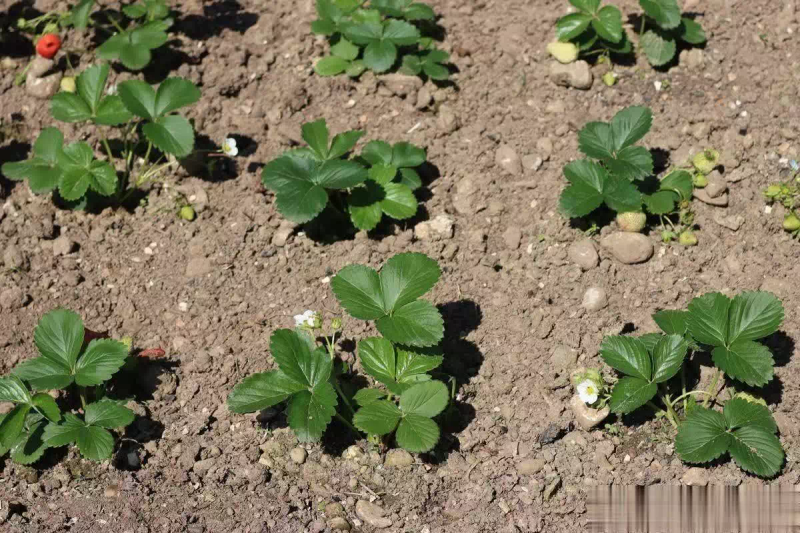
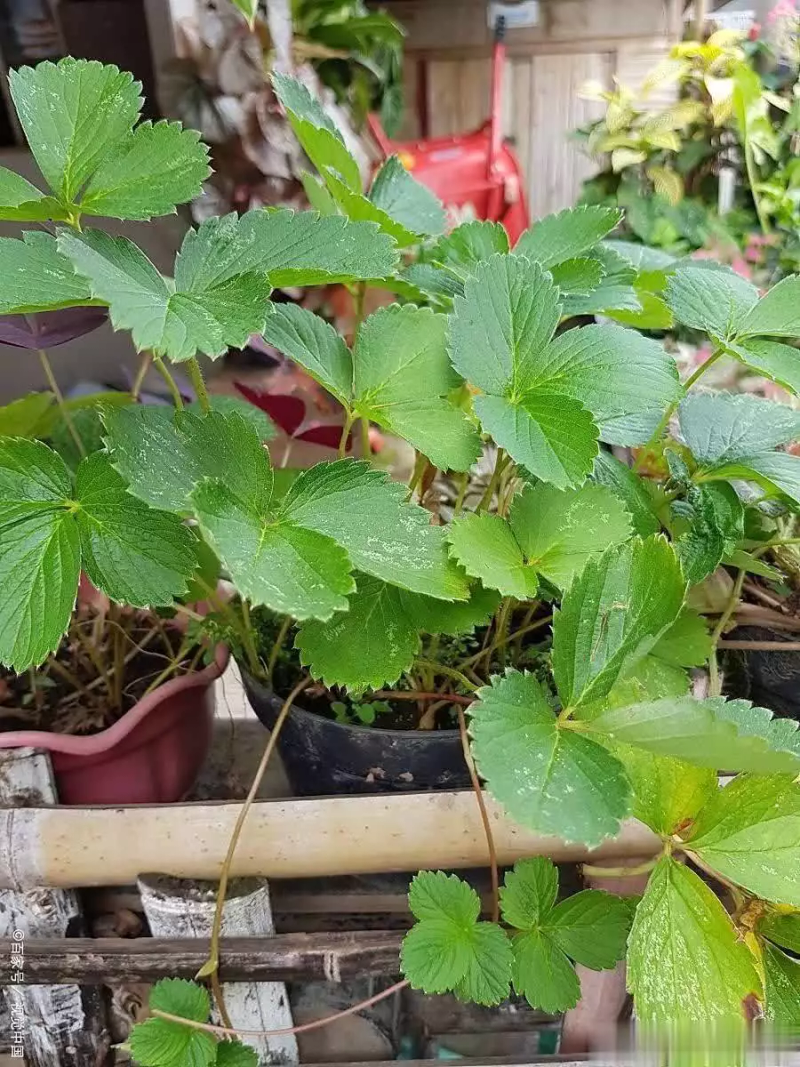
The autumn is a critical phase for strawberry seedlings, and mild conditions of light provide an enabling environment for seedlings to grow, but at the same time address the challenges of remaining heat, rain and pests. Science is well-managed for autumn strawberry seedlings, which is directly related to the robustness of the seedlings, the quality of the lumbering and subsequent production and quality. This paper will elaborate on the core technical elements of the autumn strawberry seedlings in terms of environmental regulation, hydrofertilizer management, plant management, pest control, etc。
I. Location and preparation of nursery beds
(i) location requirements
Strawberry seeding bases should select sandy or border soil that is flat, easy to drain, soil estranged and fertile, with high organic content, and have not been grown in the front crops to reduce the risk of endemic diseases. At the same time, good ventilation is required at nursery sites to avoid infestation and pests in hot and wet environments。
(ii) slim bed preparation
The nursery bed needs to be thoroughly organized before the fall. First, weeds in the fields, leaves left over leaves are removed and pests and pests are reduced; then deep-tilled soil is about 30 cm, combined with deep cultivation of about 2,000 to 3000 kg of roted organic fertilizer per acre, 50 kg of tridollar compound fertilizer (n2-phosphate-purple = 15-15-15) to increase soil fertility; and finally, dredges are flat, made to a width of 1. 2 to 1. 5 m and 20 to 30 cm high, with a range of 30 to 40 cm to facilitate drainage and field operations。
Ii. Typology selection and mother-planting
(i) choice of varieties
Autumn breeding requires selection of suitable varieties according to local climatic conditions, market demand and cultivation patterns. In the north, it is advisable to select species that are cold-resistant and have long hibernation periods, such as “all star” “frandy” and in the south, such as “zhang ji” “red”. At the same time, a high-quality, disease-free and robust mother-to-child strain should be selected to ensure quality。
(ii) mother plant
The mother-planting period is usually in mid-august, when temperatures are suitable for the mother-baby seedlings and tubers. Pre-plant roots are trimmed up to 10-15 cm, root and disease are removed and the health root system is preserved. Plantation is done at 50 cm by 80 cm length of line, with the roots being kept stretching, and the depths of the plant being “deeply unheard, shallowly unexplored”, i. E., so that the heart is not too deep to cause the root to be naked. After planting, the root water is poured out in a timely manner to facilitate the close integration of the roots with the soil。
Environmental regulation
(i) temperature management
Temperatures were high in the pre-autumn period and needed to be reduced. When temperatures exceed 30 °c, sunnets with about 50 % shade or sprays can be used to cool to avoid high temperature burning of young children. Following the gradual decline in temperature in mid-september, the sun-shield net should be dismantled in a timely manner to increase light time and to promote the growth and fusion of seedlings. At night temperatures of less than 10°c, thin membranes are covered to prevent the freezing of seedlings。
(ii) humidity management
Strawberry seedlings grow with an appropriate soil moisture of 60-70 per cent of the water held in the field and a relative air moisture of 70-80 per cent. The heavy rainfall in the pre-fall period requires the timely cleaning of ditches in order to ensure a smooth discharge and to avoid the degradation of the roots of the seedbed water; during drought periods, water should be watered in a timely manner, soil should be kept wet, water should be watered in the morning or evening and should be drip or sprayed to avoid flooding. It also reduces the occurrence of pests and diseases by reducing air moisture through reasonable ventilation。
(iii) light management
Strawberries are radiant crops, and adequate light is conducive to light cooperation and seedlings. During the autumn nursery period, light should be guaranteed for not less than eight hours per day, and in the event of a rainy weather, the deficiency of light can be compensated by artificial light recharge, such as the use of led light. In addition, weeds and leaves in the fields were removed in a timely manner, and ventilation was maintained to improve light utilization。
Iv. Water management technology
(i) fertilizer management
In autumn, strawberries must be fertilized rationally in accordance with the growth of the seedlings and in accordance with the principle of “frequent application”. The mother's plant is grown 10-15 days after the date of planting, with 500 kg of rotting human urine or 5 kg of urea per acre, which promotes the growth of the mother's seedlings and new leaves; the three-dollar compound fattening 10-15 kg per acre, which assists in the growth of the stem and the rooting of the seedlings; and the three-dollar complex fattening of 15-20 kg per acre every 15-20 days, with the application of 0. 2% of the potassium solutions of phosphorus acid 2-3 times, which enhances the resilience of young seedlings and the accumulation of nutrients. Fertilizers are applied in such a way as to avoid direct exposure to young leaves and roots in order to prevent burns。
(ii) water management
Soils should be kept humid and watered one or two times a day to ensure sufficient water intake in the root system before planting, and the soil should be kept dry and wet (after the surface soil is dry) to avoid the disease caused by overwetting. Water should be given in the morning of the sun, and should be ploughed in a timely manner, with a view to improving soil permeability and root growth. In case of heavy rains, timely drainage is required to prevent the accumulation of water in seedbeds。
Plantation and roast management
(i) plantation
Strawberry strains are regularly collated to remove spare leaves from old leaves, yellow leaves, sick leaves and runners in time to reduce nutrient consumption and pest transmission. If there are too many sides in the growth of the mother strain, two to three sprouts should be preserved, the rest removed and the nutrients concentrated on the growth of the runners。
(ii) roast management
After the sprain has been pumped, it should be directed in time to the empty area of the nursery, avoiding entangling to influence the seedlings to grow. When the seedlings on the tubers produce two to three real leaves, they are allowed to grow chickens in the seedlings' base and to promote their roots. Five to six strong runners per mother, three to four seedlings per stem, and the rest of the tubers and seedlings are removed in time to ensure their growth and strength。
Integrated pest management
(i) prevention of common diseases
Frequent diseases such as anthrax, powder, roots and so on are found in the fall of strawberry. In the early stages of anthrax, 25 per cent of fresh acetamine cream may be sprayed with 1000 times more liquids or 50 per cent more than 50 per cent more than filamentable powder, which is sprayed 2-3 times every 7-10 days; platinum can be treated with 40 per cent of fluorosiliac cream 3,000 times more liquids or 10 per cent more than 1,500 times more liquid spray sprayed with diluent acetylene water; root disease can be treated by rooting, with 50 per cent of ferocious humid powders 800 times more liquids or 30 per cent of fertilizers 1,000 times more liquids and 200-300 ml liquids per irrigation。
(ii) common pest control
The common pests are aphids, red spiders, euphemisms, etc. Aphids can be treated with 10 per cent aphids, 1,500 times more humid powder, or 25 per cent aphid, with a dispersed particle agent of 2,000 times the spray; red spiders can spray 20 per cent avil cream with 20 per cent or 5 per cent acetone emulsion with 1,500 times the fluid; and underground pests, such as thorium, can be treated with 3 per cent per acre with 2-3 kg of thion granule agent or with 50 per cent of thiophosphate emulsifiable milk with 1,000 times the root during the onset of the disease。
(iii) integrated responses
Strengthen field management to keep seedbeds clean and ventilated, and rationally close planting to avoid reconnection; select disease-free mother strains and resistant varieties; conduct regular inspections of fields to detect the timely removal and centralized destruction of strains and strains in order to prevent the spread of pests and diseases; and reduce the use of chemical pesticides using physical control methods, such as yellow-board baiting aphids, blue-board booby traps, etc。
Vii. Standing standards and employment
(i) standards for seedlings
Autumn strawberry seedling standards: 5-6 healthy leaves, 15-20 cm tall, 0. 8-1. 0 cm thick, well-developed, multi-skinned and white, free of pests and mechanical damage. At this time, seedlings are well divided, with high survival rates and high yield potential。
(ii) sapling planting
The seedlings can be planted when they meet the requirements for seedlings. One or two days before the sapling, a permeation of water is provided to reduce the damage to the root system when the sprouts are made. The seedlings are excavated together with the soil surrounding the root system to avoid the bare seedlings; if transported over long distances, the water loss is prevented by the wet sheeting of the roots. The planting time is usually in mid-october, with the same method as that of the mother plant, with due regard to rationally dense planting, and the spacing of the plant is based on the characteristics of the species (usually 20 cm x 30 cm)。
Autumn strawberry seed management is a system project that needs to take into account, inter alia, environmental conditions, variety characteristics, and planting techniques, and that provides a solid foundation for subsequent high-yield quality cultivation through scientific management measures. In actual production, management methods should be adapted flexibly to local realities to ensure the smooth running of nursery work。
Explore the world of the sea floor
Computer free fishing game, no download, no point
♪ strawberry seedlings ♪



