It's a key technology to fight the cold
Nisaguli abra et al
It is located on the north-west side of china, bordering kazakhstan in the west and north. A semi-arid continental climate in the meso-temperate zone, with an average annual temperature of 4. 7 °c and a precipitation of 280 mm, an average total solar radiation of 565. 218 kj/cm2, an average annual sunlight of 2,800 h and a frost period of 155 d. The towers are inverse to the temperature zone during the winter, and they're thick, and they're long. In 2019, the tacheng division of the academy of agricultural sciences of liaoning province began its work on technical assistance for the introduction of a new species selected by the institute of fruit tree science of liaoning province. In 1994, with a mix of `premium' and `gold souffle', it was recorded in 2009 through the office of non-main crop varieties in liaoning province。
Main characteristics
1. 1 fruit economics
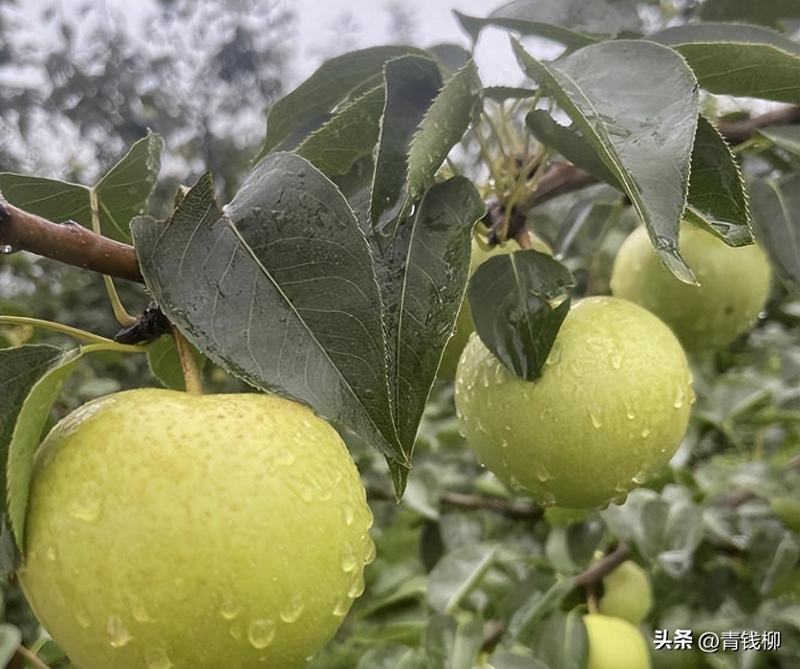
Vegetable hammers, green yellow, thin skins; meat smelt, juicy juice, sweet flavour, small stone cells. In the tower area, the average is 190 g of single fruit, with a total sugar content of 11. 857 per cent, 0. 252 per cent of imitable acid, and 4. 76 kg/cm2 of hard fruit, with an extremely high quality。
1. 2 growing results habits
Growing strong, the larvae grows straight, four years old tree tall, 22 cm dry, 220 cm crowns x 180 cm. The embryonic rate is high at an average of 75. 8 per cent. Strong branch, average 3. 4. Entropy sprouts are higher, accounting for 28. 9 per cent of the total sprouts, with high capacity for continuous results. It's 2. 4 in each sequence. After planting, the results began in the second year, the fourth year of which entered the festivities with premature, productive and steady production。
1. 3 equivalent period
In the ta city area, the springing of late april, the beginning of 6 may, the blooming of 10 may, the ripening of the fruits on 25 july and the fall of the leaves in the first half of november, the nutrients of about 200 d long。
1. 4 adaptation
The pox disease is severe, at 84. 3 per cent on average, and it was never detected by the fruit. On 15 january 2023, there was a rare cold in the area of tall city - 30°c, when the four-year-old `premature soufflé' did not show any frost and the older the tree, the stronger it was。
2 elements of cultivation techniques
2. 1 construction
The choice is to build a park in the middle of the slopes of the sun or open flat. A backwind can reduce cold winds and increase the temperature of orchards; the upper part of the slope is well drained to avoid the freezing of the roots of the water; and the open and flat ground is well ventilated and contributes to the growth of pear trees. The construction of plantations in valleys and low-lying areas, where cold air is concentrated and freezing in winter, is avoided. The choice of deep, fertile, well-drained sandy or bordery soil, which is well ventilated and has a certain capacity to hold water, provides suitable micro-environmental conditions for the absorption of plant roots and nutrients. Soil ph is appropriate at 6. 5 ~ 7. 5, otherwise it affects the absorption of nutrients in pear trees. Before planting, the soil is improved in depth, increasing soil fertility and ventilation。
2. 2 cultivation and selection
2. 2. 1 cultivation of cold-resistant trees
In the spring of the year before the establishment, a pear seedling meeting the “two-eight” criterion (80 cm tall and 8 mm long) could be cultivated, and `premium soak' pears and the corresponding pollination varieties could be contracted at 40 cm above the surface. There is a need to strengthen fattening and integrated pest management measures during growth to ensure that the height of trees is above 1. 5 m in the autumn of the year. The seedling, storage and disposal of the leaves are carried out after the fall period, in preparation for the next year's park。
2. 2. 2 tree selection
The choice is for a 2-year high-quality tree with well-developed roots, disease-free pests, dry tubers and full eyes. The development of roots enhances the capacity of trees to absorb moisture and nutrients and improves their resilience to colds; the absence of disease and pests ensures healthy growth of trees; and the strong growth of dry, luminous trees favouring early outcomes and production。
2. 3 integrative shearing
2. 3. 1 tree selection
Pears in the tar city area are suitable for the development of hammer shapes, with the main backbone standing up and evenly distributed single-axis extension branches from 60 cm above the ground, at intervals of 15-20 cm. This tree is well ventilated, easy to manage, contributes to improving the quality and productivity of fruit and is more resistant to cold。
2. 3. 2 period and method of trim
The winter cutting should be carried out before the onset, mainly by removing the twigs, competitions, long branches, dead branches and pests, optimizing the tree crown structure, increasing permeability, reducing nutrient consumption and improving cold resistance. At the same time, the outcome branch has been modestly retrenched to maintain its growth and outcome potential. In the summer, shearing, technical measures such as sprouts, grafts and stretches, can be effective in curbing new overgrowth, optimizing the spatial distribution of branches and promoting the fragmentation of buds. Elimination of redundant buds and lumbers and reduction of nutrient consumption. Carcinating for the flourishing new steps, promoting branching and growth. Draw smaller branches to levels or downwards to moderate growth and foster budding。
2. 4 soil water management
2. 4. 1 soil management
Vegetable grass growing white leaves and rye, among other things, between fruit tree lines can increase soil organic content, increase soil pellets and increase soil fertility, and can also regulate the small orchard climate and mitigate freezing. The grass grows to around 30 cm and is cut to cover under the tree。
Deep overwhelming and improvement. This can be done after the harvest of fruit and before the fall of leaves. The tillage depth is at 30 to 40 cm. It can effectively break the slabs, improve the aqueous performance of the soil and promote root system development。
2. 4. 2 fertilizer management
Early application of base fertilizer after harvest of fall fruit. Base fat is dominated by decomposed farm fats, such as pig manure, cow manure, sheep manure, etc., with appropriate application of compound and trace element fat. Fertilizers are determined on the basis of the age of the tree, the direction of the tree, and the output, and are generally applied on a scale of 3,000 to 5,000 kg per farmer and 50 to 100 kg per farmer. Fertilizers are fully mixed with soil using fertilisation methods such as loops, radioactive trenches or opposite trenches, and then the soil is levelled。
Rational pursuit of fat. Nut fertilizer in the bud, which promotes new growth; fertilizer application in the flower, which increases sitting rates; potassium fertilizer in the fruit boom, which promotes the fruit boom; and nitrogen fertilizer in the fruit harvest, which restores the tree position and increases the nutrient accumulation of the tree. Fertilizers can be used for soil fertilisation or leaf spray, and soil fertilisation can be used to dig ditches or dig holes outside the canopy. Spraying of the leaves takes place in the morning or evening when there is no wind。
2. 4. 3 water management
Frozen water is filled with frozen water before the soil is frozen, which increases the water content of the soil, increases the heat capacity of the soil, stabilizes the temperature and mitigates freezing. The water intake is appropriate for the wet root system distribution layer, which is generally 80-100 m3 per 666. 7 m2。
Logically irrigated `premium guacamole' irrigation should be regulated by weather conditions and soil syllabi science. The bud, flower and fruit boom are critical periods for water, and adequate water supply should be ensured. Water drainage management needs to be strengthened during the rainy season in order to prevent the physico-deflation of the root areas, which causes a severe impact on tree growth and fruit quality。
2. 5 pest control
2. 5. 1 agriculture control
Strengthen field management, such as scientific fertilisation, irrigation and pest control, and increase tree orientation and disease resistance. A combination of proper trimmed garden sanitation, the burning or deep burial of dead leaves, the destruction of winter sites for harmful organisms and the reduction of their winter base。
2. 5. 2 physical control
In the orchard with a can of sugar and vinegar. Water = 3 :4 : 1 :20. Insects such as pear-eating, pear-eating, etc. Using insect light, black lights are installed in orchards and lights are turned on every night to induce the killing of the insect. In the early stages of disease and pests, artificial pest capture or removal of leaves and fruit reduces the spread of pests and diseases。
2. 5. 3 biological control
The protection and use of natural enemies and the release of natural insects, such as carbs, grasshoppers, ladybugs, etc., in orchards can effectively combat hazards such as red spiders and aphids. The use of biopesticides, such as bacillus souyun, lynchin and so forth, can reduce chemical pesticide use and pesticide residues。
2. 5. 4 chemical control
Effective, low-toxic, low-residency chemical formulations can be used for control in case of serious pests, and pesticide use norms should be strictly followed, with emphasis on the rotation and safety interval of the agent to prevent harmful biological resistance development and excess residue。
2. 6 winter protection measures
2. 6. 1 bread whiteness
Before winter, fruit tree trunks and main branches are evenly whited with white. The platinum is made of 10 limes, 1 sulfur powder, 1 salt, 0. 1 vegetable oil and 20 fresh water. White can reflect the sun, lower the day and night temperature of the trunk, prevent frost and sunburn, and kill bacteria, eggs and insects hidden in the trunk。
2. 6. 2 surface cover
Coverage is carried out within the fruit tree line using organic materials such as straw, weed, weed, corn straw, etc., which should be controlled at 10-15 cm thickness. This measure can effectively prevent the infestation of root systems by cold air currents and significantly reduce soil evaporation in order to protect against warming. The coverage process should ensure that the material is distributed evenly and is accompanied by land-covered fixation to prevent wind disturbances. For 1 to 3 years of larvae, 1 m2 of the membrane can be covered before the frost falls in order to maintain suitable soil moisture。
2. 6. 3 tree parcels
Pre-cold winter should be preceded by the use of limewater-impregnated grain grass or grass ropes entangled around trunks and main branches, which can effectively prevent cold winds and reduce water fragmentation, while having the effect of disinfection. The timely removal and incineration of entanglements following the recovery of spring temperatures could eliminate winter pests and increase the efficiency of orchard management。
2. 6. 4 soil irrigation
In the management of fruit trees over winter, a combination of cropping and fertilization should be used to produce 10-20 cm thick earth on the root neck, tree plate, using pond mud, river mud or soil. Freezing irrigation after hibernation, especially adequate water before the cryogenic effect, and the use of water body sub-heating to regulate soil temperature, can reduce temperature fluctuations, slow down budding and flowering, and ensure that fruit trees are safe from winter and frost。