


Spring is an important time for pears to take root and the season for planting. The following are the key elements of its planting techniques:
I. Selection of varieties
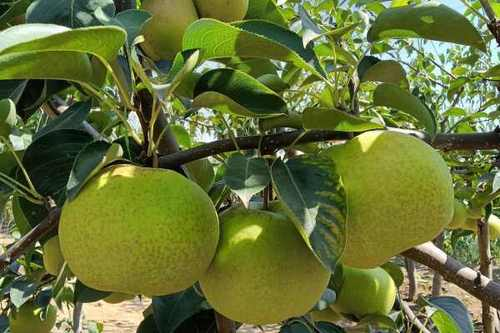
Pear varieties suitable for cultivation are selected according to market demand and local ecological conditions. Premature pear varieties such as crowns, crowns and early honeys are generally available. Pears, which belong to the alpine pollination fruit tree, require a 15 per cent pollination range of 85 per cent of the primary plant species to produce normal flowering results。
Ii. Timing
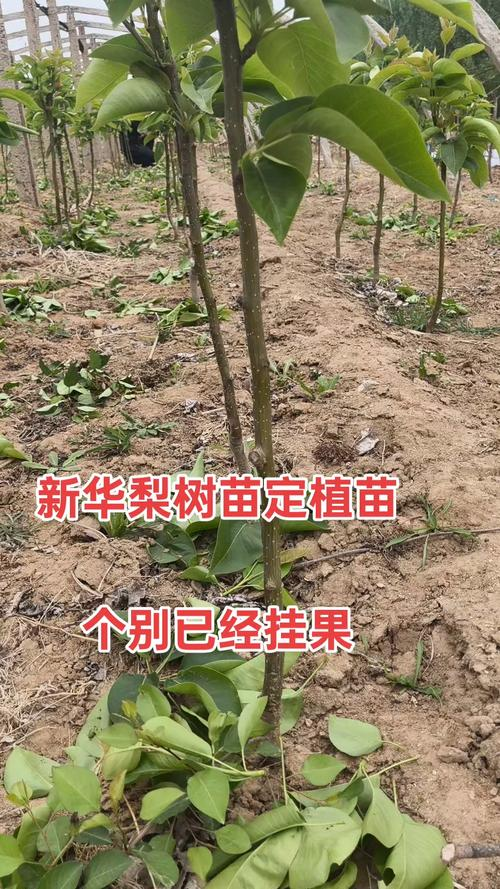
In general, planting is appropriate in the months of 2 to march or before the onset of the spring。
Iii. Planting methods
(i) lined location. Cultivation density is determined on the basis of the growth properties of pear trees, which are wired by the method of "pre-sorted before thin" planting, are wired by line, by the specification of 3x2 metres, and are marked by the placement of bamboo blocks at the intersection of its vertical and cross-line lines。
(ii) digging nests. At the location, a fixed nest about 60 cm in diameter and about 50 cm deep is dug. Organic fertilizers ranging from 3 to 4 kg of manure per nest mixed with calcium phosphate are used as base fertilizer. The layer is then refilled in the nest, about 30 cm above the original surface, forming “small earth piles” to prevent the planting of seedlings and the death of them as a result of their sinking。
(iii) pear planting. First, using a sharp knife, cutting a longitudinal cut at the dry matrimony interface, removing the membrane and cutting the roots of the bruising wounds, which are classified by the size of the pear so that it can be planted in the subregion。
Then it's settled. On the “small earth piles” of the established nests, a 20 x 20 cm nest is dug, where the pear seedlings are placed, with the pear seedlings up and down, at the distance, and the root is naturally spread around the nest, pressing the root with the mud。
Finally, the earth is filled back into the nest, carrying pears on top of it, stepping on it with its feet to stabilize it and filling it with water to make it work。
Iv. Post-plant management

When pears are planted alive, field management should be strengthened. - it's a pear. A bamboo pole of about 1 metre long was inserted by the pear, tied with ropes and set it straight. The second is weeding. When pear sprouts occur, about 30 centimetres from the main stem, a fertilizing ditch of approximately 50 centimetres long and 10 centimetres wide is dug, urea is applied to 0. 2 kg of urea per urea, the soil covers are filled in time, and a fast-effect nitrogen fertilizer is applied once a month between march and june of the year to promote pear seed growth. Third is to combat pests and diseases. When the budding new leaf grows to 3 to 5 cm, the timely spraying of a mixture of 20% more than 800 times the fungus and 10% more than 1,000 times the aphid, with one spray every 10 to 15 days and two to three successive sprays, can effectively prevent and treat pests such as pear rust and aphids and leaf moths。
Correspondent: don wonhua



