


The academy says that china's gmo system is second in the world after the united states
Network of observers official account number 2016. 09. 0811:46
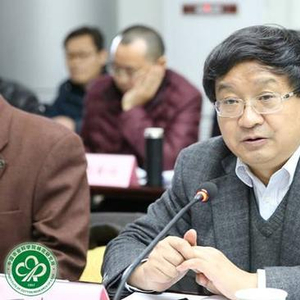
On 5 september, the fifth national media journalists' course on genetically modified sciences was held in changchun, where the chinese academy of engineering and the leading “chief engineer” of genetically modified genetically modified genetically modified technologies (gmos), huan jianming, presented major developments and revealed that china is most likely to take the lead in the industrialization of genetically modified herbicide soybeans and genetically modified anti-worm corn over the next five years. The head of the division of genetically modified biosafety and intellectual property rights of the department of science and education of the ministry of agriculture indicated that efforts were being made to convert genetically modified foods from qualitative to quantitative markings。
Wan added that, in general, china is at the second highest level in the world in terms of gmo systems (including technology and breeding), lagging behind the united states, but higher than countries such as japan, germany and the united kingdom。
On 8 august 2016, the state council issued the “xiii5” national science, technology and innovation plan, which states that during the “xiii5” period, it is necessary to promote the industrialization of major products such as new anti-worm cotton, anti-worm maize and anti-herbicide soybeans. The seminar, which was devoted to the theme “knowing about china's gm corn”, provided the media and the public with a better understanding of the needs, capabilities, etc. Of china's gm industry through discussions and exchanges。
Considerable progress has been made on major thematic issues
It is well known that in 2008, china set up a major project entitled “major gmos”, which will take 15 years to complete its project with an investment of rmb 24 billion (12 billion)。
At the current meeting, the people of huan had given details of significant and dedicated progress. There are both plants and animals that are highly specialized in genetically modified species, specifically rice, wheat, maize, soybeans, cotton, pigs, cattle and sheep. In the area of genetically modified agriculture, which is of greatest concern to all, there are currently 124 certified varieties and 6 safety certificates issued, including genetically modified cotton, genetically modified rice, genetically modified acidized maize and genetically modified papayas。
Of these, 124 were identified as genetically modified and resistant cotton. According to statistics, between 2008 and 2015, the cumulative expansion of genetically modified cotton was 400 million acres, representing 95 per cent of the domestic market, a reduction of 400,000 tons of pesticides and an economic benefit of 45 billion yuan。
According to wan, many new varieties of genetically modified cotton have also been developed, such as cotton that has recently been successful in combating yellow atrophy, and genetically modified cotton of improved quality. Since then, china's production of high-quality cotton can counterbalance the united states and australia without heavy dependence on imports。
According to the existing regulation on the management of genetically modified biosafety in agriculture, experiments with genetically modified organisms in agriculture should generally go through three stages of intermediate testing, environmental release and productive testing. That is to say, it is only through productive testing that it is possible to obtain a safety certificate; once a safety certificate has been obtained, it will be possible to industrialize through the validation of a variety. With the exception of genetically modified cotton and papayas, which were commercialized in the 1990s, genetically modified rice, genetically modified acid corn has not been commercialized since the certificate of safety. According to the 13th national science, technology and innovation plan, some varieties will continue to receive safety certificates in the future and may start commercialization。
During the meeting, journalists asked which varieties were most likely to serve as “break-throughs” for commercialization in the future, saying that genetically modified herbicide soybeans and anti-worm corn were most likely to take the lead in authorizing commercial cultivation, given the high market demand for both varieties, while the products were relatively mature and internationally competitive。
Genetically modified “welfare”: rice for blood production, fattening, blood pressure reduction
The most widely known are crops that are resistant to insects, diseases and herbicides, which are indeed the most common types of genetically modified crops, but also have some “welfare products”, which have the advantage that consumers are directly aware of their benefits。
The builders described three types of “special” genetically modified rice. The first is the use of rice for the production of pure blood protein, an important study done by professor yang dynasty of wuhan university, which uses genetically modified rice as a “biological reactor” to produce clean human protein for human use. The study is highly valuable because of its extensive and important medical use as an artificial plasma substitute。
Thesis by yang dynasty, “large-scale protection of funccioAn online publication on 31 october 2011 in the american academy of sciences journal, nal human serum albumin from transgenic rice seems to have attracted wide international attention。
The second is genetically modified rice, known as high resistance starch to genetically modified rice, which is conducive to diet. Simply put, when ordinary rice is eaten in, its starch composition is quickly digested and absorbed into sugar, which is not easily enzyme, but is finally excised, and it is a blessing for diabetics and dieters。
In addition, there are genetically modified rice for the benefit of high blood pressure patients, a trans-acei gene rice that allows for the efficient expression of the anthropogenic acoustic enzyme resistance (acei) in rice, thus contributing to the expansion of the blood vessels in the human body and inhibiting the rise of blood pressure。
China's level of genetically modified research: rice is the world's leading and others are catching up
The participants were concerned about whether china had core technology and patents on genetically modified products. According to wan jianmin, china has cloned 3160 genes in important shapes and obtained 137 genes of value in important breeding applications in research on genetic cloning and functional validation. That is to say, there has been a constant fear that europe and the united states have monopolized genetic patents, but the situation has changed considerably, and china has its own patent。
Chinese scientists are internationally leading in research in rice function genomics and genetic cloning, with 16 ncs papers published globally from 2014 to 2015, with 11 chinese scientists accounting for the world's leading genes in maize, wheat, soy cotton, etc。
In general, china is at the “second place in the world” in terms of gmo systems, lagging behind the united states, but higher than countries such as japan, germany and the united kingdom。
Significant specializations also include techniques for gmo testing, safety evaluation and technical standards and protocols, which are complementary to r & d applications and have done much work。
However, wan jianmin also mentioned that there are many weaknesses in genetic modification in china, most notably the lack of intellectual property protection capacity and the large gap between the number of important genetic patents and the united states. In addition, the industrialization of bioculture is low and there is a disconnect between research results and market demand。
"in thousands of experiments that have proven the safety of genetically modified persons."
During the course of the course, the head of the division of genetically modified biosafety and intellectual property rights of the department of science and education of the ministry of agriculture gave a presentation on the safety of genetically modified foods, about a thousand cases of which have been tested globally for safety assessment. Compared to the european commission, for 25 years more than 500 independent scientific teams have been involved in more than 130 research projects that try to find genetically modified crops or possible animal problems, but so many studies have not been found。
In china, 149 experiments have been conducted in accordance with international standards and no security problems have been detected. In addition, over the past two decades, 28 countries around the world have accumulated 30 billion acres of genetically modified crops, 65 countries and territories have eaten billions of genetically modified foods, and there has been no scientifically proven safety problem and evidence that genetically modified products are safe。
Forestang ming indicates that, through a comprehensive assessment of the high doses, full life cycle and multi-algebraics of animal models, genetically modified products are free of harmful substances and do not have a material basis for harm to future generations and to more generations。
“gmos are the most in-depth, tested and regulated category of agricultural products to date. None of our traditional foods have ever been tested like this, and it can be said that approved genetically modified foods are the safest ones.”。
The revision of the gmo system is being promoted
Before that, china introduced a system of characterization of genetically modified organisms, i. E., the identification of genetically modified components in foodstuffs, as long as they were present in the catalogue. For example, 5 per cent for japan and taiwan, 3 per cent for korea and 0. 9 per cent for the european union. Like the european union, if 100 pounds of soybeans were to be identified with more than 0. 9 per cent of them, less than that would be necessary。
Im changming stated that qualitative marking was not scientific and that the ministry of agriculture had been coordinating with the legal office of the state council and other departments to promote the revision of the system of marking genetically modified genes。
It is also indicated that in recent years there have been some sporadic proliferation of genetically modified materials, mainly in research and development units, not only universities, research institutes but also in enterprises. The difficulty of regulating is that china’s few hundred small r & d units and some illegals have stolen seeds from abroad to experiment with breeding, unlike in the united states, where only six companies actually do genetically modified breeding, so china’s regulation is difficult。
At the same time, it was stressed that the fight against illicitly grown genetically modified crops was not motivated by security concerns, but rather by violations of the seeds act and the patent act and the regulation on agro-gmo biosafety。
The advantage of china’s industrialization is its localization
According to zhang shiping, a scientist in the field of agro-biosciences, chinese seed companies are clearly disadvantaged in terms of industrial layout and financial investment compared with international tncs. For example, multinational enterprises are starting to reach 20 million in the past day, while china's major gmo budget is divided over 15 years, with more than 20 billion dollars in co-financing from central and local governments。
However, zhang se ping believes that china also has its own advantage, since we are targeting the chinese market, conducting research and development on our own soil, such as genetically modified maize, asian corn troubles, eastern sticky worms, etc., and so on, so that our products can quickly adapt to china’s agricultural cultivation, while the united states products are targeting the united states corn pests。
Zhang se ping firmly believes that chinese enterprises can concentrate their r & d on several niche industries, such as maize and soybeans, and that if policies are open and social support is provided, there will be large agricultural enterprises in china in the future。
Genetically modified industries also need to solve their attendant problems
According to huang dae-hwan, a researcher at the china institute of agricultural science and technology, the publication of the “13th five” programme on science, technology and innovation did not mean that the industrialization of transgenics would be imminent, with some obstacles and problems to be overcome。
First, there was a need for further conceptual change, especially among management officials, to be truly coherent and central and to act. Second, the original provisions that were not suitable for industrial development, including some provisions on safety evaluation, species validation, which were not consistent with international standards and lacked a scientific basis, needed to be revised。
It is not scientifically justified, according to wong, that the validation of varieties should be made clear as soon as possible, so that three or five more years after the issuance of the safety certificate are no longer possible. Without firm determination and favourable measures, the industrialization of genetically modified organisms could be delayed. (reporter/kinchi)



