


How should grapes grow? Don't think it's a technical job, but if you find the right way, the new guy can harvest a sweet fruit! Many have failed in planting, either in the wrong breed or in management, and today the key steps in the cultivation of grapes are to be broken apart, made clear in big white, and do so less inverted。
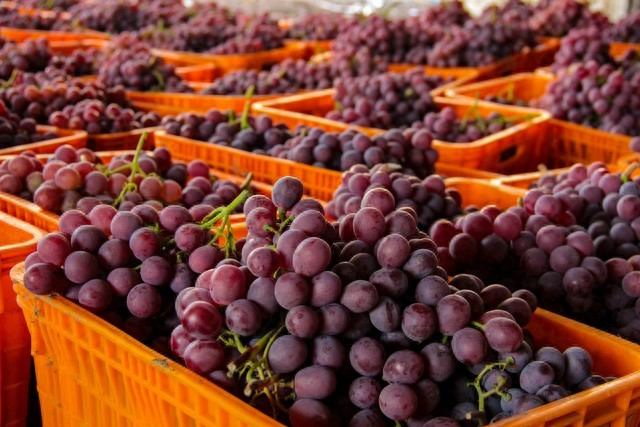
The choice of varieties and the timing of planting is the first step, so do not be blindly chosen. In the south, when the weather is hot and the rain is heavy, the high peaks, the summer black, the sun roses are chosen. These varieties are resistant to disease and need not take too much care of themselves. In the north, the winter is cold, the air is dry, the red is colder, the roses and the cactus are more resistant to freezing. It's easy to get small ground if you pick a dwarf like mini roses. Cultivation times are preferred in the spring for 3-4 months, with the soil unfrozen and pre-emerging with an extremely high rate of survival; the southern autumn for 9-10 months also works, with the roots recovering fast and growing in the coming years. The area chosen for planting must be bright enough, with at least six hours of sun per day, otherwise the fruit is small and acidic; the soil needs to be soaked, so that the low-lying water can not be sown, and the pellets must be ploughed with foliage, garden land, river sand and 4:3:2 mixed with a bit of rotting goat dung to be fattening。
Before we plant the trees, cut the broken roots and branches, clear the blisters for six to eight hours, disinfect them with the polybacterium for 10 minutes and dry them. A 50-cm wide, 40-cm deep pit, a 10-cm bottom bunk of organic fattening, covered soil seedlings to avoid the manure hitting its roots; a 30-40cm basin with potted pots of pottery draining, filling up with seedlings, pouring down the root water, draught the sun in the shade 7-10 days。
Here we share a central view: grape cultivation is high, details are controlling and patience are needed! Many newcomers rush for grapes and ignore small details of day-to-day management, such as watering too many rotten roots, cutting too many poor ventilations and, ultimately, not producing results or poor fruit quality. In fact, grapes, like humans, require gradual conservation, such as fertilization, which is not much of a waste, and “difficultness”, which cannot be softly trimmed and which must be trimmed, so that the nutrients can be concentrated in the provision of fruit. Especially during the expansion period, grapes are anti-chlorine crops, and never use potassium chloride, pick potassium sulphate complex fertilizer, mix it with fatty fattening, root fattening and leaf spraying, and fruits are big and sweet and not easily fissure。
The day-to-day management focuses on the three points of fertilizer, tree shape, and flower fruit. In water fertilizers, nitrogen fattening leaves in the bud, nitrous phosphorus in the flower and bovine corrosive fruit in the flowering season, with a focus on permutation of potassium in the fertilizer season; water and other water, with more fermentation periods, 10 days before maturity, less water and sweeter fruit. Trees are to be laid, fences are to be planted and sheds are to be set for the yard; in winter, weak and ill branches are to be cut with strong female branches, and in summer the buds are to be sprouted and the shelf is to be radiant. The flower fruit management requires twirling, with one or two pecks per branch, 15 to 20 grains per string of fruit, soybeans bag, pre-jecting microbicides, and pests and pests that even the colour of fruit。
Pest management remembers that “prevents are the main problem”, normally cleans up the faller fruit, disinfects pre-sprouts with thiomers, sprays microbicides every 10 to 15 days during the rainy season, and uses them interchangeably to avoid resistance; pests are safe and environmentally friendly with cedars or biological pesticides. When the colour of the fruit reaches the standard and the grain is full of elasticity and sweetness, it can be collected in the morning or evening, with a small amount of fruit handle to be cut, and it can be frozen after harvest。
It's not that hard to grow grapes, just pick the right varieties, find the right methods, fix every detail with your heart, wait patiently, and grow grapes from a small seed, enjoying the beauty of the vine and eating the sweet fruits of your own



