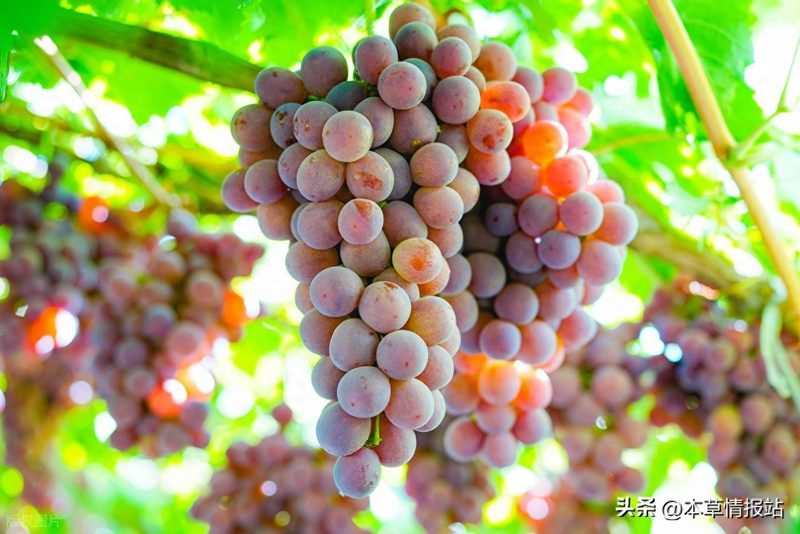
When and how grapes grow
The planting time of grapes is concentrated mainly in the spring and autumn, which usually take place between march and may, when the temperature is rising gradually and the soil moisture is moderate, which is conducive to the growth of grape seedlings, and in the autumn, which generally takes place between september and october, when the climate is stable, the temperature and humidity are appropriate, and when it is conducive to the healing and new root growth of grapes, with a higher rate of survival. In addition, some areas can be planted during the summer (may-july) or early spring (february-march), subject to flexible adaptation to local climatic conditions and variety characteristics。
Plantation methods
Site selection: grapes are suitable for planting in flat ground, well-drained, sun-rich and ventilated areas. The soil is based on fertile, loose, deep sandy or bordered soil with ph values ranging from 6. 0 to 7. 5。
Selection of varieties: selection of suitable varieties based on local climate, market demand and planting purposes. Fresh grapes can choose sunshine roses, peaks, summer blacks, etc., and wine-making wines can choose cactus, melo, chardolis, etc. At the same time, high-quality, pest-free seedlings are chosen, preferably detoxified。
The whole place and fertilizer:
(b) digs into the cleavages along the mountain level and in the north and south of the flat, planting them deep and wide by 60 to 80 centimetres。
Farmers are fat from 3 to 4 tons per acre, calcium per phosphate from 50 kg, ammonium carbon from 25 kg, and phosphorus from 50 kg as bottom fertilizer。
High-strength cultivation, 20 to 30 cm tall and 100 cm wide。
Plantation methods:
Digging well-established ditches or caves, applying a sufficient amount of organic and phosphorous fertilizer as the base, evenly mixed with soil。
And put the tree into a ditch or den, and stretch the roots, then fill it with soil, and pour out water。
The depth of planting is appropriate for the first bud of the seedling neck and the surrounding ground。
Array selection:
Fences: for weaker varieties, easy to manage。
(c) roof racks: for more growing varieties, for ventilation and fruit growth。
T-forms: combine the advantages of fences and sheds。
Integrative cut:
Winter trim: after the leaves fall and before the spring bud. Short-stamp trims (one to three buds), mid-stamps (four to six buds) or long-stamps (more than seven buds) are used, depending on the characteristics and direction of the species. Ignoring the branches, the tiny ones, the sick ones and the long ones, and preserving the strong ones。
Summer trims: including sprouts, tablets, grafts, etc. The embroidery takes place after the buds have matured and removes the excess buds; it is set to grow to between 15 and 20 centimetres and to determine the number of bequests according to the frame and tree pattern; it is carried out when it has grown to a certain length in order to promote the separation of the buds and the development of the fruit; and the by-doing is the detachment or disguising of the protrusion on the main stubble。
Soil management:
Weeding is carried out regularly to keep the soil loose。
Inter-walk grass or membranes can be covered to reduce water evaporation, inhibit weed growth and increase soil organicity。
Fertilizer management:
Base manure: following the harvest of the fall fruit and before the soil is frozen, organic fertilizers, such as decomposed animal manure, composting, school manure, etc., are used, with appropriate amounts of phosphorus and potassium. Fertilizing is generally 50 to 100 kg of organic fertilization per plant, based on tree age, yield and soil fertility。
Fertilizers: during the growth of grapes, different types of fertilizer are pursued according to the needs of different stages of growth. In the bud, nitrogen fertilizers are applied to promote new growth; before flowering, potassium phosphorus fertilizers are applied to improve sit-down rates; in the case of fruits, potassium fertilizers are applied to nitrogen phosphates in large periods to promote fruit growth; and in the case of fruits, potassium fertilizers are applied to the colour of the fruit to improve the quality of the fruit. Common foliage is urea, potassium dihydrophosphate, boron, zinc sulphate, etc。
Irrigation: grapes require sufficient moisture during growth, but the demand for moisture varies from one stage to another. In the bud, in the long run, and during the expansion of fruit, water is required in large quantities to water in a timely manner and to keep the soil wet; water is to be properly controlled during the flowering period and the maturity of the fruit, avoiding excessive watering leading to a deterioration in the quality of the flowers and fruit. Irrigation can take the form of drip irrigation, spraying or ditch irrigation。
Drainage: in the rainy season or areas with high groundwater levels, care should be taken to discharge in a timely manner to prevent the accumulation of water from causing oxygen deficiency and decay。