Cherry is a beautiful and tasteful fruit. In recent years, the economic value of cherries on the market has been so spectacular that supply has not been sufficient. At the peak, many people grew cherry trees to earn money, but found annual production to be unsatisfactory and far from expectations. The following mini-editor will tell you about a very productive method of planting cherry, and hopefully it will help your friends。
1. Timely planting。
Cherry trees grow relatively fragile. If plants are not cultivated at the right time, they either have a low survival rate, are congested and grow very weak after survival, or have a longer flowering period, with not only slow but low yields. Thus, the best planting season is the recovery season, with up to 95 per cent survival rates for cherries growing at the beginning of the spring. Second, the relatively high growth and physiological function of cherries growing at this time reduces the fruit period and results as soon as possible。
2. The density is reasonable。
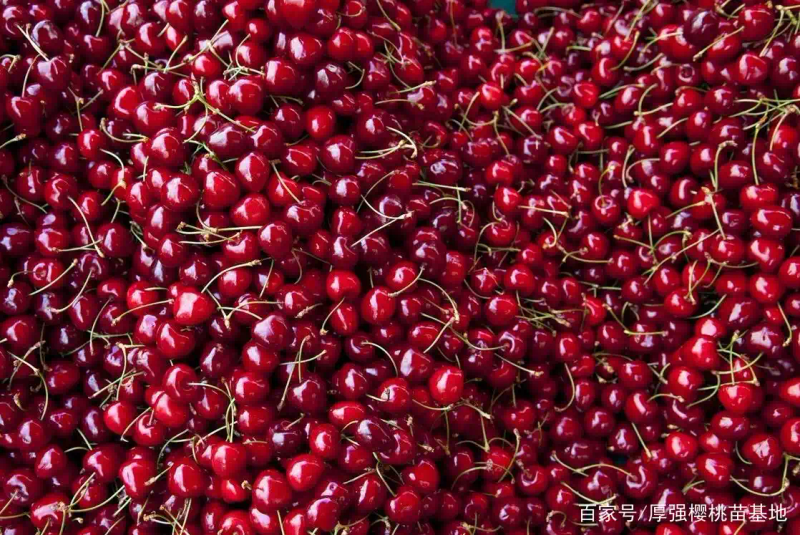
Cherry trees are not usually grown so high that they are not easy to harvest, so they grow as high as possible, so cultivation must be based on reasonable planting density. As a rule, an average of 200 cherry trees can be planted in an acre, with a distance of approximately 2 metres between each row and each plant, allowing for some stretching of the leaves of the cherry trees. At the same time, there is a gap in the management of the park that does not touch the leaves. Finally, it enhances the aerobics of the park with sufficient light to make the cherry grow better and its colour more evenly。
3. Fertilizer water management。
Fertilizer management plays a key role in cherry production. We need to water the cherries three times a year in order to ensure water supply in the fields, to make the cherries grow properly and to provide sufficient secondary moisture for the fruit. But when the fruits are ripe, do not water. In the meantime, it needs to accumulate sugar. If there's too much water, the cherries don't taste, they're dim. Fertilizers need to be applied at least three times a year, the first of which is the annual spring branch, which accelerates the growth of the branch, enters the flowering period early, the second flowering, increases the flowering period, increases the fruit rate, and the third is the expansion of the fruit, which can be sprayed with boron fertilizer to make the fruit more full and the colours more beautiful。
4. Park management。
The management of cherries generally refers to the trimination of leaves, lumber-cutting and clearing of gardens. The shearing leaves are mainly designed to maintain a reasonable density between gardens, followed by the cutting of branches, branches, thin branches, old branches, and then the new branches are more dynamic and more productive. In flowering and fruiting, care must be taken to control the fruit, which means that we need to knock out some good flowers in the garden, keep them well and increase the seating rate. Then, after the fruit, we need to knock out some sick, deformed and small fruit and keep the big and strong fruit. Finally, all the weeds, weeds, leaves and branches in the garden need to be cleaned up in order to reduce the impact of pests on the garden。
5. Disease prevention and treatment。
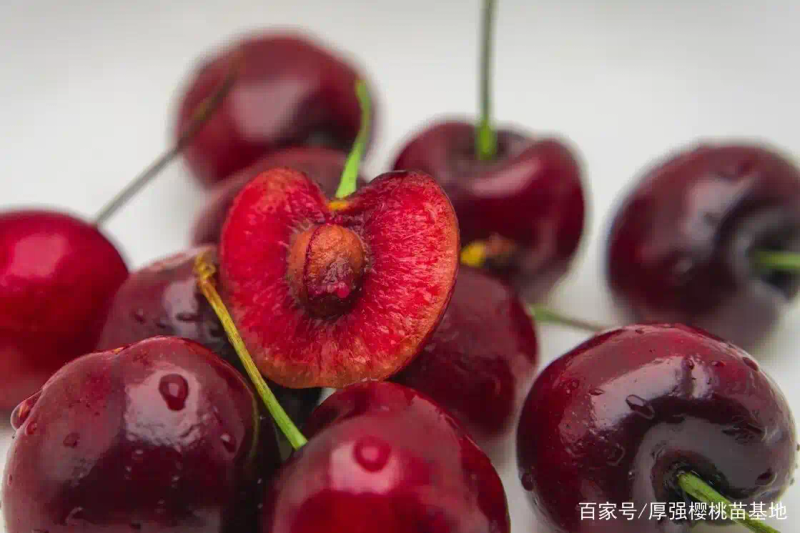
The main diseases of cherries are foliage, perforation, drying and brown rot. Leaf spots and perforation are very harmful to the leaves. We can prevent it with thiomers of 3-5 degrees, and polymix can be prevented and treated in the early stages of the disease. Dry diseases occur mainly on branches, and you find branches slowly dying, without water, that we can avoid if we manage the park properly. The symptoms of brown spots are slowly showing brown spots on the fruit and deepening, with we normally spraying 100 times 50 per cent of the cracks or 800 times 70 per cent of the methyl tobuzin before early flowering. The most common pests are pears, aphids, salbian worms, canoe caterpillars, etc. Of course, cherries also crack, affecting quality. We focus primarily on balanced water management and even light。