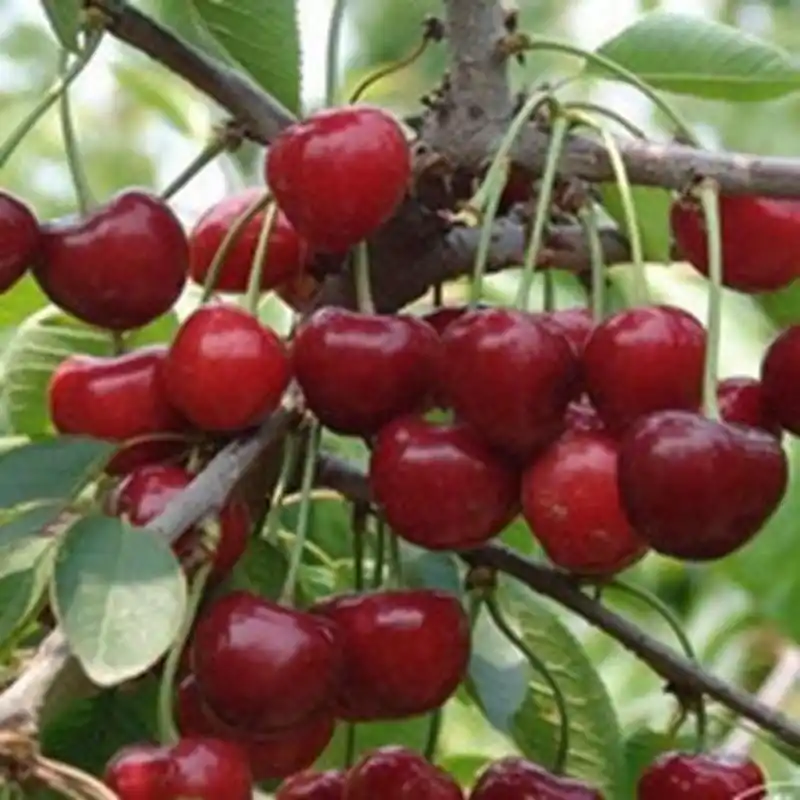
Peaches belong to the quavico tree, which is the main fruit plant in the south. Cherry is beautiful and nutritious, while its tree formations are beautiful and fragrance, and its value in viewing is extremely high and is one of the important tree species used in the garden. In recent years, the ecological surveyor garden, which is based on chinese cherries, has expanded rapidly and is well received by the local population, but is relatively extensive in production management and cultivation techniques, mainly due to inappropriate selection of varieties, late entry into the cherries and early tree decay. The following is a specific presentation on the ecological dwarfation techniques of chinese cherry cultivation in the lower and middle part of the yangtze river。
1. Choice of varieties
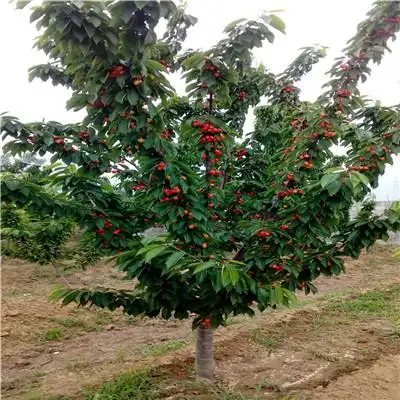
After many years of testing, the " black pearls" and " short-hand" species performed well and had a clear advantage compared with indicators of biological learning, growth, outcome, quality of fruit。
Cultivation
While the cherries have strong roots and are easily liveable, the tungsten seedlings are shown to be resistant, early tree decay, age and higher. Usually, in mid-march, cherries are used as a wood for a year of healthy branches. The seedlings form a bud in the nursery, planting 100 per cent of the adjoining fruit in the second year, and in the fourth year they enter the fruit season。
3. Plantation
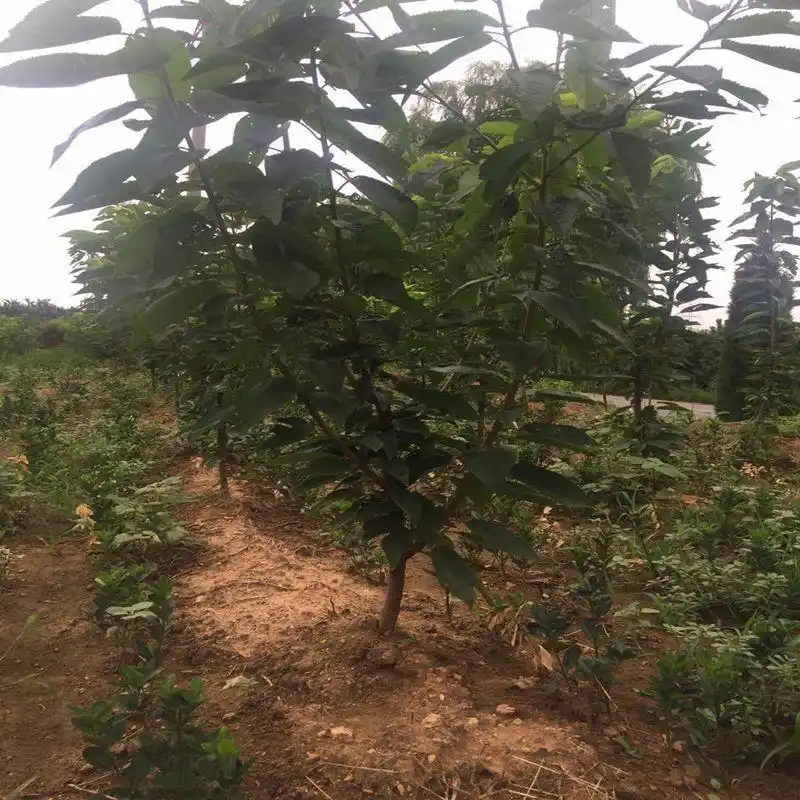
In march and december. It is appropriate to establish a garden on a slope of deep, lax and well-ventilated soil, and to plant it on a flat ground, around 30 cm tall. The choice of high-quality seedlings, the cutting of roots and the impregnation of 10 to 12 minutes with 600 times liquid multibreeding slurry and an appropriate amount of root powder is ablaze. It is established by digging holes, spreading roots, liftings and strutting lines. The depth of the ground is compatible with the original soil marks on the roots of the seedlings, and the water is filled with root water. Cultivation density is 2 mx4m, with 88 units per acre, and because of high self-absorption rates, pollination species are not required。
4. Cultivation management
In the 1st to 2nd year of planting, the ground cover of the orchards is low. Peak conversion is desirable in the autumn and can be combined with the application of base fertilizers. Weeding in china is mainly practised during the spring and summer seasons, where weeding can be used to increase the soil organic content of the garden and can be carried out in parallel with the conservation of the pine soil. After the third year of planting, more than 80 per cent of the park was covered by branches, and deep dens were expanded during the application of fertilizers in autumn。
5. Fertilizers
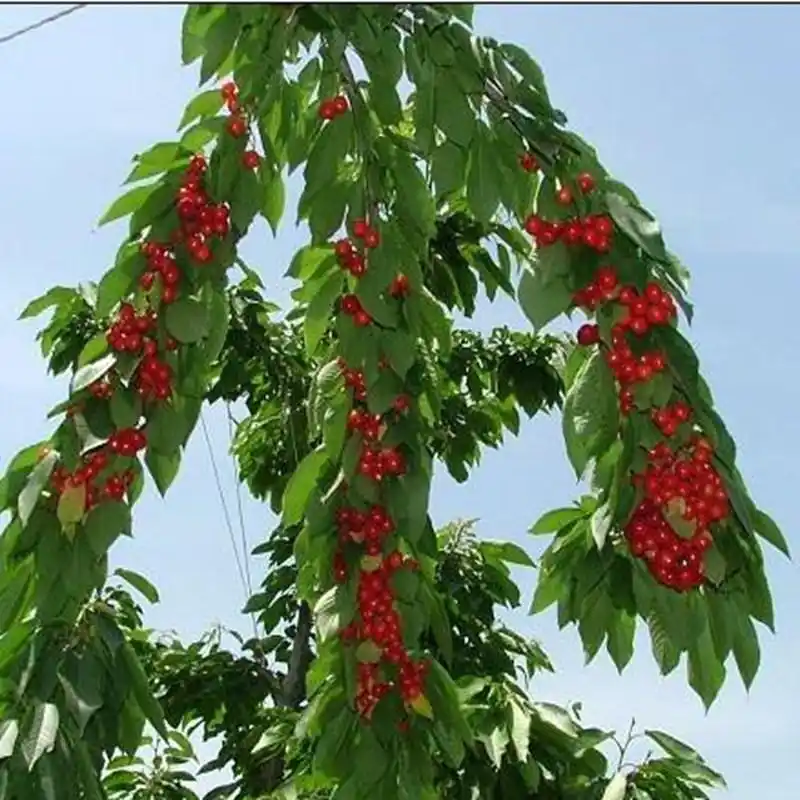
At the time of its gestation, the larvae was fertilized with nitrogen, two times with 0. 5% urea at half-month intervals, and then two times with 1%. Adult trees applied 0. 1 kg of compound fat, mainly nitrogen fertilizer, 0. 2 kg of compound fat, mainly potassium fertilizer, in front of flowers, and 0. 3 kg of combined fat, mainly phosphorus fertilizer, in post-harvest plants. Four long-term foliage fertilizers with trace elements. Sprayed 0. 2% ~ 0. 3% boar solution twice during flowering and increased sitting rate. In the autumn, organic fertilizers were applied around 30 kg in combination with deep-spread dens。
Water drainage and flood control after the rainy season can be carried out with proper irrigation in the context of fertilization in the autumn during drought, with a focus on the amount of water in the soil before pre-predation, hard nuclei and after leaf harvesting, especially during the hard nuclei to the second rapid expansion period of cherries, to stabilize the soil water content in the range of 10 to 30 cm at about 12 per cent, so as not to affect fruit expansion and prevent fisssures。
6. Integer trim
Cherry buds and branches are strong, and natural happy and free hammered trees are used. The first year was set at 40 cm, eliminating the 2nd to 3rd sprouts of cuttings, boosting the branches, and then pulling the large branches, 60°-80° of the basic corner. In the second year, the main dryer was about 60 cm, and in the autumn it continued to pull and train the main branch, and to dump the branches of the lower branch and the branches above which were levelled, so that when the new branch grew to 20 cm, it could be turned into a medium branch. The third year is essentially the same as the second year. Attention is paid to the removal of disease branches, weak branches, overstretched branches, and to the timely thought-provoking of new ones in order to promote the creation of branches and buds. From the fourth year onwards, the main focus is to provide care and orientation to the main branches, to control the growth and to promote the growth of buds. The overall objective is to keep it at a height of 2 m, with 15 to 20 branches, distributed on a three-tiered basis, with an opening angle of 60°-80°, staggered。
7. Flower fruit management
An effective increase in sit-in rates can be achieved through flowering of bees or application of soil microfertilizers (0. 2 per cent of potassium dihydrohydrophosphate and 0. 2 per cent of boron sand). In the case of late and weak flowers, it is common for a short branch of fruit to keep between three and four bouquets, with no more than five bouquets. In late february and in early march, in the middle and downstream parts of the yangtze river, frequent rainy days have had a significant impact on cherry-sitting fruit, and it is recommended that rain-shield cultivation be carried out in places where conditions exist to adequately mitigate the fibrosis and prevent bird damage when the fruit matures. In addition, planting can be facilitated through large shed facilities and delayed cultivation can be covered by sunnets。
8. Pest management
A combination of winter trimmed, with dead and sick branches cut and brought out for burning. Pre-winter sulfate kills pathogens. After the flowers, various pests, such as pomegranates and large grey elephants, are treated with 800 times liquid oxidated fruit. 1,500 times liquid hpcp or 1,200 times liquid. Combat pests such as green blind moths, yellow tail moths, pear ingesters, moths and gold turtles. In the case of leaves, 800 times more liquid methyl tobuzin was used to combat bacterial perforation, lignoma, lignosis etc。