


Technical overview
In response to soil degradation, such as marginalization of arable land, salinization, acidification and reduced conservation capacity, efficient support systems such as mechanization, seeding, efficient water fertilization and harvesting of potatoes in dams and dam-connected areas have been consolidated. The mechanized deep-dry cultivation of potatoes in the pre-birth period, high-strength cultivation, chinese cultivation for weeding and soil fertilization, and the application of integrated management techniques such as drip-drink fertilizer in the mid-term and later stages, soluble fertilizers are dissolved in the water, and water, such as moisture and fertilizers, are delivered to the potato root soil in a regular, quantitative and precise manner through drip irrigation systems. The target production generally ranges from 3. 5 to 5 tons/acre. Compared to conventional technology, acre water saving of more than 300 metres, fertilization of more than 20 kg, drug saving of 2 kg, labour savings of 10 kg, and increased production of more than 20%. This technology is applied to agricultural production areas with an altitude of 200 to 1,700 metres, an average annual temperature of 4 to 8°c, an effective temperature of ≥10°c of 2,200 to 3200°c, rainfall of 400 to 700 mm, a neutral or micro-acidity of 100 to 180 days during frostfree period, semi-humid semi-arid, non-polluting sources and suitable mechanized operations。
Ii. Whole-sowning and plumbing
(i) location
Potatoes have a wide range of adaptations to the soil, and the most suitable soil for growth is light border soil. Land parcels are required to be flat, with soil perturbation, thickness, good drainage, preservation of fattening and adequate sunlight. The target yield of medium-force plots (20-25 g/kg soil organic content, 1. 0-1. 5 g/kg nitrous, 25-30 mg/kg active phosphorus, 100-120 mg/kg fast potassium) was 3,500-5,000 kg/acre。
(ii) land as a whole
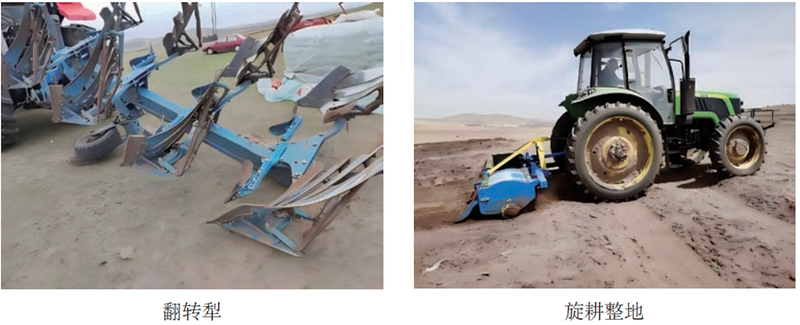
A tractor mechanizes the ground before planting in the spring. Before sowing, the soil is used for the conversion of ploughs, which are then rotated and levelled, followed by a one-time application of fertilisation, rise and sowing. A further 20 centimetres of ground was ploughed and then ploughed to the ground and then mechanically sowed. Parameters for overturn ploughs: 3 ploughs, 60 centimetres wide, 40 centimetres deep, 180 centimetres wide. Rotator parameters: 90 cropper blades, 20 cm till depth and 250 cm surface width. (b) a single rim, with a width of 0. 5 m, a drain ditch wide (mechanical belt) of 40 cm and a height of 35 to 45 cm。
(iii) selection and sowing
1. Selection of species: selection of high-quality, productive, resilient, locally appropriate, and commercially good potato varieties, such as dutch15, french-based, meioc-1, taiwan red, v7. Choose primary or higher detoxification potato. The sprouts weigh 30 to 50 grams and each sprout is not less than one sprout, and the sprouts are not longer than 0. 5 cm, full, even and bright。
2. Pre-damp treatment: 5 per cent potassium permanganate solution or 75 per cent ethanol soaked or disinfected with 1 to 2 minutes of pre-plant sprouts after 10 minutes of use or when they are cut to a sick or rotten potato. The slices are immediately mixed with saline-free plant grass-wood ash or plaster, with multibacterium (0. 3 per cent of the size of the potato) or mesmeric acid (0. 1 per cent of the weight of the potato), and are distributed to heal the wound and not accumulate too thick in order to prevent the scab. Scratch the bud and sow it. All rotting stubs and lumbers without buds are selected for destruction。
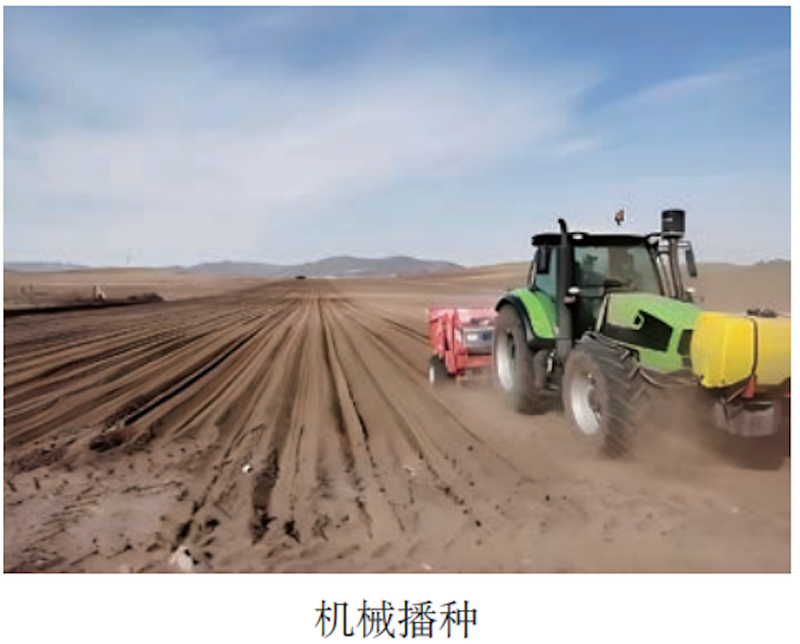
Sowing: mechanized seeding of tractors. Between mid-april and mid-may, on the right surface, the sprouts were spread evenly into the ditches from 16 to 18 centimetres and from 10 to 14 centimetres into open ditches, with one to two sprouts per cave, with an acre seeding of 150 to 190 kg and a cover thickness of 3 to 4 centimetres, so that the sprouts were closely bound to the soil and seeded 20 to 40 days later。
(iv) pipeline laying
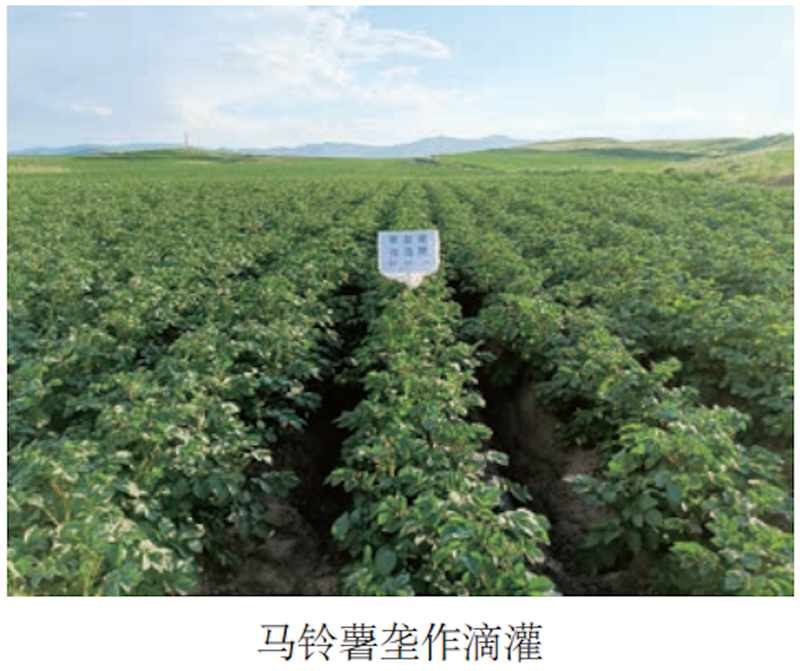
1. Establishment of irrigation systems: depending on the terrain and the plumbing system, irrigation systems are established taking into account the combination of effective wetting areas, the depth of the earth's layer, water pump pressure, etc., and the selection of the standard type of drip zone, drip spacing and pipe length, usually with a drip zone of 700 to 800 metres per acre。
2. Light dripping belts: usually a thin wall drip belt with a droplet, 20-30 cm between heads and a flow of 1. 0 - 1. 5 l/h. When seedlings are produced and they are 2 to 3 cm tall, the drip belts are laid on the floor, fixed at both ends of the poles, combined with the ground cover of 2 to 6 cm and connected to the surface sub-pipe. Integrated and fine management of water fertilizers in the form of drip fertilization is achieved by dripping the head of the fertilization facility。
Under-drive dripping can also be carried out with an epidural drip, 35 centimetres high, 30 centimetre wide on the top and 90 centimetres wide, with drip belts laid, two lines or a row of potatoes in the top of the cap, and a full mechanization of the pickle, fertilizer, seeding of potatoes and drip irrigation。
Iii. Fertilizer management
(i) fertilizer management
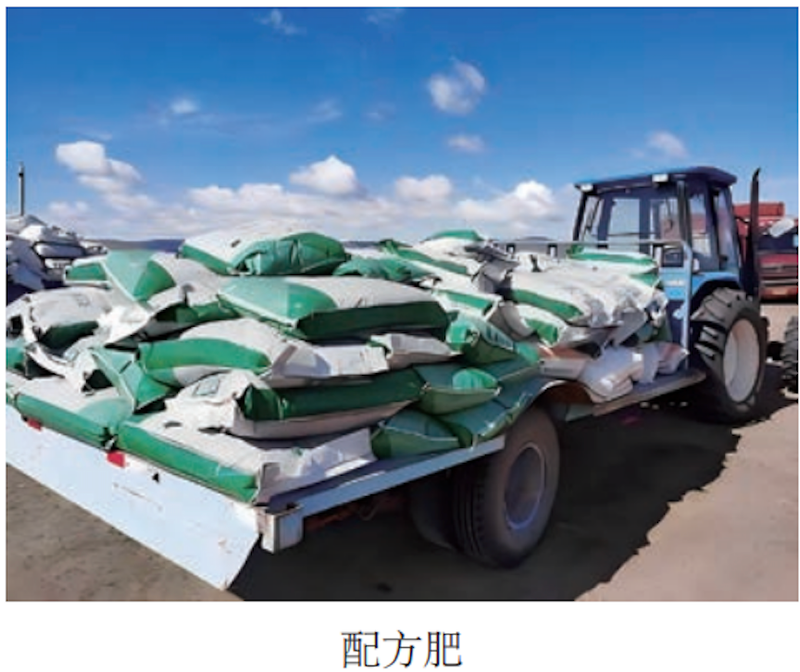
1. Soil formulation: soil samples are taken prior to the processing, fertilization and sowing of potatoes, and soil samples are analysed for organic matter, all nitrogen, active phosphorus, potassium permutation, ph and micronutrients. Based on the results of the soil tests, reasonable fertilization indicators are determined, i. E., the type, variety, usage, proportion, use and period of use of the fertilizer, taking into account the fertility properties of the soil and the target production of potatoes. The recommended target yield for medium-earth power was 3,500-5,000 kg/acre and the total recommended fertilizer application for potatoes for the whole reproductive period was 52 (n-p2o5-k2o 15. 5-12-24. 5)-74 kg (n-p2o-k2o 22-17-35)。
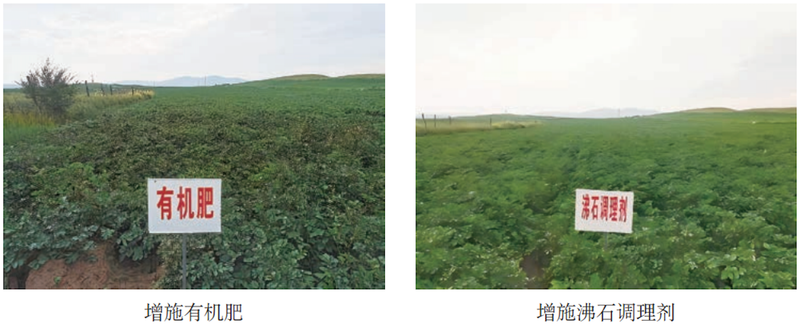
2. Increased organic fertilisation: spreading organic fertilizers evenly to the surface, tilling the ground as it is grounded, and increasing the supply of soil organic matter, beneficial microorganisms and micro- and meso elements. Organic manure acres use 500-1000 kg, reducing fertilizer use by 5-10%。
3. Increased regulation: balanced soil alkalinity with a boiler soil adjustment with an acreage of 80 - 100 kg. They spread all the boiling rock particles evenly over the surface of the earth with a fattening machine, so that when the earth is full, they are ploughed into the ground。
4. Biobacterial supplementation: supplementing microbacterial agents such as phosphorus, nitrogen, etc. To increase fertilizer utilization and prevent fertilizer loss. At seeding or at the end of the period, the combination of water fertilisation is applied, with an acreage of 3-5 kg。
5. Supplementation of micro-fertilizers: integrated hydro-fertilization or application of micro-element nutrients by drones; mechanized post-moderation or integrated hydro-fertilization of potatoes, supplementing micronutrients and balancing nutrient supplies with acreage of 1-3 litres。
6. Fertilizer application: first application at ground level, flat-sulphurized triple fertilisation, which accounts for 45 per cent of total fertility; second application at chinese tillage, which accounts for 30 per cent of total fertility; third application of integrated hydrofertilization systems for mid- and later periods, which provides 25 per cent of total fertility。
(ii) integrated management of water fertilizers
1. Water quantity and quantity: due to low temperatures and low demand for water in the pre-spring period, the frequency and quantity of water used are properly controlled. Soils have a relative water content of less than 60 per cent and drip when no natural precipitation is available. During the pre-natal period, water is usually poured between 5 and 6 times, 10 and 15 metres per acre. In the middle and later periods, the potato needs more water and more weight, with an appropriate increase in the quantity and frequency of fat water, and 15 to 20 metres per acre。
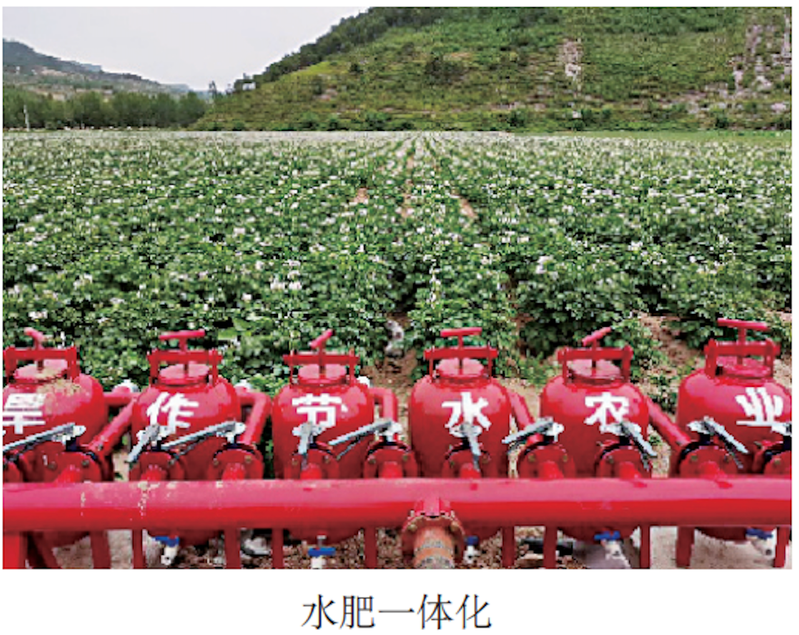
2. Fertilizer management: application of integrated water fertilization drip irrigation facilities, with a drop of between 0. 5 and 1 hour before application, followed by soluble application of fertilizers with water, with a fertilizer of between 1 and 2. 5 hours and with a drop of between 0. 5 and 1 hour after application. Four or five times during the whole reproductive period。
For the first time, water was poured: at the end of may (15-20 days after seeding of potatoes), the soil of the land on the frontier had a relative water content of less than 60 per cent and had no natural precipitation; water had to be poured once in an integrated water fertilizer facility, 10-15 m3 in acre and 3 to 4 hours in length。
Second, water fertilization integration: in early june (about 25 days after seeding), sulfur-based compound fertilizers were applied evenly with water, accounting for 5 per cent of all fertility fertilization。
Thirdly, water fertilisation integration: in early july (about 45 days after planting), sulfur-based compound fertilizers were applied evenly with water, accounting for 5 per cent of all fertility fertilization。
Fourth, water fertilisation integration: in early july (about 50 days after seeding), sulfur-based compound fertilizers were applied evenly with water, accounting for 5 per cent of all fertility fertilization。
Fifth, water fertilisation integration: in mid-july (about 60 days after seeding), sulfur-based potassium fertilizers were applied evenly with water, accounting for 5 per cent of all fertility fertilization。
Sixthly, water fertilisation integration: in late july (about 75 days after planting), sulfur-based potassium fertilisation was applied evenly with water, accounting for 5 per cent of all fertility fertilization。
The flowering period and the expansion period of the trough are peaks of water need, and water use is regulated by natural precipitation and soil moisture. Control of water before natural precipitation. When arable soils contain relatively less than 60 per cent of water, water use is increased appropriately and water is controlled in the later stages of growth and before harvest. In the event of flooding and excessive accumulation of water, timely drainage is used to prevent the decay of potatoes and the occurrence of early and late diseases。
Iv. Chemical regulation
Chemical regulation is required in a timely manner for those potatoes that are too nourished, and there are commonly used chemicals such as propyl. Cyclops were 10 ml in acreage and at a concentration of 2,000 times the fluid at a height of 45 to 50 cm during the spraying period. In case of hyperbole, the spray can be regulated twice: 2,000 times more when the first use is 5 ml and the seed is 45 to 50 cm; and 2,000 times more when the second use is 10 ml and the seed is 60 to 65 cm。
V. Other accompanying measures
(i) small seedlings
The seedlings are established when the potato seed is 5 cm tall, and the nests are 16 to 18 cm, and single dens are kept。
(ii) cropping
When the potato is seeded, two or three times the land is planted mechanically to keep the soil loose and weeds removed. It is followed by shallow tillage in a timely manner and is now a medium-term plowing of high-yielding land, with the final weeding before sealing. Plowing is carried out in due course after rain or water during the booming potato season. In the mid-term front, shallow farming was carried out to avoid damage to the root roots of potatoes。
(iii) pest management
Physical control: prevention of pests using physical measures such as light and colour booby traps. An oscillator lamp is installed for every 50 acres, and adult insects can be lured with sticky yellow traps。
Biological control: the conservation and use of natural occult herrings, etc., to plant maize, sorghum or sorghum on the edge of the field to promote the growth and development of natural enemies. Plant-based pesticides are used to control major pests with 1 per cent of the acre in the form of fertilin emulsion and alkaline。
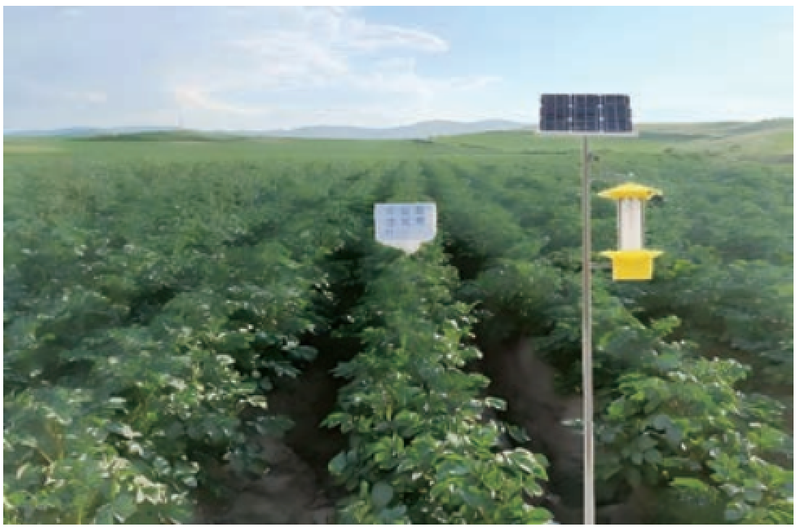
Bug-killing lanterns
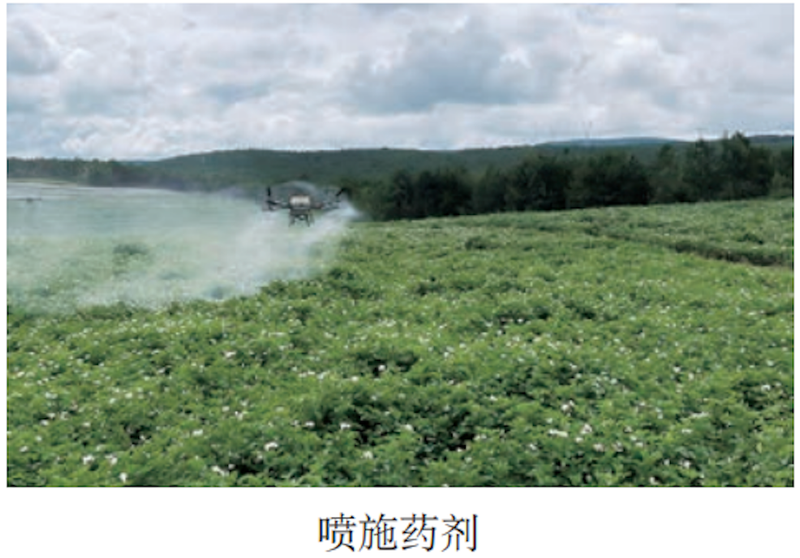
Chemical control: in order to ensure a productive harvest, green chemistry is needed 5-7 times throughout the reproductive period, especially during the high potato growth season and the hot rainy season of june-august. Depending on the circumstances, one to three insecticides, microbicides and nutrient fluids are rotated and sprayed evenly on potato leaf in the morning。
(iv) collection and storage
At the beginning of september and at the end of september, the potato maturity, market conditions and weather conditions were used to harvest and store in a timely manner。

Vi. Applications
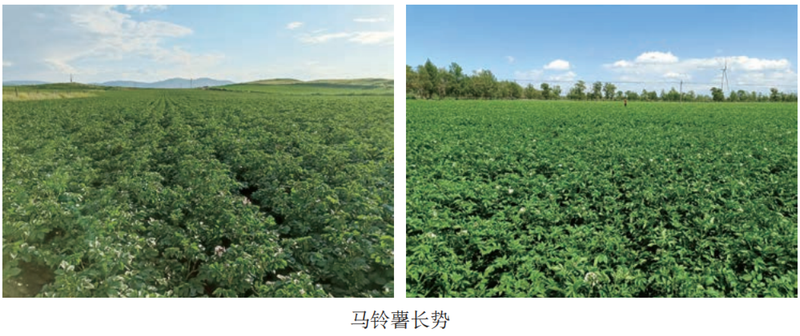
In hebei province, a professional co-operative for the cultivation of dual-minor potato vegetables is applying the technique of fertilizing potato dripping. Potato double-cropping, water fertilization integration under drip irrigation conditions, with an acre production of 4350 kg, a commercial rate of 84% (over 200 g), an increase of 1090 kg, or 33. 4%。
Author: the soil fertilizer workstation in hebei city, yuji, zhang jiaguchi agricultural technology promotion station, ma chin wei, zhang bok-chu



