One option is to use detoxified potatoes, which are mainly pre-cooked, to use early whites, easter farmer 303, etc., and luxulu 1, jin quo 8, if they are pre-cooked, productively balanced and cost-effective。
Potato processing 1. Wake up. Approximately 200 kg/acre needs to be planted. In january, one or two days of drying were chosen for a warm midday and the sick, rotten and deformed potatoes were removed. The seeding was then placed in a room at 20-25°c for 10-15 days of awakening, after the buds had begun and ended. 2. Crop chips. Chewing chips 20-25 grams each. Potatoes are tilted to the top by a spiral, and the top of the budding eye is finally cut into 3-4 blocks, taking advantage of the top. 3. Cultivation. The suitable temperature for the seeding is 15-25°c. The wetness of the sprout beds is suitable for dispersing in groups of hands. The seedlings shall be carried out in dark light. The seeding time is typically 25-30 days before the broadcast. The shandong area is generally more suitable from 10 to 30 january. There are three methods of seeding: indoor sand. In the room where the temperature is maintained, five centimetres of fine sand are laid on the ground floor, then the lumbers of chips are lined up and down, and as far as possible, five centimetres of sand are covered, and the second and third layer of chips are lined in the same order as above. A three-to-five layer, with a last layer of five centimetre thick sand, with a temperature-conservation facility, covering the membrane or sapling. The second is an indoor silhouette. It uses seedlings such as baskets, clamps, wooden boxes, etc., which are planted in layers with indoor sand. Thirdly, it is sprouts from winter or small arch sheds. The incubation method is essentially the same as indoor incubation, but the seeding is generally 2-3 layers, with sandy soil being the best. When the chips sprout up to 1 - 2 cm, the chips are removed and moved to an indoor or winter heating shed at 10 - 15 °c with scattered light, preferably with wet sand on the bottom. Controlling the growth of the sprouts with cryogenic and dispersive light promotes the growth of the sprouts. In light conditions, young buds become green or purple green coarse。

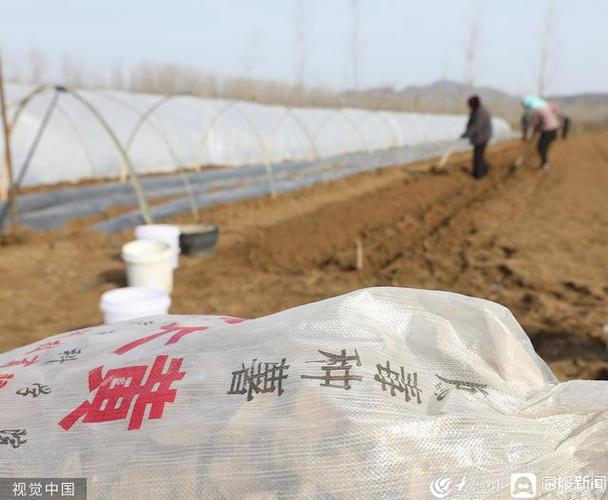
1. Fertilization in whole. The choice is for loose, fertile land, high terrain and easily drained land or sandy plots. Before tillage, 3,000-5,000 kg of fertilized soil per acre, before winter, and twice after the next spring soil has been unfrozen, the land has been levelled. Before seeding, a deep-tilled soil adjuster should be sprayed once. For each acre, 200 g of undivided soil is prepared, 100 kg of water is added to the surface of the ground. Some 20 days later, 50-100 centimetre-deep soils can be defunct. 2. Density. Double start-up planting, 80 centimetres away and 2 rows per seed. It is 20-25 cm and has a seed density of 6,000 - 8,000 hectares/acre. Time of seeding. The seeding can take place at temperatures above 0°c at 10 cm deep in the small arch shed. The shandong area generally took place from 5 to 18 february. The choice is to sow in the clear weather, free from wind and cold, and to hold the sheds on the same day. 4. Sowing methods. Two shallow ditches at a 20 cm line on the rim. After planting, 10 kg/acre of no-tilled fat. Land cover depth 10-12 cm and rise height 15 cm. 5. Covered membranes. When seeded, the top of the lid is made into a dent, which is then covered with a membrane of 90 centimetres wide, which tightens the pressure. The membrane can also be removed in a timely manner after the planting of seedlings in order to prevent overstretching and delays in the masts. Construction of sheds and sequesters. Stationing: a small arch with 2. 5 - 3. 0 metres long and 1. 5 centimetres in diameter, which is attached to a small arch with a height of 90 centimetres and a width of 3. 0 - 3. 2 metres, is selected for membrane coverage of 4 metres wide. Within four rows. It is also possible to construct two metres, six metres and eight metres wide on the basis of materials. (b) absorption shacks: when seeding takes place, it should be done in a timely manner, and the membranes should be compacted with soil, as far as possible. A small wooden stake is used every 1. 5 metres on either side of the shed, and a 14-line barbed wire or plastic membrane line is used to tighten the plastic sheet on both sides for windproof purposes。
Iv. Precision management generally ranges from seeding to seedlings of about 20 days and seedlings of 55 to 60 days. 1. Temperature regulation. For long periods of time, 16-20°c during the day and 12-15°c during the night. Harmful gases can be removed from the pre-birth period at a small opening at noon. Late in mid-march, when the temperature reached 20°c, it began to ventilate every day at 9 a. M. And closed at around 3 p. M. In mid-april, when the external temperature is above 20°c during the day and 12°c during the night, the lid should remain in place for the night and day when the complete detoxification of the film is frozen. We'll be out of the shed in time for the final frost. 2. Photoration. The membranes should often be amplified with poles during childbirth, so that the membrane drops to the ground and the membranes become more perceivable. When semens are punctuated, the diaphragm is selected as far as possible. 3. Fertilizer water management. Since it is not easy to catch up with fat in the arch shed, it should be applied to base fat once before planting. Two times, 0. 2% potassium phosphate was sprayed after the shed was dismantled. After the seeding, the horticulture, and the top, water was poured once. During the bulge of the chips, the soil is kept wet. Water should not be over the roof, soil aerobicity should be maintained, and chips should be increased. It is important not to be too dry in the later stages of childbearing, otherwise the water can be watered to form crack potatoes and lower the quality of commodities. 4. Spraying of natural molybdenum - large and large. One tenth of the fluid sprayed with natural aphrodisiac during the horticulture period promotes the capacity for foliage co-operation and increases production。
In due course, the potato can be harvested from late april to mid-may, when the commodity matures and the tubers are over 5-6 cm in diameter。
Special invitation to a vegetable expert at the agricultural college, shandong province
Excerpts from: 2008 version of science and technology information