


Because it is easier to live, the aroma is also a common vegetable in rural gardens and is grown throughout the country. It's called fragrance on our side, and every time we cook, it tastes better, and on our northern side, a lot of people like it. As a result, the price of the aroma in the north rises as soon as winter begins, and because the aroma is a small group of vegetables that growers can earn a lot of money, making some farmers particularly interested in growing it. We'll talk about the technology。
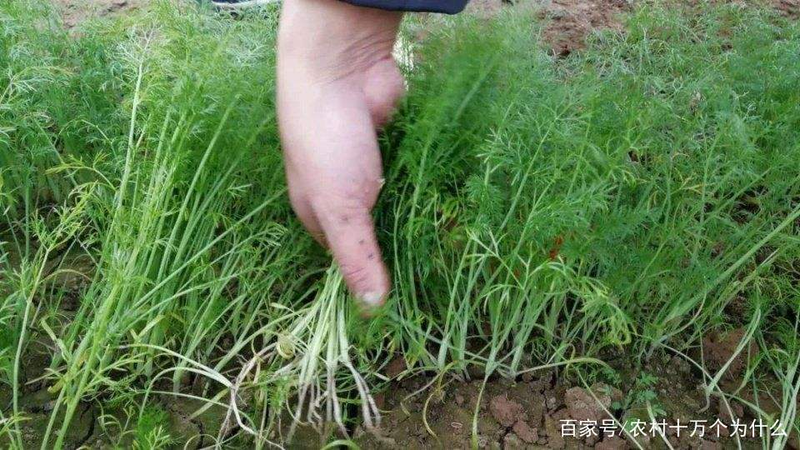
What time is it supposed to grow
In the case of home-grown aroma, seeding is possible in the months of march-september each year. The aroma is warm, cool, cool, heat-resistant, and the most suitable growth temperature is 15-20°c。
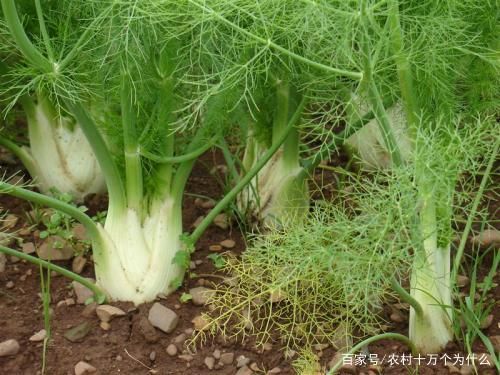
The aroma is produced for a long period of about two to three months and can bloom 30 to 50 days after seeding, so some who like to eat it can pick it in this time period and grow it with a small mouth; a strain of 30 to 60 centimetres, with a pole with a fake dident, three full-brasted leaves, an umbrella and a white or blue white colour。
The aroma can be grown live, or by seedlings, which are used mostly in small areas in rural households, if the greenhouse plant is recommended. The following is a specific reference to the techniques used to plant the aroma。
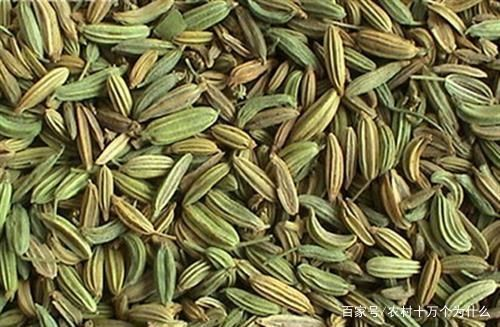
First, it can be treated with seeds. Because the aroma seeds have a hard outer shell, seed treatment can increase the germinate rate. Seeds can be placed in warm water of 50-55 degrees celsius, impregnated for 20-30 minutes, and the seed can be extracted with a soft hand to dry; then the seed can be placed on a wet gauze, placed in a 20 degrees celsius greenhouse, during which the yarn can be humid and soaked when the seed is white。
Second, science cleans the ground with soil disinfection. Despite the resilience of the aroma to the soil, soil treatment is still needed, and farmers need to level the land, ensure the aerobicity of the soil, and make it one-1. 5 m wide flat for management purposes. It is also possible to use some fungus-containing fertilizers in the soil to prevent endemic diseases; for greenhouses, soil disinfection can be done with quintozene, phomibis, polybacterium, etc.
Thirdly, the fragrance leaves are relatively small and are therefore more suitable for intensive cultivation, so they can be sowed in a strip or sowing system, usually using 4-5 kg of seed per acre; then the soil is to be planted and then the surface layer is to be levelled with tools, which can facilitate seedling management。
First, science fertilizer. The whole area is covered by a basic fertilizer application, which uses 500-7000 kg of corroded organic fat on each acre, together with 40-50 kg/acre per acre of high nitrogen-heavy potassium complex; two-to-three long-term recommendations for the recovery of fat, the first of which is applied at 10 cm height of the plant, with urea at 10-15 kg or 15-20 kg per acre of high nitrogen compound fat; and a later proposal for the recovery of fattening at 2-3 times for each harvest and one high nitrogen compound fertilizer。
Second, seedlings should be followed by appropriate seedlings, seeding by sowing, which can easily be overgrown, with poor permeability, disease and competition between plants affecting yields. The seedlings should be removed and co-planted so that they remain at a distance of about 4 cm。
Thirdly, we should do something about pest control. Chrysophagus produces long-term and vulnerable diseases, mainly decomposition, and pests are mainly tigers。
In the case of disease, it is recommended that farmers begin to prevent the disease during the pre-plant period, after which 30 per cent of the agent, 100 ml/acre or 62. 5 g/l of sperm. Cyclactone 50 ml/acre, can be used with good prophylactic effect; in the case of a long-term occurrence, the grower is advised to remove the strain directly and then to use the components of cyccus, fungus and fungus for root control; in the case of pests, it is first recommended that the planter should perform insecticidal work before planting, e. G. The application of 5 per cent of the granular agent of vermin in the soil and so on. Late detection of a local tiger hazard allowed 70 per cent of octhion to be flushed at 300 ml/acre. In addition to this, 2-3 protective microbicides, such as desen manganese zinc and methyl sulphate, can also be sprayed on the leaves to prevent diseases in plants that are normal and long-lived. Fourthly, leafy nutrition supplements. The aroma is primarily of high value in the upper leaf, so that fast nitrogen fertilizer can be selected when the leaf is sprayed, and urea solution can be sprayed 1-2 times in the long term; it is also necessary to adequately replenish the potassium phosphate fat, with the choice of potassium phosphate being the most economical。
Fifthly, do the watering. The demand for aroma is still relatively high, and pre-planting requires pre-irrigation and pre-planting, with proper management of the water for seedling; when the plant reaches 10 centimetres, the water should not be overstretched, depending on the aridity of the soil, and small water effort will facilitate the growth of the plant。
Sixth, harvesting. The aroma is generally as long as 30 cm to be harvested, and the harvest can be fully harvested at once or repeatedly. In the event of multiple harvests, it is recommended that the grower be cut at a distance of about 3 cm from the ground floor, after which the harvest will be followed by the timely application of 15 to 20 kg of high nitrogen compound fertilizer for secondary growth。
Seventh, constant attention should be paid to the strength of the field in daily management. For some of the sick leaves that appear in the plant, the old leaves must be cleaned up in time; for the aroma grown in the early spring, if the temperature is low, facilities such as greenhouses, small arch sheds, etc. May be used to ensure normal growth, and when temperatures reach 15°c, the small archer can be removed。
In fact, it is easier to plant aroma, which is more resilient, and where farmers manage the disease and pest control and are scientifically replenished, they can obtain higher-quality aroma。



