


Oil tea, an important economic tree planted extensively in the south, has won a wide market for its high-quality tea oil products. To further the boom in the oil and tea industry, we have explored a number of key technical aspects of the oil and tea cultivation process, including the choice of good seeds, the efficient preparation of plantations, scientific methods of planting, fine care management and effective pest control measures. Through these empirical lessons, we aim to contribute to the quality development of the oil and tea industry。
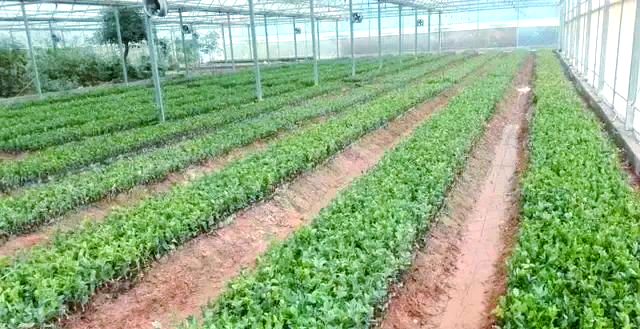
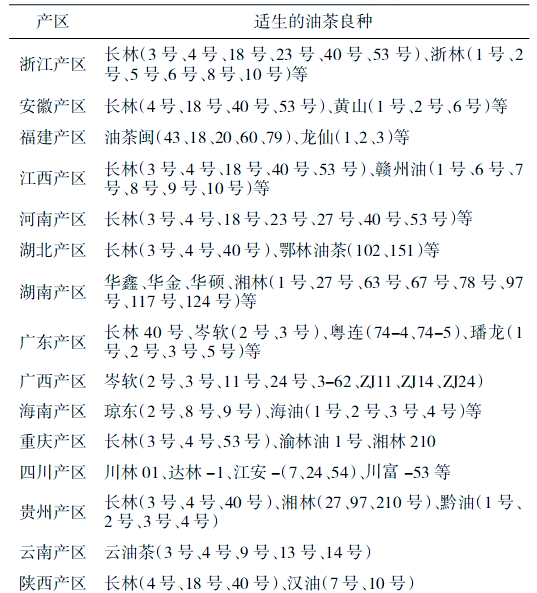
Oil tea, which belongs to a shrub or a little wood of tea from the mountain, usually at a tree height of between 4 and 6 metres. Its bark colours are light brown, single leaves are arranged in an interactive manner and have tannery. Flowers, petals, white as snow, cover the period from october to february. When the fruit matures, it is spherical and concentrated in september-october of the following year. The tea is known as the high-quality edible oil from its seeds. This edible, bright and fragrance is not only rich in unsaturated fatty acid but also contains multiple vitamins and antioxidants, which are of high nutritional value and easy to store. That is why tea oil has become the ideal option for healthy cooking. In the south, with the growing demand for green economy and diversification of edible oil, oil tea is widely grown because of its excellent edible oil quality and ecological adaptability. However, inappropriate planting techniques and pests have emerged as major challenges to the continued healthy development of the oil and tea industry. In response to these problems, the following solutions have been proposed: first, the planting of high-yielding, stable varieties that have been validated at the national or provincial level, based on the specific climate of the area under cultivation, soil conditions and ecological adaptability. Next, in conjunction with the national directory of oil and tea owners published by the national forestry and grassland authority, we will outline the best varieties suitable for planting in our main oil and tea producing areas。
Preparation of afforestation land
1 selection of afforestation land
The low hill hills are suitable for afforestation areas below 800 metres above sea level, and the south-west is suitable for up to 1,800 metres below sea level. Priority should be given to sunslides or semi-light slopes below 25° and to avoiding deep valleys and wind vents for the healthy growth of oil tea and the reduction of freezing. With regard to soil, oil tea is suitable for cultivation in the red, yellow and yellow palmy sides of the heterogeneity of sandstone, shale, granite and limestone, with a thickness of over 60 cm. At the same time, the soil should be lax, fertile, wet and well drained, with ph in the range of 0 to 5 acidity. On the climate side, oil tea prefers warm and humid environments, with average annual temperature and annual precipitation of about 12 to 21°c and 800 mm respectively. In addition, high-prevalence areas, proximity to pollution sources and geological disaster-prone areas need to be avoided。
2 reforestation
Complete clean-up is ensured by cutting, cutting or spraying herbicides, and by completely removing old vegetation, such as weeds, shrubs, and miscellaneous items, such as dead leaves and larger stones, from the forested land. In the case of hard-to-exposure plots, such as manga, conditions may allow for the use of mountain refining。
3 reforestation of land
Afforested land below 10° slopes is fully grounded, with a depth greater than 30 cm, while afforestation land above 10° slopes is suitable for a strip-to-ground approach, with afforestation belts along the contours, with a specification of width x depth = 60 cm x 60 cm. Upon completion of the site, the caves are excavated to the design afforestation specifications, which are long x wide x depth = 60 cm x 60 cm x 50 cm. The design afforestation density is between 83 and 110 units/m6 and the range is set at 2 metres x 3 metres。
Oil and tea cultivation
1 slim ready
A 2-year-old seedling or container seedling is selected for afforestation. Naked seedlings shall ensure that they are above 25 cm and have a geometry of 3 cm and that they are slightly lower in terms of their height and diameter, but equally require high quality. When the tree is transported to the forested land, it needs to be placed within a length of about 1 metre in the aluminum, and attention is paid to showering water and leaching with microbicides to prevent disease。
2 plantation
In early march to early april, and in late september to late october, it was a suitable period for silviculture of tea. During the 30 days preceding afforestation, the base fat should be prepared. The application of 10 kg of organic and 5 kg of phosphorous fertilizer per den, when fully mixed with the topsoil, is used as a base fertilizer back to the planting grounds, which is 10 cm above the ground。
At the time of planting, a small pit of 20 centimetres deep and 20 centimetres in diameter would have to be dug in each planting den, where the tree would then be planted, ensuring that it was watered to its roots. In the case of large-scale afforestation, which leads to difficulties in water use, the choice is made to plant it in the sun after the rain, after the den is wet。
After the planting has been completed, the activity of the tree is periodically checked. Inspections are carried out every 10 days and are completed in a timely manner when a shortage of seedlings is detected in order to ensure a rate of over 90 per cent during the year。
3 condoms
To increase land use, improve soil structures, reduce pests and diseases and increase economic efficiency, other economic or green fertilizers can be planted between oil and tea plantations and stands. These plants should have characteristics such as condensation, shallow root systems and low light demand, such as soybeans, green beans, peanuts and green fertilizers such as purple clouds and trifle grass. The spacing between the plant and the oil and tea plantations should be kept above 60 cm. In the early stages of oil and tea cultivation, due to the small size of the tree canopy, suitable inter-plantation can be used as a crop; however, as the age of the tree grows and the canopy expands, the area under inter-cropping should be gradually adjusted. At the same time, there is a rotational system whereby crops are regularly replaced in order to maintain ground strength and prevent the occurrence of pests and diseases。
Care management
1 early childhood care
For a 1-year-old larvae, it is necessary to dry 50 to 70 centimetres from the sapling interface and to train three to four branches as the first main branch at the onset of spring sprouts. The first urea application, using root application, should be carried out in the period from june to july (spring) or february to march (fall) of the following year. Within 60 to 90 days of afforestation, pine soil, with a depth of 15 centimetres, must be centred on larvae. In addition, weeds and weeds within 1 square metre around the tree body will need to be cleaned regularly。
For two-year-old larvae, care management measures are essentially the same as for one-year-old larvae, subject to adaptation and strengthening。
At the onset of the spring sprouts, two to three sprouts should be selected for cultivation on each branch. In the run-up to the start of the rainy season, a second fertilisation was carried out, with a root application of 100 grams of urea per plant. At the same time, the soil is again pine. In the summer, in may-june, a third fat chase was carried out, with a ditch application and 250 grams of oil and tea used exclusively. During the course of one year, weeds and weeds within 1 square metre around the tree body are regularly removed。
For the three and four-year-old larvae, the fourth and fifth fertilisations were carried out before the springing rainy season of oil and tea, respectively, with the same use of ditches and increased fertilisation to 500 grams of oil and tea for exclusive use. The depth of the pine soil is maintained at 15 cm and is centred on the larvae. At the onset of the third year of sprouts following afforestation, the side branches were trimmed, with two to three sprouts per branch to cultivate the result branches。
In the management of the tree of result, in march-april or november of each year, deep tumbling of the pine soil outside the canopy projection is required, with depth control at 20-30 cm. After the rain during the growing season, fattening should be pursued, followed by ditch application, with application of 20-30 kg of organic fertilizer and 1-2 kg of quick-effect compound fertilizer for each plant (n∶p∶k=10(6). 8). At the same time, based on the growth of the plant, 5 per cent of the leaf fertilizers are sprayed, consisting mainly of urea, potassium dihydrophosphate, trace element fertilizers and growth regulators. After picking fruit and before the spring sprouts begin, plastic cutting is required, mainly to keep springs, and to trim the inside branches, long branches, overlapping branches and insect branches. Each year, round head, happy or evacuated tree shapes are cultivated. In the case of ageing trees, the old and weak branches should be properly trimmed and new branches selected for replanting。
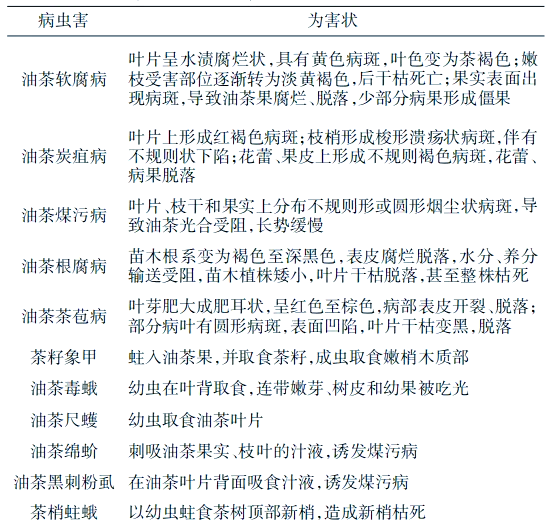
Attention also needs to be paid to pest and disease control. The most common diseases in oil and tea are morbid diseases, anthrax, coal pollution, roots and foliage, while the most common pests include tea seeds, oil and tea moths, oil and tea platinum, oil and tea powdered lice and tea moths。
2. Measures
(1) camp forest measures
(b) the preference of oil and tea varieties resistant to disease and pests for cultivation
(a) rationally control planting density and ensure that the oil and tea tree crowns are ventilated, thereby reducing the risk of disease breeding and pest concealment
(b) regular clean-up of gardens and the removal of leaves, dead branches, fruit, fruit and weeds in order to eliminate the source of winter pests
(b) improve drainage conditions in gardens, avoid wetting, etc., leading to the root causes of decomposition and, at the same time, rationalize the application of fertilization to increase tree position and the resistance of plants to pests and diseases
(b) properly trim the branches, increase intra-forest penetration, reduce transmission routes and contribute to reducing humidity and inhibiting disease development
(b) strengthen phytosanitary measures and prohibit the introduction of seedlings from severely affected areas to prevent the introduction and spread of new pests
(b) regulate agricultural activities to avoid the occurrence of pathogen infections caused by injuries caused by mechanical damage, while focusing on rotational systems to reduce the insect problem associated with infestation
Regular pest survey monitoring and early warning systems for early detection, early warning, early prevention and control。
(2) physical control
Physical methods are used primarily to combat pests and diseases and are particularly relevant for pest control. While the disease is less affected by the individual size of the pathogens, physical control is applied, some methods, such as covering membranes and fruit kits, still have some effect. It is possible to combat oil and tea stings by replanting and removing eggs; it is possible to effectively combat oil and tea stings and seeds; it is possible to use light traps to combat oil and gas moths; and it is possible to lure tea and tea and black powder。
(3) drug control
In cases of serious pests, microbicides and pesticides (including biobacterial and plant-based pesticides) can be used for rapid control. These bioconservatives are more environmentally friendly than traditional chemical control pesticides. Care needs to be taken, however, to periodically replace the agent to avoid resistance, while observing the safety interval to ensure that the oily fruit is free of drug residues。
(4) natural enemy biological defence
The use of natural enemy organisms for pest control is also an effective method. The number of pests can be naturally controlled by introducing natural enemies of pests such as weeds, flies, etc. Attention needs to be paid, however, to the possible impact of the introduction of natural enemies on local ecosystems and to ensure that the introduction of natural enemies is compatible with local ecosystems。
Concluding remarks
In the process of oil and tea afforestation, a combination of factors is needed. First, the appropriate high-yield and steady-yielding tea varieties should be carefully selected for planting in accordance with the ecological conditions of the different production areas. At the same time, and taking into account the unique characteristics of oil tea, land parcels are carefully selected, cleaned and reforested. Secondly, planting density should be reasonably controlled and fertilized in due course in order to ensure the healthy growth of oil tea in high-quality land conditions. In addition, the management of regular pine weeding, orthopaedic trimming, etc., which are essential for increasing the rate of afforestation activity and growth, cannot be ignored. Finally, in order to effectively combat common pests and diseases that oil and tea may face, a combination of forest-related measures, physical control methods, pharmaceutical countermeasures and natural enemy biological control strategies should be applied. These integrated management and prevention measures will ensure healthy and stable growth of oil and tea, thereby achieving the goal of a high-yield, high-quality oil and tea industry。



