
Key points for gold and silver flower planting and field management
Preparatory work for “three steps” prior to planting
Cropland, twirling land, shampoo。
Ii. Six modes of planting plots
1. Cultivation along roads (the environmental rehabilitation demonstration line in each village is fully covered)
2. Tens of thousands of front houses were planted in small courtyards (30 per cent of the total number of households in protected villages)
3. Detillation for forest cultivation
4. Marginal planting
5. Cultivation of non-basic agricultural land by side
Reclamation land in the project area was not planted。
Iii. Tree planting
In principle, gold and silver flowers can be planted in the fourth quarter of the year as long as the land is unfrozen, but especially when the soil is unfrozen in the early spring and before it is frozen in the late autumn, as is the case with the usual tree planting, digging pits of 20 cm or so wide, placing them in trees, standing up, piling up and pouring water, and replanting the earth's seals once the water is leaked, at a distance of 1 metre, at a distance of 1. 5 metres, or about 300 seedlings per acre。
Planting a “three-step walk”: pit digging deep, foot-stepping and watering。
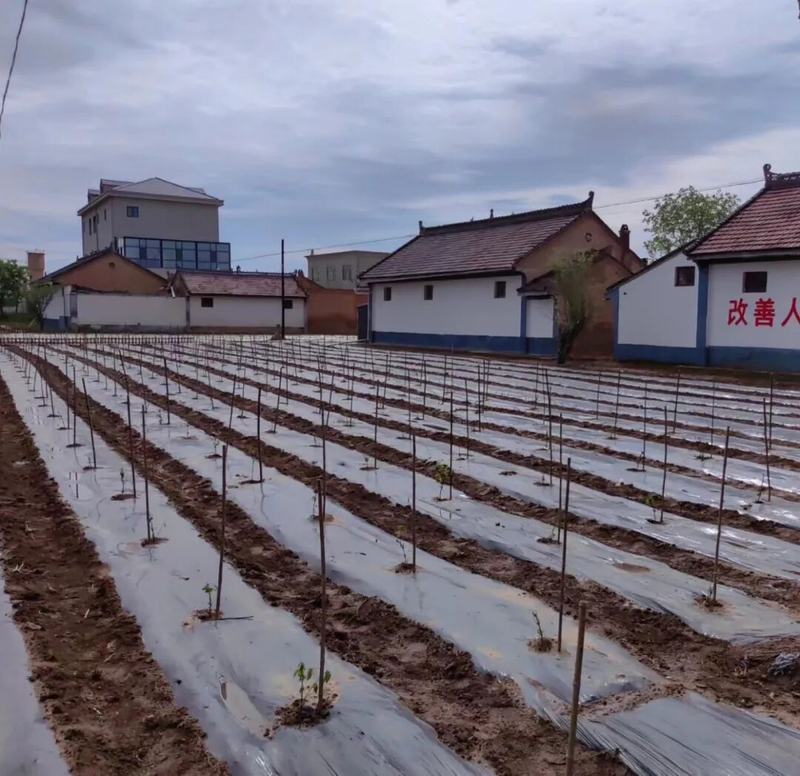
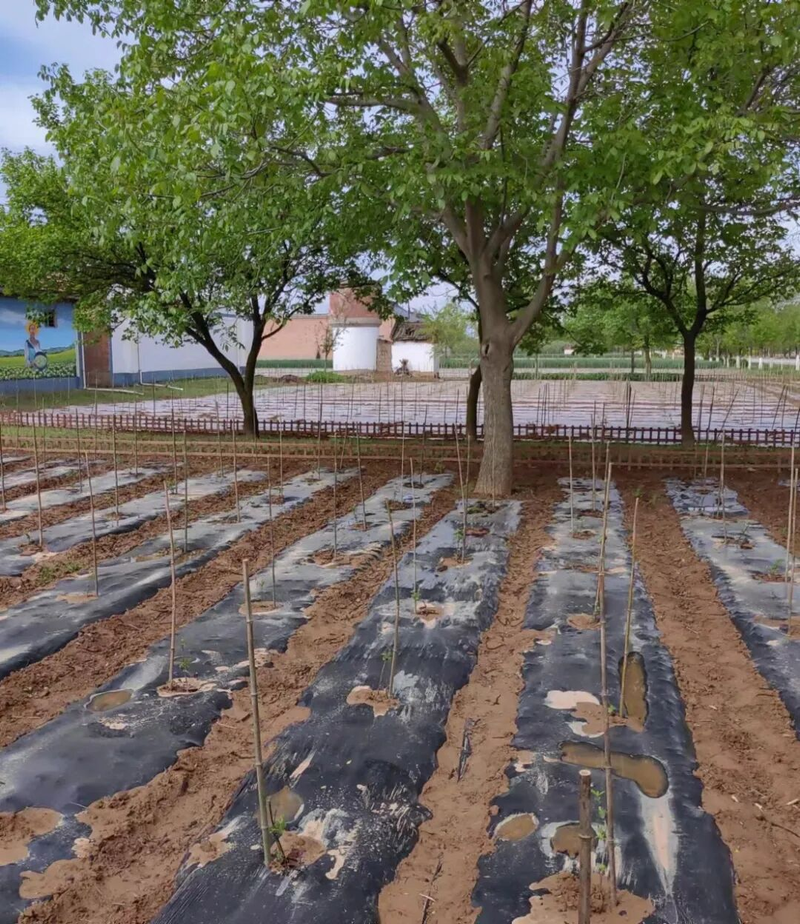
The six essentials of the demonstration planting: planting “six” with a “24-word mouthpiece” (strike, equidistance, spot-deeping, seeding, water sealing, placing)。
Iv. Fertilizing
Fertilizers of gold and silver are generally divided into base and pursuit。
1. Base fat
The application of fertilizers is generally carried out in the autumn winter from october to april of the following year, and winter is better than spring。
2-based fertilizers, mainly organic or farm-based fertilizers, are applied prior to freezing at a depth of about 15 centimetres, 5 kg per den, 2 tons per acre. Before the spring sprouts, the 15:15:15 compound fertilizer was applied, 100 g per den and 80 kg per acre。
The special organic fertilizer for gold and silver flowers meets the ny 525-2012 national standard, and the special organic fertilizer is 200 kg ~ 400 kg per acre。
Two. Getting fat
Leather spraying is carried out after water is used to dilute potassium dihydrohydrophosphate prior to the bud, and usage is determined by tree size. There was one spraying and three continuous spraying between 7 and 10 days。
V. Strengthening
After the migration, weeding is cultivated three to four times a year, for the first time at the onset of the new leaf in spring, for the second time in may, for the third time in july-august and for the fourth time in early autumn and winter. After weeding, china should also plant inter-plant soil for the benefit of winter。
Vi. Intracting
1. The principle of trimmed (without repair, without repair, with branches dominated by even numbers)
(1) formed with a twig。
(2) long-term planning, comprehensive arrangements. For example, the cutting of the plumes of early age should be driven by growth and the cultivation of strong branches, followed by early flowering and early earnings. It will not be productive in the future if it is focused on immediate income and not on the cultivation of branches. Conversely, it would not be appropriate to look only at plasticization and ignore early earnings。
(3) balancing power, ventilation. This must be done by means of a combination of strength and control, and by arranging the branches at all levels so that they can be ventilated。
2. Basic methods of shearing
(1) short cut: is a one-year cut. It's short and short. Cuts are short and light at 4-5 of the branches; short and heavy at 2-3 of the branches。
(2) snitching: cutting a branch from the base and calling it a snuff. It is usually used in dense and thin branches, which improve the light conditions in the pit。
(3) abbreviation: the method of cutting a part or a large part of the long-term drag branches is called abbreviation。
(4) cardiac and budding: retweeting the top of the new roof during the growing season and its role as a catalyst for secondary growth and early gravitation. Erasing is the early elimination of the sprouts or indeterminate sprouts that are useless to certain parts, saving nutrients and contributing to the improvement of light conditions within the swarms。
3. Period of trim
A winter cut。
2 summer shears: since gold and silver flowers have the habit of flowering new branches, they are properly trimmed after each flower, and are usually trimmed three times in actual production, thus increasing their production. The first was in early june, the second in late july and the third in early september. Thus, three cuts a year, three bouquets, three bouquets a year, no more summer cut, and winter cut or shaped。
Collection
The timely extraction of gold and silver flowers is an important component in increasing production and improving quality, with low premature production and poor quality following the opening of late flowers, so they are best picked on the day when the flowers are to be opened, in order to expand the top, but not open, and are best picked in green and white. Flowers that are generally suitable for harvesting can dry 1 kg dry for every 6 kg. Full-time flowers require 7-8 kg to tan a kilogram of dry flowers. Approximately 300 kg of wet gold and silver per acre. The extraction of gold and silver flowers should take place in the morning of the sun, and the fresh products picked should be placed, in order of quality, at the acquisition point in the town。
Viii. Gains from gold and silver
Gold and silver flowers, also known as winter flowers, which are cold, drought-resistant, grow once for 30 years, need only be trimmed every year and pick flowers in june each year, for a 10-day period, three times a year, until the end of august, when the actual three picks take about 20 days. The gold and silver flower is a treasure, not just a flower that sells money, but also leaves and vines, which earn about $500 in the first year of cultivation, around 2,500 in the second year, and about 300 kg in the third year of production, with about $5,000 in income。
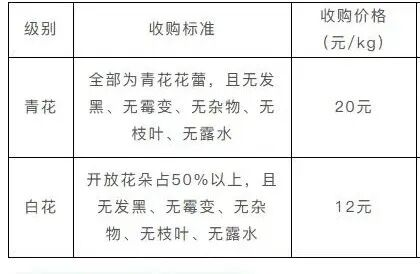
Since gold and silver flowers are multi-year woody plants that grow slowly, enter a productive period two years after planting, and have less income for farmers in the previous two years, the chrysanthemum project is feasible in order to increase the incomes of farmers and ensure that planted gold and silver flowers remain intact and are not cut by farmers. Newly planted gold and silver bouquets of anesthesia have been used efficiently, increased farm incomes and beautified the environment。
Ix. Perspectives and enjoys of the assistance project
A chrysanthemum plant can be harvested for two years in a row, and after two years of digging up the chrysanthemum, the gold and silver flower enters a productive period without affecting its earnings. Approximately 5,000 acres are planted, 600-1,000 accelerants per acre are produced, 300-500 acres are purchased at a floor price of $2 per acre, and 1,500-2,500 acres are purchased at a floor price of $1. 50。
X. Elements for achievement of achievements
1. Cultivation: the most suitable planting time is around mid-april, with cave or ditch planting in between two lines of gold and silver, and in principle with an asyllabi of 40 centimetres per line, 12 centimetres, depth of 10 centimetres and 4,500-5,000 seedlings per acre。
2. Cardiac (top)
The aim of the pedestal is to increase the production of the chrysanthemum, with a ceiling length of about 7-10 cm, with all main and side branches to be hit. The peak time: after planting the field, it usually hits the top three times, prompting multiple branches, with all main branches to top, depending on the time and the growth of the secondary data, usually 15-20 days after the planting of the pyrethroids, the first time when the new mat is 10-15 cm, the second time in mid-july, the third time in mid-august, and lastly not later than the time of the white field, otherwise affecting production and quality, the top is to be taken when the sun is free。