


The promotion of the application of compact, condensed and dense-planted high-yielding varieties is the main way to further improve maize monoculture. In recent years, maize production has increased significantly through the continuous promotion of resistant varieties and associated planting techniques, which have been well recognized by farmers, who have begun to shift to compact-planted maize varieties. Promotion of different high-yielding and resistant plant varieties according to different soil types and environments
I. Principles of rationalized context of torture
Crop yields are the production of a unit area of a group, and increased, steady, robust and high yields are key to improving group integrity and productivity. On the basis of sound planting, it is necessary to improve the integrity of the group by ensuring that it is well-planted, with low resolution and even ears. Appropriate cropping density is constrained by such factors as species characteristics, soil type, climate environment, land status and management measures. Cultivation density should be determined in the light of the combination of the above factors and be tailored to local conditions。
1. Short and inoculated strains
Varieties vary in fertility periods, in the extent of leaf-planting, in the form of strains and in the nature of resistance. In the case of plots of general interest, with long reproductive periods, long-growing and large leaves and unsatisfied roots, planting density should not be too high, with 3,000 to 3,500 varieties per acre. On the other hand, the varieties have a relatively short reproductive period, have a relatively small plant and have strong strong roots, are compact, and are strung up on leaves, and are suitable for highly radiant group varieties, with 4,000 to 5,000 plants per acre. There are also a number of large, compact, large-stretched varieties with high individual potential for increased production, which can be kept within the range of 3,500 to 4,500 acres per acre, depending on local production conditions。
2. The flatness and the thinness
Ground power levels are important determinants of planting density. Soil fertility conditions and high organic content of flat plots should be dense or rare. In the less fertile slopes of the soil, planting densities are too high, plant growth slows and weakens yields, and planting density ranges are lowest. In flat-fertilized plots with high soil fertility organic content, long-term strains against disease are used, with maximum planting density ranges. Medium fertility plots have a median planting density range. The same species are grown in the same area and their suitability varies by about 20 per cent due to fertility. Rare-planted sibling varieties have a suitable density of 3,000 units/acre under high fertility conditions and 2,500 under low fertility conditions, with a difference of 500 per acre。
3. Temperature is sufficient to be dense
Cultivation density is associated with environmental factors such as temperature, moisture, etc. If the temperature is high enough to be dense, the temperature is low enough. In some cases, under natural production conditions, the temperature is in contradiction with the moisture and the effect on density is mutually constrained. For example, during the birth of maize in some areas, the temperature is high, but the moisture is scarce and the intensity of cultivation is scarce; in some areas, the water is adequate, but the temperature is low; when the general species are planted, the temperature does not meet the requirements; when the birth is delayed; when the cold years are not good enough; when the shorter species are planted, the yield is high and they are safe enough to mature; and in areas where the temperature and the water are more harmonized, appropriate planting is possible。
4. Land in the sun and in the sand
In general, the sun is well ventilated, so that it can be cultivated and soaked in the sandy soil. Low-lying soils are less well-ventilated and have low cultivation, usually with a difference of 300 to 500 units per acre。
It's a long time for light. It's a very hot area
Long periods of light, long hours of light cooperation in areas with high temperature differentials during the day and night, low breathing consumption and higher planting density. It is desirable that the intensity of cultivation in low-temperature areas, which typically vary by about 500 acres, be less frequent。
Ii. Methodology for restization of torture
1. Density
Reasonable planting is carried out in accordance with different varieties and different production conditions. The key to a secret plant is how to get the degree right. The density is determined on the basis of the characteristics of the species and the conditions of cultivation, with reference generally to the principle that the density of pre-maturized varieties is higher than that of late-maturized varieties and spring species is higher than that of summer species, with the maximum density for high-yielding fields and the lowest density for low- and medium-yielding fields. (b) volkswagen flats: 3,000 to 3,500 species/acres at night; 3,500 to 4,000 species/acres at medium level; 4,000 to 5,000 species/acres at early age. Cracked-leaf varieties: medium and late-literate varieties of 4,000 to 5,000/acres; medium-literate varieties of 5,000 to 6,000/acres。
2. Line spacing
An appropriate reduction of the range within a given range, increasing the intensity of cultivation is the main measure to increase maize production. Experiments have shown an increase of 6 to 12 per cent when the range is reduced from 95 to 75 cm. When selected for compact varieties at 60 to 70 cm, density ranged from 3,500 to 5,000 acres, with little impact on yields. When the line distance was reduced from 60 cm to 35 cm or increased to 85 cm, the yield was reduced by 12 per cent and 8 per cent, respectively. So tight corn varieties grow at a distance of about 60 cm, and flat-forming at 60 to 70 cm. The general shorts are smaller than the suitable row distance for the highs。
3. Seed requirements
High-quality maize seeds are the main condition for securing density. If seeds have low seeding rates, low growth, low purity, poor purity and uneven particle sizes, seeding can result in loss of seedlings and slow seeding and growth. When planted in high density, the weak strains have a weak absorption capacity for nutrients, resulting in reduced yields。
4. Increasing seedage
It is difficult for any maize species to reach 100 per cent sprouts and, if sprouts are 90 per cent, 10 per cent single-particle seeding is needed, so the number of seedings should be 1. 1 times the planned density. In the case of the 58th plan for iron research, the density is 5,000 units/acre, 5,500 per acre. During the growth of some 3 per cent of the reserve corn from seedlings, some plantations continue to compete for light and nutrients due to differences in seed quality or mechanical planting practices, or to poor growth due to soil conditions, pests, etc. These plants are withdrawn in a timely manner when they are clearly vulnerable, resulting in a decrease in the number of plants. In order to ensure the maximum density of the variety, some seedlings may be kept, which would result in a reasonable degree of insulation and a significant increase in production。
Iii. The principle of double-cropping in corn plume
The two-way cultivation of maize is based on the marginal effects of large-scale space, increasing ventilation in the fields and improving the maize-growing environment, with the aim of increasing yields, as well as new patterns of cultivation of high-yield resistant maize。
Increased group ventilation
With a 40cm inner distance and an 80cm inter-clan distance, the corn pyrotechnic plant has a narrow group structure, which has improved light-temperature conditions on the upper surface of the community and increased the growth space of the root system, as the distance is wider, the wind speed of the field accelerates the exchange of air in time, solves the problem of group ventilation and fully exploits the advantages of the maize side。
2. Increased density
Cultivation density of maize is typically between 3,000 and 3,500 per acre. If the density increases, there will be poor ventilation in the field and poor growth in the plant, leading to reduced production. Co-cropping of maize is generally between 4,000 and 4,500 per acre, an increase of about 1,000 per acre compared to the clearing of maize. Because of the sound form of cultivation, a good group structure has been created, which has served the purpose of planting high yields。
3. Increased resilience to drought and flooding
The increased width of the maize bong is greater than that of conventional cultivation, with broad surfaces, small soil erosion and strong capacity to store water for fertilizer, which increases resilience to drought and floods. The maize roots grow in sufficient space to allow them to grow to depth and breadth, increasing the stability of maize plantations. Soils on the plume are not vulnerable to rainfall shocks and are able to maintain their original surfaces, which play an important role in counter-falling maize later in its growth。
Iv. Elements for the technology of between colonial transfer
Intensive diffusion of deep-seine technologies。
Emphasis is placed on the promotion of deep tillage of autumn soil, with continuous dredging operations at depths ranging from 25 to 30 cm, increasing soil fertility protection, preventing the reversal and premature decay of plants and improving crop resilience to drought. A combination of high-quality organic fertilizer of 3,000 to 4,000 kg per acre. In the autumn, plots that did not reach the depths of the spring, should be operated in the early spring, at depths ranging from 15 to 20 cm, and should be suppressed in a timely manner。
2. Varieties should be selected as compact, well-developed and resilient。
High-yield, high-quality maize varieties, such as 985 for the rich and 189 for the semi-durable。
3. Pre-plant seed treatment。
Before seeding, maize seeds are usually selected and packed. Seed processing: i. E. Elimination of pathological particles, small particles, broken particles and miscellaneous matter, followed by a germination test, with a lumber rate of over 95 per cent, a purity of not less than 98 per cent, water content of not more than 14 per cent and seed wrapping before seeding of two to three d. Seed wrapping is the mixing of maize herbicides and good corn seeds, i. E. The filamentation of the seed surface. Corn-growing clothing is a mixture of insecticides, fungicides, trace elements and membranes. Infested seeds can be used for long periods of insecticidal, sterile and anti-temperature cooling, thus protecting the seeds from disease and insect abuse, and promoting their growth and development for productive purposes。
4. On-time broadcasting。
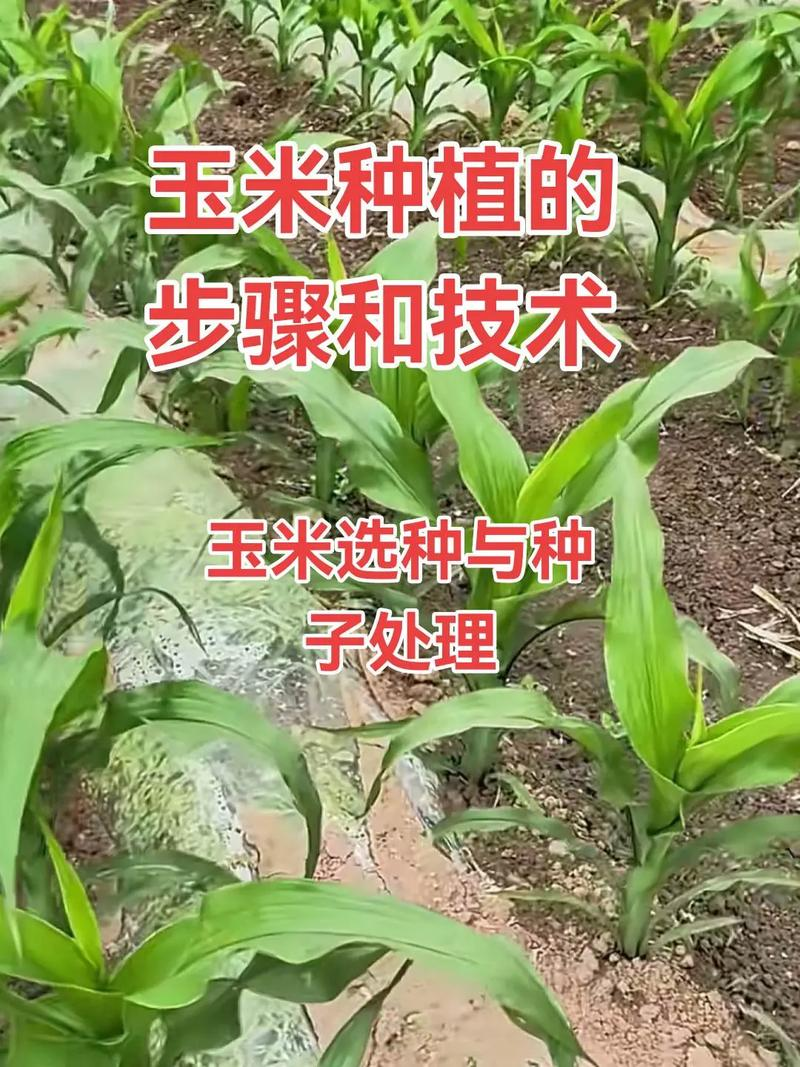
The planting of seedlings is a major part of maize production, and it has money to buy seeds and not to buy seedlings. As a result, seedlings, seedlings and seedlings are the basis for high-yield, high-quality maize cultivation. When 5-10 cm earth temperature reaches and stabilizes at 10-12°c, soil content of 0-10 cm should be sowed at more than 13%. The sowing depth is 5 to 6 cm, the soluble clay is 4 to 5 cm, and the soothing sand soil is 6 to 8 cm. The sowing volume and range are determined on the basis of soil strength and the characteristics of the selected species. Mechanized planting of maize, using a no-till seeding machine, can achieve even non-rebreeding and leakage, sowing in a consistent manner, and the earth is so close that seeds are in full contact with the soil to ensure rapid seeding。
5 - formulation fertilization
Fertilizer application is determined on the basis of maize production of 650 to 850 kg per acre. In general, 10kg ammonium phosphate per acre containing 64 per cent of oral fattening and 52 per cent of potassium nitrous phosphorus on the side are subject to a one-time decomposition of 50-60kg fattening。
Drought-resistant seeding and timely water injection。
In the event of severe spring drought, weeding can be used, i. E. The dry earth layer can be removed from the wet earth layer with an excavator at the front end of the no-cultivator and then the seed can be sowed on the wet soil that it is sealed or planted by water. In the event of drought during the pollination of males and drying of mags, the water must be replenished in a timely manner。
7. Weed control。
The plant is followed by herbicide, which is used as a combination of 72% of the total active ingredient per acre, and acetamine + neptunium + 2. 4-dioxin 200-dioxone 200-150 kg of water for soil surface closure or 30% of the total active ingredient per acre of corn in mid-june for periods 3 to 5 and for periods 3 to 4: smoulder + smorghum + smorghum + smorghum 150 to 200g for smog spraying. At the end of june, in early july, corn troubles were dealt with with 12 per cent of the dictum, 1 per cent of the dictum and 1. 1 per cent of the meth salt or 5 ml of the chloromethamphetamine. In mid-july, 5 per cent of high-chloride salt per acre, 50 g per acre, or 10-15 ml per acre, was used to mitigate the effects of trigenes of corn。
8. Collections due late。
Properly late harvests contribute to high quality maize production, low levels of early harvest maize particles, high water content, low capacity and poor quality, and a decrease of more than 10 per cent in maize seed production. Properly late harvests allow maize to mature fully, increase the weight and quality of grains and reduce water retention rates. Criteria for timely harvesting: at the end of the season, the fruit leaf is yellow and loose, the seed grains are hard, bright and bright, the nipples disappear, and when black layers appear at the tip of the seed grains, they will be ripe for harvest. The harvest time when maize matures depends on weather conditions for the purpose of effectively reducing the water content of seed grains without affecting maize production。
Notes:



