What's the quality of the sprouts
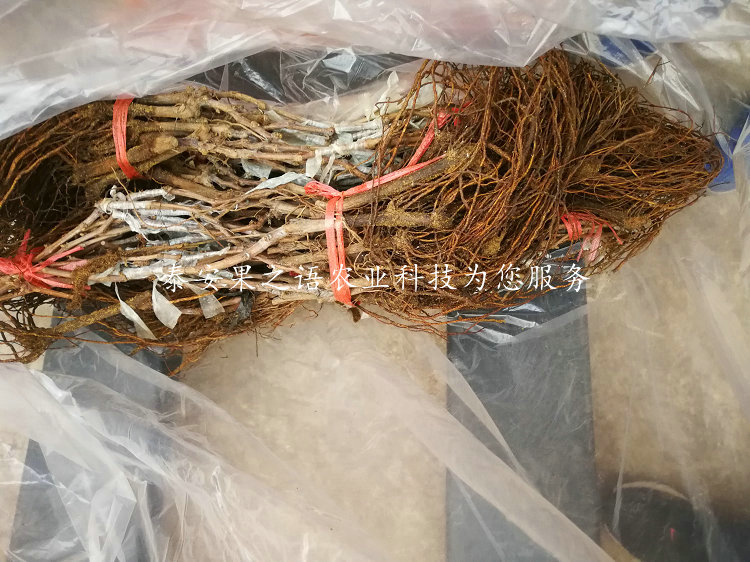
The fruit-speaking agriculture breeds grape seedlings, grape seedlings and provides information on the price of grape seedlings. It has a 200-acre sapling base and selects high-quality sapling varieties, providing the following services:
1 contract for the supply of quality grape seedlings, grape tree seedlings and grape seedlings。
2 provides technical services for the cultivation of grape seedlings, and techniques for the planting of grape seedlings, cutting of branches and pharmacology。
Information is provided on the prices of grape seedlings, and of grape seedlings。
4 quarantine, transport and regular wet mail operations. Delivery is within three days of delivery, logistics within five days and train on two days。
The fruit seedlings produced, such as grapes, are sold to guizhou, yunnan, guangxi, sichuan, chongqing, hubei, hunan, gansu, ningxia, namon, hebei, henan, shanxi, shaanxi, liaoning, etc. Welcome to the big old client! Every year, i cultivate 800,000 varieties of grapes and vines and welcome them to a large number of customers。
The official publication of the indicators will provide important guidance for the planning, design, investment, construction, inspection and acceptance of my reforestation projects. Four is to act with responsibility and speed. The first is the scientific preparation of the implementation programme, which, after validation, is reported to the sanbei bureau。
Every year, the company cultivates 600,000 grape seedlings, which are popular with customers。
Pointing grape seedlings:
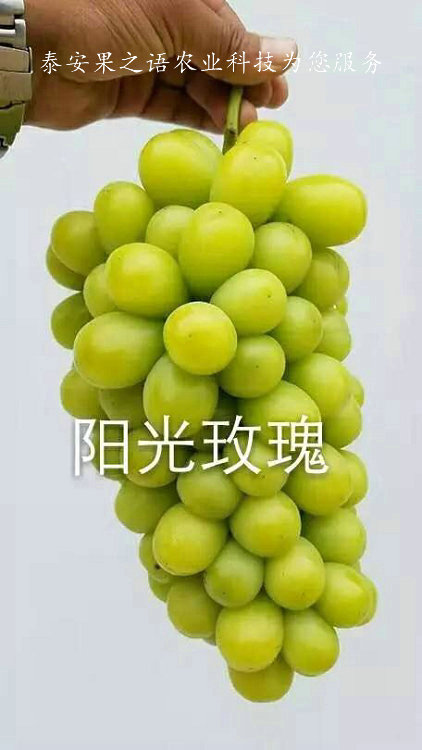
Source: referred to as fresh foods that were produced in 1984 by the lusophone institute with a hybrid of no. 2 from uniquín. Eurasia. It was introduced into the country in 1994。
Botanical form: yellow and yellow, sun-faced, fuzzy; young and yellow, slightly red and radiant; old, medium, yellow and green, with no fuze on the surface and back. It's new, it's sharp, it's got purple red on the lower side. It's long, it's green and white. Gender。
The fruit size: the size of the ear, the cone, the absence of an ear, the average size of the ear, 580 g, the size of the ear, the size of which may be 1850 g; the size of the fruit, the size of which is 10-12 g, the size of which is 20 g, the diameter of the large grain exceeding 5 cm, the ratio of the size of the grain to the length of 3:1, the fine shape of the fruit, the brightness of the front, the light of the light, the light of the base, the light of the base. Fruit peels are difficult to separate from fruit and meat, skin is thin but resilient, not fissure fruit is not fracky, and the meat can be sliced into slices, tastes sweet and smooth, and contains 16-19 per cent sugar and 0. 45 per cent acid。
Growing results: the species is extremely dynamic, has a strong budding eye, has a high rate of branching, has a moderate rate of branching, with an average of 1. 1 sequences per branch. The capacity to plant flowers varies from one plant to another and is stronger in arid and semi-arid areas。
In the north china region, the budding took place in mid-april, flowering in late may and full maturity and late maturity in late september. The fruits are well stored, less resistant to disease and the branches mature later。
Cultivation points: the direction of the tree should be directed, with the use of sheds, mid-long cuttings to ease the tree position, and with the use of measures such as graft and cycling to promote bud formation. During the growing season, pests are strengthened, in particular early frost and albinism, and kits are planted. Rain avoidance is used to prevent pests and diseases from occurring in areas with heavy rainfall during the summer. This means that it is suitable to plant in areas with high temperature in the north-west and north-west of china, and because the species is very old and has long tree hangers, it has a good aesthetic effect in the yard。
Name of kyoto variety: source of kyoto variety:
American hybrids. The beijing botanical garden of the academy of sciences has selected pre-maturized varieties from seedlings produced in heelin, which were identified in 1992. There are cultivations everywhere。
Botanical characteristics: green, abbreviated. Scary white fur. The young leaves are green, with light purple red dizziness, and the young leaves have a slightly luminous surface with light red wool. Age-old leaves of medium size, shape, deep green, smooth surfaces on the blades, velvet on the back of the leaf, slightly gravitated leaves, fractured leaves of 3-5, deep upper and lower cracks, leaves bearings shorter than the median vein, and leaf-spreaded pellets. One year old, tan, stripes. Winter sprouts. Gender。
The shape of the fruit: a cone or cylindrical fruit, with a side ear, a large ear, and an average of 480 grams. The grains are closer and full in size. Plumb ellipse, fruit pyramid black or purple black, average grain weight 9. 5 g, fruit powder, skin thicker, tougher, fruit meat softer, juicy, soluble solids of about 15%, acid content of 0. 9%, flavour acid sweetness of 2-3 grains per fruit。
Growing results habits: plant growth is medium, 80 per cent budding, resulting in branches accounting for 55 per cent of all budding, with an average of 1. 6 per cent of each result being sprouted
It's very early, it's very early, it's medium and it's weak. In the beijing region, the budding occurred in the first half of april, flowering in the second half of may, and the fruits matured in the first half of august, taking approximately 120 days from the bud to maturity, with pre-cooked varieties. Strongly resistant。
Cultivation elements: medium-sized kyoya growers, sheds and fences can be used, short- and medium-sized, combined with shearing, as the fruit matures earlier, requires base and early water fattening, the species are pre-maturized, productive, the fruit-fruit is the only thing that is acidic, and production is based on the application of potassium phosphorous fertilizer, resulting twigs
Acid-reducing techniques such as harvesting, fruit quality. Kyoto, which is prone to flowering in facilities, is well adapted and is a species to be noted in greenhouses and sheds。
3. Name of megatop species: original title of megatop: kyoho
Source: european-american hybrids. In 1937, mixed breeding was carried out, with the birth of a large combour and centenial, which was named in 1945. Four-fold variety. It was introduced into the country in 1959 and is now cultivated in all provinces and districts。
Botanical form: green, white, velvet. The young leaves are light green, and their upper and lower surfaces are covered in wool, without light. One year old, tanned, long, the leaves of full age are large, close to the circle, fractured, fractured, shallow, sawn teeth medium sharp, thick, green, smooth, fuzzy, with medium-intensity feathers on the back of the leaves; they open up, the leaves are slightly red and the leaves are shorter than the median. Spacing, double fork. Both sexes。
The fruit size is large and weighs an average of 450 g, 23. 5 cm long, 15 cm wide, cone shape, and the fruit grains are a little loose. Large grain, average heavy
9. 1 g large grains weighing 12 g, with a diameter of 25. 9 mm, with a diameter of 23. 9 mm, round or ellipse, black and purple fruit skin, thick fruit; medium-heavy fruit skin, soft fruit, yellow green, meat bladders, sweet taste, with strawberry scents, easy separation of fruit skin from fruit, meat and seeds, short brushes, ready to fall after maturity, sugar of 16% in fruit, acid of 0. 71%, seed of 1-2 in fruit。
Agricultural biological characteristics: tree strength. The embryonic rate was 96. 5 per cent, with the result that the branch accounted for 57 per cent of the total budding number, with a coefficient of 1. 62 and strong by-embrying and stinging. The middle and lower yellow river region sprouted at the end of march, blooming in late may, the fruit began to colour in mid-july and the fruit matured completely in mid-august. From budding to ripening of about 130 to 140 days, the medium breeds began to mature in early august. The varieties are excellent four-fold grains of fresh food produced early on. The trees are strong, resistant and adaptable, and they are grown almost everywhere。
Cultivation points: the giant peak is the introduction into the country of the early four-fold variety of mixed european-american species, strong growth, large fruit ears, large fruit grains and disease-resistant varieties, which are currently growing on a large scale and are also a good food species. For a long time, however, as a result of strict good breeding systems and science, the degradation of varieties has become more widespread, the production of large-scale species has been pure and reinforced, the cultivation has been directed towards the promotion of rational negative cultivation, the strengthening of integrated, robust tree positions, the use of integrated techniques to prevent the falling of flowers and fruits, so as to achieve the full beneficial nature of the species inherent in them. Time sheds and fences can be planted, with short- and medium-term trimmed. The prevention of falling fruit is successful and healthy。
4. Saplings of vines: aliases: ping-pong grapes
Source: european-american hybrids. Original. A four-fold variety bred by iikawa 682 mixed with pioneers. It was introduced into the country in 1986 and grown in various parts of the country。
Botanical characteristics: green and shallow. The young leaves are light red, with wool. The foliage is large, close to the circle, 3-5 fractures, the face of the leaf is covered with a shallow web of wrinkles, the back of the leaf is covered with thin fuzzy hair, the teeth are sharp, and the leaf handles open the arch. A year's seasoned, skin deep. Gender。
The fruit form: the ear size, the cone shape, or the short cylindrical form, with an average of 450 g of the ear weight and a moderately tight grain. Vegetable black, near circle, particularly large grains, with an average grain weight of 15 to 16 g, fruit skin thick, fruit meat, sweet sour, soluble solids of 15 to 17 per cent, acid of 0. 6 to 0. 75 per cent, with slightly different tastes, with 1-2 grains per fruit of general quality。
Growing results are customary: growing plants are strong and burgeoning, but growing branches are weak and buds are easy to form. As a result, branches account for 70 per cent of the total number of new branches, with an average of 1. 6 bouquets and more productive branches. In the beijing region, where the springing of early april and the flowering of late may will mature in late august, it will take approximately 135 days to grow from the bud to the full maturity of the fruit, with activity temperature of 3,200 degrees celsius. It's a medium-preserved species. Wind and earth are adaptable and resistant to disease, but prone to black, grey and frost。
Point of cultivation: the vines grow strong, fit for sheds, fences, mid-stamp trimmed, mainly mid-stamped. There is a low rate of embolism
Also, since the seedlings are less developed, proper aluminum should be used for indoctrination to strengthen the tree. Owing to growing plants and large grains of fruit, the demand for fat water is high, and especially fat water is supplied in a timely and appropriate quantity to strengthen the tree. In order to ensure the size and quality of the fruit, care should be taken to ensure the timely removal of the osmosis. In the outcome period, care will be taken to have a condom plant for black, frost and grey. Vegetable fruit is very easy to fall upon when it matures and is collected and sold as soon as possible。
Five, the summer black grape seed
It's also known as sunset, three times the size of europe and america introduced in 2000. Test seeding has been observed in recent years in such places as jiangsu, zhejiang and shanghai, where early maturity, good quality, taste, abundance, disease resistance and adaptability are both visible and well-equipped, and are a relatively promising early and unnuclearly good grape species。
The cone of fruit, with its dichotomy shoulders, can weigh 500-750 g for plant growth regulation agent treatment and up to 1600 g for size; the fruit grains are very tight, with a near circle of fruit, with natural grains weighing 2-3 g. The consequences of treatment with plant growth regulation agents are 7-8 g, combined with thawing and two periods of fertilizing water, each of them can weigh 10-11 g; the fruit leather or blue black, thick, fruit powder, excessive hanging fruit, is slow and ill-colored; the fruit meat is hard, juicy, 16-19 per cent soluble solids, high above 20 per cent; the flavor is sweet, with a strong strawberry scent of good taste; and there is no nuclei, with one to two nuclei and multiple l-s。
The species is growing, growing and growing, with moderate growth, moderate resistance to disease, well-drived, well-regulated, well-regulated and well-regulated, high-quality, and resilient to transport. Henan collected it in mid-july. The maturity is good for the number of adhesive fruit, which can be pre-cooked to medium-precipient varieties; it also has a significant impact on the fracturing of flowers。
Technical highlights of summer black cultivation:
(1) the summer black is strong, with an appropriate increase in the length of the strain and the distance, if a “t” frame is used, with a range of 1. 5-2 m x 3 m. If a flat stand is used, a 2-4x6-8 metre range may be used。
(2) summer black is three times the size of a non-nuclear species, with small natural growth grains, which require 1 to 2 treatments in order to be of commercial value. (most of them are: 15 d after the flower, with 45-50 gm/l cactinium, pickled or sprayed ears, repeated 12-15 d apart. When 2 fruit grains of soybeans are so big, they will be able to spray or soak with 45 mg/l cactinone at 10 ml per 1-1. 5 kg per radon, with a high yield (of 50-60 ml per chromium and 5 g per chromium) and beams will be sufficient once。
(3) the production shall be carried out in a strict manner in order to control production so as not to affect colour and delay maturity。
Advantages:
(1) premature, disease resistance is three times the peak system, europe and america, matured in early july。
(2) nuclear-free species, with good treatment. After secondary treatment, the grain can reach 8-10 grams。
(3) good quality of fruit, culture, strict control of production, maturity in the first half of july, purple or blue black fruit, thick skin, thick fruit; hard meat, abundant juice, soluble solids 16 to 19 per cent, high above 20 per cent, sweetness, strong strawberry flavor, good taste。
(4) large growth, rapid growth, early production, then planting, and second year production。
(5) the buds are well divided and the standardized and high-quality plant is well produced。
Disadvantages:
(1) natural fruit is small (2-3 g), has no commercial value and needs to be treated twice and is more expensive to produce。
(2) in response to production, the upper colour is slow when the load is large, the maturity period is delayed, the quality is reduced and the flower buds are affected。
(3) prolonged, production should increase the distance of the strain, moderate growth and split the bud。
Zhu fuqin, a 81-year-old citizen, is a resident of a nearby community. "this is the "choose village" we understood. (a) to ensure, through the ombudsman, that provincial councils are aware of and follow up on the deployment of protection decisions, the resolution of problems, the implementation of accountability for the protection of subjects, the establishment of a system of accountability for wrongdoing in forestry administration, adherence to the principle of accountability, strict procedures and discretionary powers, and the introduction of a system of adjudication of major cases