


How do you plant the black twilight? It is actually a fruit with a black appearance, mainly in the gansu, xinjiang and qinghai regions. It has great vitality, and it can grow in the unviable wilderness, and below is a look at the breeding methods of the black twilight and the technical aspects of day-to-day management cultivation。
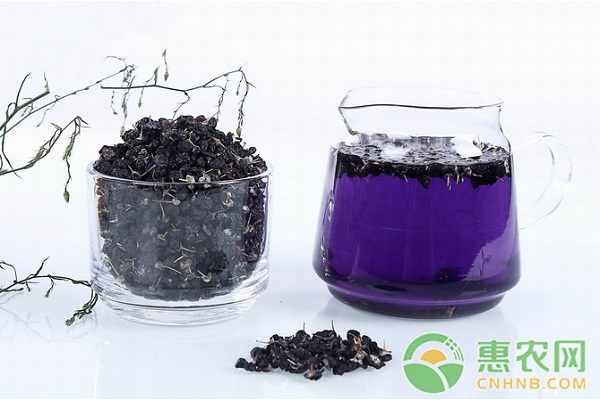
1. Biological properties of the black diaphragm
1. 1 environmentally adaptable
Poor soil requirements, saline, infertile, cold, drought-resistant, wind-sand-resistant, etc., allow artificial water-saving drip irrigation。
1. 2 growth long
The tree can grow more than 30a, and after the results of its cultivation, 3a enters a period of 667 m2 to produce more than 100 kg of dried fruit。
2 cultivation methods
2. 1 seed breeding
The seed is small, weighs 0. 9-1. 0g in thousands and is not easily washed and collected, when seeding, the fruit is immersed in the water, then the berries are broken, the meat is washed clean, the seed is filtered out of impurities and dried and stored in airnet or cotton bags. In the spring, the sandy sandy soil, which is flat, well drained and deep, is selected as a breeding ground, with 2500 kg of fat for every 667 m2 applied to the decomposed farmer, then dredges the ground, sowing the seeds with multibacterium prior to planting, sterilizing the seed, mixing it into the fine sandy soil (soil: seeds = 1. 20 times), mixing it back (at a distance of 40 to 50 cm), covering it around 1. 0 cm, stepping it down gently, planting drip strips on the seed and pouring water in time. Neoplasm breeding can also take place in the form of dens (range 15-20 cm). It's 15 cm tall and more transferable。
2. 2 cultivation
Cultivation took place in late spring, march-early april or late autumn in october. The selection of a single, thicker branch of one year's life, with a cut of about 20 cm long, and the placement of the branch in a thin film and drip belt (one drop of a sheet of tape to plant one row of black twig), is tight and pedal, with a range of 75 cm x 120 cm, timely drops of water, ensuring that the tree activity rate is more than 85 per cent and that the number of seedlings is around 600 666 m2. It can also cut off the roots and grow new seedlings around them。

3. Plantation techniques
3. 1 field management
Throughout the year, weeds are combined, pine fields are ploughed in time, water is watered in due course, and 30 m3/667 m2 of water is produced over a long period of 15-20d drops of water, per year in march and 2-3 times per year in june-august。
3. 2 plant shearing
In order to increase the production of black tungstens, the second year of planting should be remodelled. With 20-30cm height, the first layer has five well-developed branches, one layer from the root up, and then three to five branches from each floor, cutting the plant to an umbrella plant of three to four floors, each year in which the plant is reconstructed and the result branch is cultivated. They are trimmed with insect branches and weak branches, with strong branches, which ensure a ventilated luminous luminous plant, a steady production, a large fruit luminum, a higher grade of fruit and an increased economic efficiency。
4 pest management
The main pests are aphids, pollinosis, black fruit disease and root disease. In case of severe pests, high-efficiency, low-toxic and low-residency pesticides such as avimectin and aridium have been selected. Spraying is used for powder, black fruit, root disease, etc., at the beginning of the disease, with multibacterium, eg., one blow at 10-15d and two at three consecutive times。
5 harvest processing
During the period of june-august, the fruit was turned into dark purple, and when the particles were full, they were harvested, they usually cut down the ripe branch of the fruit, smote the fruit softly after spreading dry in the vent, and then screened the impurities such as twigs, leaves and premature fruit, without hand rubs, guaranteed grade, clean, clean, black, and large grains, stored in a cool place. If the fruit is not harvested in time and the fruit is not taken off by itself, it will naturally dry up。



