


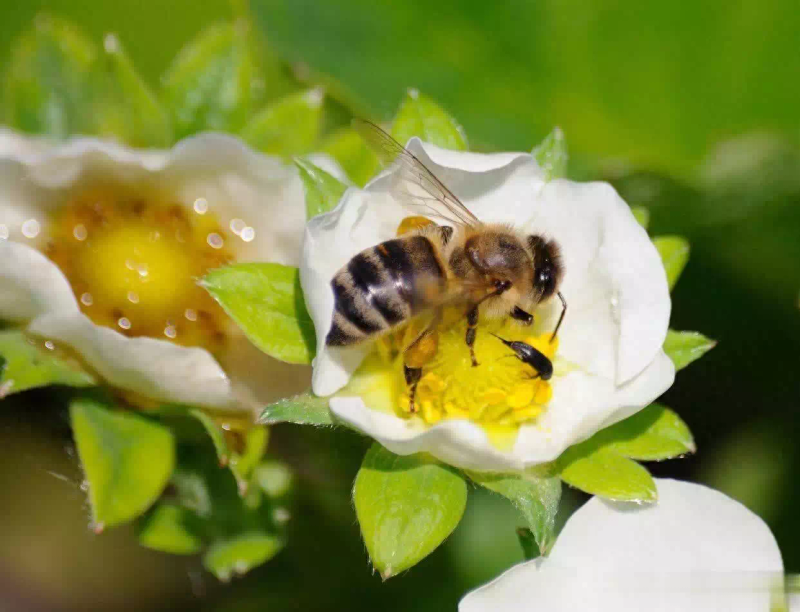
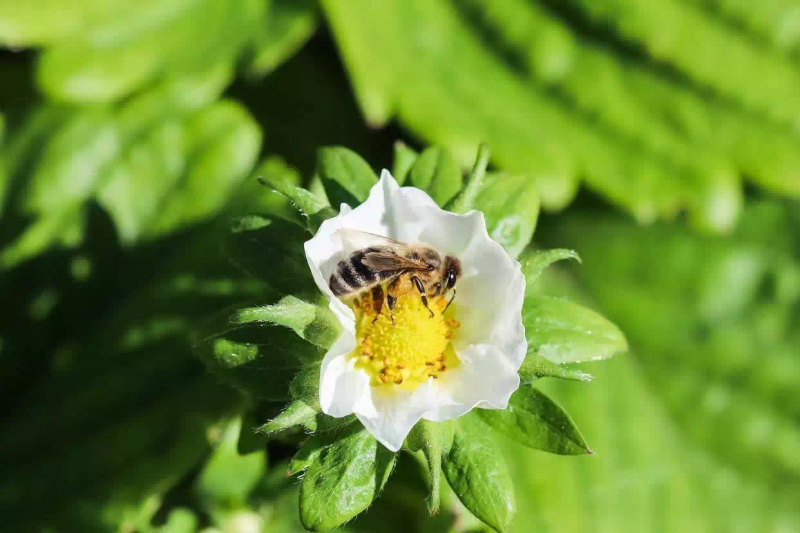
In winter facilities, strawberries are grown with very low success rates of natural pollination due to closed huts, restricted ventilation, low activity of natural insects, and prone to fruit malformations, reduced sit-in rates and lower quality. The use of bees for artificially assisted pollination is a key technical tool for improving the production and quality of winter strawberries, with advantages such as simplicity of operation, low cost and even pollination. This technical protocol was developed to regulate the practice of strawberries bee transfer technology in winter and to ensure pollination efficiency and the safe production of strawberries。
Scientific options for bees species
The winter sheds are characterized by high temperatures, high humidity and a single source of honey, with high cold tolerance, gathering motivation and adaptability requirements for bees and the need to target the selection of suitable bees。
1. Preferred bee species: italian bees and chinese bees
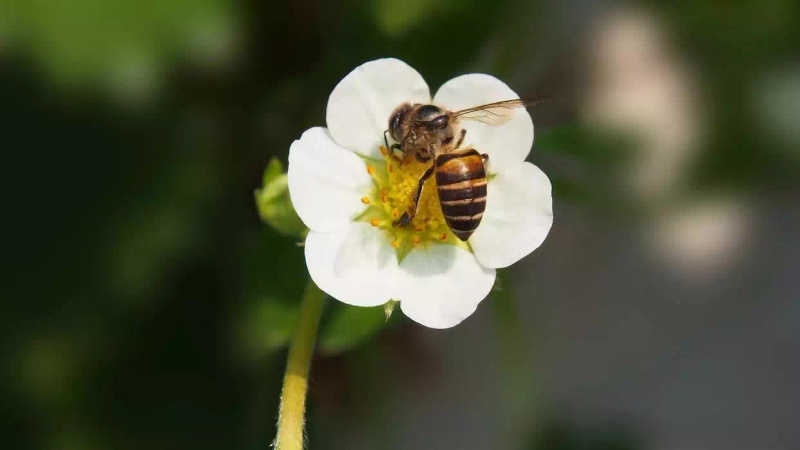
Italian honeybees are warm and capable of collecting, are more adaptable to the shed environment and maintain a large herb size suitable for use in strawberries with an area above 0. 5 acres. The chinese honeybees are particularly chill-resistant, maintain a certain degree of outreach activity during the winter's low temperatures and have a high utilization rate of sporadic honey sources, suitable for small strawberry huts or decentralized sheds。
2. Bee selections
The use of wild bees or unsanitary bees is strictly prohibited and the introduction of pests is avoided. The healthy bees that are grown in the formal beehives should be selected, and the bees should be free from rotting, reptiles, the king of bees should be able to lay eggs, the number of bees should be sufficient and the spleen ratio should be reasonable。
Ii. Preparations for the shed before the introduction of the bee herd
Before the bee is introduced, the strawberries shed will need to be fully organized and environmentally regulated to create suitable conditions for its survival and pollination, while avoiding its disturbance by external factors。
1. Optimizing regulation of the shed environment
With regard to temperature, the suitable temperature for strawberry periods is 20°c-25°c during the day and 8°c-10°c during the night, and the temperature in the shed is stable in advance by covering the cotton, heating the hot stoves, etc., and avoiding low temperatures leading to reduced bees activity. On the control of humidity, the relative humidity of the air in the shed should be maintained at 60-70 per cent, wet over the high susceptibility to bees ' disease, which can lead to pollen binding and affect pollination effects, which can be reduced by ventilation, membranes, etc。
Ventilation management, pre-screening of shed vents and installation of 40-purpose insecticide-proof nets to prevent the escape of bees and the entry of external pests. There is a need for a gradual process of ventilation to avoid cold wind blowing the bee box and to trigger bee stress。
2. Preparation and management of strawberry strains
Two to three days before the introduction of the beehive, the strawberry plant would need to be overhauled to remove sick leaves, leaves, deformities and already open flowers in a timely manner, reduce nutrient consumption, increase the ventilation of the plant and facilitate the finding of flowers by bees. At the same time, the strawberry season is checked to ensure that, when the bee is introduced, about 30 per cent of the flowers in the shed are open, providing the bee with sufficient honey sources to stimulate its pollination incentives。
3. Strict control of pesticide use
Bees are highly sensitive to pesticides, and no highly toxic, highly residual pesticides are sprayed in the sheds within the first 15 days of their introduction. If strawberry strains are infested with pests, biological pesticides or low-toxic, low-residual pesticides need to be pre-selected and the pesticide safety interval strictly observed. Pest control should give priority to physical control tools such as yellowboard baiting of aphids, white lice, insecticide-proofing nets, etc. To ensure the safety of bees during pollination。
Iii. Introduction and scientific positioning of the bees
The introduction time and placement of bees directly affect pollination efficiency and requires rational planning of strawberry seasons with the environmental characteristics of the shed。
1. Hive introduction time
The bees should be introduced during the start-up of strawberries, i. E., when about 10-20 per cent of the flowers in the shed are open, when bees can rapidly adapt to the shed environment and gradually increase the frequency of pollination as strawberry flowers advance. It is advisable to choose between 9-11 a. M. In the middle of the day, when the temperature in the shed is gradually rising, facilitating the movement of bees out of the nest。
2. Hive placement and methods
Beehive placement is governed by the principles of “centre, shelter, dry, smooth”. For large rectangular huts, beehive boxes should be placed in the centre of the shed to reduce the distance from which the bees fly; in the case of multiple sheds, the beehives may be placed in a corridor between them for easy management. The bottom of the beehive shall be 10-15 cm tall with bricks or wooden mats to prevent the humidity of the ground from causing cartilage of the beehive while avoiding infestation by pests such as ants。
The door to the beehive shall be in the direction of the vent of the shed in such a way as to facilitate the entry and exit of the bee and the door to the nest shall be slightly tilted downward to prevent rain or condensed water from flowing into the beehive. Above the beehives there is a need to build a sunshield to avoid the sun-fire beehives causing excessive temperatures in the boxes and affecting their survival。
When the beehive is introduced, do not immediately open the door to the nest, which should be kept in place for one or two hours, until the bee has adapted to the outside environment, before slowly opening the door to prevent the bee from fleeing with stress。
Iv. Day-to-day management of bees after their introduction
The limited availability of honey and special environmental conditions in the winter sheds require enhanced day-to-day management of the hives to maintain their activity and ensure pollination。
1. Humming feed management
Strawberry nectar and pollen are limited, especially at the end of the strawberry flowering period, and the lack of honey sources can lead to a decrease in bees' motivation to collect and require timely artificial feed。
Flour feeding: the choice is to mix pollen with honey at a ratio of 1:1, and to make it into a burrito that is placed on a nest spleen in a beehive, feeding 50-100 grams per bee and 1-2 times per week until the end of the strawberry flowering period。
Sugar feed: when strawberry flowers are smaller in the shed, 50% of sugar cane water solution can be prepared, placed in a feeder, placed in a beehive box to feed bees and avoid bees fleeing from hunger. It is advisable to choose evening feeding times, when the bees are largely nested, reducing the waste of sugar。
2. Periodic check of the condition of the bee
A weekly check of the beehive is required, focusing on the laying of eggs by the king, changes in the number of workers, and the presence of pests and diseases in the beehive. In the event of a decrease in the spawning volume of bee kings, proper nutrient supplements are provided; in the event of a decrease in the number of worker bees and bee-crowding, pesticide poisoning or disease must be detected in a timely manner and measures taken accordingly. The inspection shall be carried out gently to avoid disturbance of the bees and shall be time-controlled within 10 minutes to prevent excessive temperature fluctuations in the case。
3. Dynamic regulation of the shed environment
The suitable temperature of the honeybee out of the nest is 15 °c-28 °c. When the temperature in the shed exceeds 30 °c during the day, it is required to cool the bee in a timely manner to prevent heat in the bee; when the temperature is less than 5 °c at night, the warmer cotton is required and, if necessary, the heating equipment is activated to ensure that the temperature in the beehive is not less than 8 °c。
Rain or fog days, insufficient light in the shed and low willingness of the bees to leave their nests can appropriately prolong the time of light in the huts, enhance the light, including through the use of light patches, and stimulate the bees to pollute outside。
V. Pest control taboos during bee pollination
During bee pollination, strawberry pest control needs to be “preventively supported by biological control” and the use of chemical pesticides should be strictly eliminated and bee poisoning deaths avoided。
1. Types of pesticides banned
Insecticides such as organophosphorus, carbamate and pyrethroid are highly toxic to bees and spraying is strictly prohibited during pollination. Some species of fungicides, such as bordeaux, thiomers, etc., are less toxic to bees, but overuse can affect pollen vitality and should be avoided as much as possible in flowering。
Alternatives to pest control
For fungal diseases such as strawberry powder, ashilosis, biological agents such as bacterium mollusc and mucus, which are harmless to bees and have a significant impact on prevention, can be selected. For insects such as aphids and parrots, biocombination can be carried out using cedars, blueboard booby traps, or by releasing natural insects such as ladybugs and grasshoppers to achieve green pest control。
If pesticides are to be used, the herd must be temporarily removed from the shed until after the end of the pesticide safety interval, ventilated for three to five days, before the herd is moved back into the shed。
Vi. Evacation and follow-up management
When the strawberry season ends and the fruit enters the swelling period, it is necessary to evacuate the herd in time to avoid the bees eating the fruit, while at the same time following its maintenance。
1. The evacuation time of the herd
When more than 80 per cent of the strawberry flowers in the shed are pollinated and the fruit starts to swell, the herd can be evacuated. The withdrawal time should be chosen after all the bees have returned to the nest in the evening, closing the door and moving the bees to the outdoor abdomen in a smooth manner。
2. Follow-up conservation of bees
Following the evacuation of the herd, the feeding of sugar and pollen needs to be replenished in a timely manner to restore the strength of the herd. Check the health of the bees, clean up the groceries and dead bees in the bees ' boxes, disinfect the bees ' boxes and prepare them for the next pollination or bees ' reproduction。
Assessment of the effects of bee pollination
After bee pollination, pollination can be assessed through indicators such as strawberry sit-in rate, fruit malformation rate, fruit quality, etc. Strawberries, which are successfully pollinated, have a rate of over 90 per cent sitting fruit, a rate of less than 5 per cent for fruit malformation, a positive shape, colour and sweet taste. In the case of abnormality in fruit and low sit-in rates, the reasons need to be analysed to optimize the technical parameters of bee pollination for the following season。
Viii. Notes
1. Farmers entering the sheds are required to wear light-coloured clothing to avoid dark, beautiful clothing and prevent bees from attacking. Do not shout, so as not to disturb the bees。
2. Incentives such as pesticides and fertilizers are strictly prohibited in the vicinity of bees to prevent bees from poisoning。
3. The high humidity in the winter shed requires regular inspections of the water in the beehives and their timely clean-up to prevent their disease。
In summary, the core of the winter strawberries bee transfer technology lies in “selecting bees, managing the environment, managing the bees”, which, through scientific variety selection, environmental regulation and rearing management, can take full advantage of bee pollination, effectively boosting the production and quality of winter strawberries and providing technical support for the efficient development of the strawberry industry。
Computer free fishing game, no download, no point
3d fishing adventure under 2026. Load



