


The walnut tree describes the cultivation techniques of the walnut tree
Introduction to walnut trees
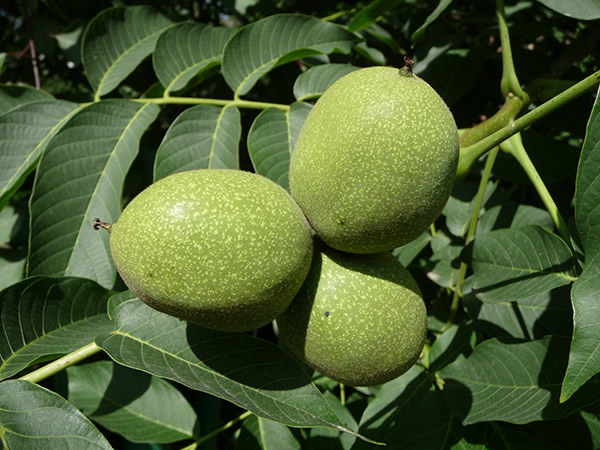
The walnut tree, also known as the walnut tree, is a walnut plant, divided into wild walnuts and artificially inwed modified walnuts. Born in the central asian region and grown in various parts of china, it has generally chosen to grow artificially modified varieties, which are more productive than wild varieties, with thin shells and commonly known as walnuts. Wild husks are thick, big and oily. They taste better, commonly known as walnuts. The walnut tree can be a protected forest for road greening; because of its wood strength and resilience, it is also a superior material used in industry; walnut shells can be processed into art. Walnuts are referred to on the international market as “four nuts” with walnuts, cashew nuts and sprouts. The walnut trees are adapted to the deep, loose, fertile, wet and cool ecological environment of the soil。
Ii. Distribution
Foreign countries are located in temperate regions of the americas to subtropical regions, central asia, west asia, south asia and europe。
It is located in north, north-west, south-west, central, south and east china。
Iii. Growing the environment
It's hot, it's cold. The pecan trees, born 400 - 1800 metres above sea level and in the hills, have a may and october fruit。
The fertile and wet sandy border soil is common in the deep areas along the mountain valley. Agricultural cultivation is generally in the low hills and hills, about 200 metres above sea level。
Iv. Form characteristics
Walnut trees, which vary from tree trunks to trunks, are typically at heights of 2-10 metres, with heights of 10 metres or more; tree crowns are extensive; tree barks are green when they are young, white when they are old and shallow; small branches are hairless, gland, shielded, gland, green and later brown。
The odd plume is 25-30 cm long and leaves and leaves and axles have very short gland hairs and gland bodies at an early age; the small leaves are usually 5-9, rare, three rare, elliptical eggs or long ellipses, about 6-15 cm long, about 3-6 cm wide, with a blunt or sharp tip at the top, short tippings at the tip of the base, close to the circle, edges at the edge or on the larvae, are thinly sanctuaries, are dark green, have no hair, are green below, have a side of 11-15 pairs, have very short or near-strengthed hairs within the armpit, have very short little leaves on the side, are small on the lower end and usually have small leaves of 3-6 cm long。
Males are down in the line, ranging from 5 to 10 centimetres and up to 15 centimetres. The male acupunctures, small acupunctures and flowers are covered with gland mammoths; the male has 6 to 30 items and the flower is yellow and has no hair. The female tends to have 1 to 3 or 4 females. The female's total acreage is very short gland, and the column is light green。
The fruit is short, leaning down, having one to three fruits; the fruit is near the ball, four to six centimetres in diameter, and has no hair; the core is wrinkled, with two ellipses and a short tip of the head; the diaphragm is thin and there are no gaps in the interior; and there are irregular gaps or no gaps in the walls of the inside。
Cultivation
Seeding
In the month of august-september, when the fruit is ripe, seeded, skinned, dried and dried. In mid-march, seeds were immersed in cold water for two to three days, which was followed by wet sand and piled to the sun. 30 ~ 35 cm tall, covered with l0 cm thick wet sand, wet with water once a day, wet with straw curtains or thin membranes at night, 10 ~ 15 days for the shell to crack and white to sow. Each day is selected for planting in batches, and sowing should be sufficient。
On-demand, the two stitches are paralleled to the ground at depths of 3. 5 cm above the surface of the ground at a line distance of 40 to 50 cm. The soil is then covered and protected, with a seeding capacity of around 100 kg/acre and a yield of 7,000 to 8,000 acres。
Marriage
The marriage took place between late march and early april. In mid-march, at the onset of the sprouts, a one-year sprouts of strong, disease-free pests were collected, and a wet sand collection was taken, and in early april, the sprouts of walnuts began to gravitate. The log requires a roughness of about 1. 5 cm and a marriage of 10 cm from the ground。
The walnuts are incubated and difficult to live. Within 12 hours of their marriage, they must be cut to the core “water” of the wood, then cut or plugged, then tied to the wound with plastic strips and painted on the upper end of the ear to prevent evaporation. On completion of the operation, the abdomen were removed in a timely manner and the decompression took place at a time when a little more than 20 cm was grown. When wed to about 40 cm, we fix it with little bamboo poles or wooden sticks in case of wind loss。
3. Cultivation management
The planting took place before and after the onset of late march, with a high rate of life of 1 to 2 years of seedlings, which should be followed by water-filling and enhanced management of water fertilizers, frequent pine weeding, and during the rainy season, attention to drainage and pest control in june-july. In the long term, branches should be repaired and dry height maintained above 3 m. When leaves fall, they cannot be cut, otherwise they can cause injuries and affect the growth of trees。
The planting time of the tree leaves is generally suitable for winter, and the constant green fruit tree is suitable for spring and must be designed in a manner that allows the tree to move up and down. The matrimony interface shall be shown on the ground and the roots shall be stretched, then the soil shall be bred, laid down, water shall be poured, water shall seep and then the water shall be sealed in order to preserve the water。
High walnuts have a long life and hundreds of years of trees have maintained high yields. The tree is large and thick, with a large walnut tree with a crown size of more than 10 metres and an area of 100 to 200 square metres。
Vi. Transfer technology
1. Reproduction and planting
Seeds are easily grown, but the results are late and prone to variability, affecting the commercialization of fruits. Inheritance should be promoted over time。
It's common practice to regenerate home or wild walnuts. Seeds are broadcast in the autumn or in the spring after sand. It takes 60 to 90 days to hide. In the case of seeds planted in the dry spring, five to seven days of warm water will be required before seeding will take place, and water will be replaced once a day in order to promote inhaling of seeds, cracking of shells and increasing the rate of seeding. The method of indoctrination is dominated by spring branches (under the skin or in pieces). The walnut tree suffers during hibernation, and it is desirable that the mating be delayed more than the rest of the fruit tree, otherwise it affects life. It is common to have control of the lumber sprouts for about 10 days. However, the ears should be cut early and kept wet at temperatures ranging from o to 5 degrees. The sprouts took place between july and september, with multiple sprouts of squares. The walnut pelts are more nucleus-like and can easily form an interfaced isolation layer. The marriage is performed quickly and smoothly, which helps to increase the rate of marriage。
Indoor indoctrination has been promoted in recent years to control the mild humidity conditions of healing wounds. When the saplings fall, fake plantings are dug, and the remnant is stored as it approaches the leaves. Ten to fifteen days before the marriage, both sides were placed in storage boxes containing wet sawn wood and placed in rooms of 25 to 30 degrees for two to three days to promote recovery. It is followed by tectonics, binding, waxing and wetting, and is placed in a storage box to facilitate healing. Upon the production of the healing tissue, it is moved to the fields for false planting, and the temperature rises and is planted in nurseries. In the case of in-house marriage after spring heat, there is no need for recovery。
The distance of planting plants depends on the characteristics of the species and soil fertility. The distance between fruit grains can be increased to 25 to 30 metres. It is required to plant the earth in deep depth, which is too thin to form “old trees” and is not suitable for planting. When planting, care must also be taken to plant pollinating trees. The seedlings should be grown quickly after they are small and intolerant. The seedlings should not be exposed for long periods of time and should be wet before and after planting。
Walnuts can be planted in the gangay region either in autumn or spring. In order to form a film, care should be taken to plant pollination varieties。
2. Integrative trim
Walnuts are the most radiant species, especially when they enter the outcome period and require adequate light. The tree-like use of either the evacuation stratification or the natural pleasure. Dry varieties and well-established land are subject to an evacuation stratification with specific requirements and operating procedures that refer to apples. However, the late branching of the walnuts, the greater size of the tree and the greater strength of the branches behind it are such that in plastics it is also important to have a higher dry height (lm – 1. 5 m) and a later drying period, an appropriate increase in the distance between the layers and the first secondary branch of the main branch (i. E., the side branch) from the centre, as well as the inappropriateness of the requirements to choose the branches behind them as the side branch, the opening of the tree crown, the dryness of the species and the poor condition of the land, and the use of natural happy tree shapes, with two to three branches per branch, and three to four branches per branch to fill the space。
A number of branches that interfere with tree shapes are treated mainly in larvae trims. If early walnuts are capable of producing a large number of double branches and male branches, and sometimes also long branches, the second branches and long branches that need to be retained should be carefully or short-lived in time to form a group of results; the rest should be removed early. The branches which are on the top of the first layer of the main branch and the secondary branch are removed from the base; on the second and third layers of the main branch and the secondary branch, they are set aside on the basis of need and strength, and it is possible to take care of them or to retort them when they flourish。
Adult trees are expected to be able to defunct the outer branches in a timely manner, to fall down and to shrink and adapt the more spatially grown branches in order to improve light conditions within the tree canopy. When the proportion of short and male branches in the canopy increases, it is clear that the tree has weakened and should be updated and strengthened in a timely manner. The outcome groups can be strengthened, retrenched and retrofitted, making full use of the growing branches that have occurred in the tree canopy and adapting them to increase the proportion of the growing branches. When a burning or large, medium branch dies, the tree is shown to be ageing. The branches at all levels can be retrenched year by year to regenerate the new tree canopy recovery capacity, taking advantage of the long life of walnuts。
Cuts during walnuts' hibernation often occur as a result of the healing of the cut, which seriously affects tree positions. After the fall harvest and before the leaves turn yellow, the cut is scheduled. In addition, they can be trimmed after they have sprouts。
3. Water and soil management
The walnuts are thick in their adult roots and the need for fat water is high. Each year, the leaves fall down and ~2 times, expanding the tree trays and combining the application of base fats, while the weeds are drilled and crushed after the rain. The fat catch takes place two to three times before the gestation, after the flower falls and during the hard core period. The pre-period is dominated by nitrogen fertilizer, which promotes spring growth and the development of young fruit, and the three elements of late-stage potassium nitrogen phosphorus are mutually reinforcing, contributing to thawing, nucleus enrichment and improving nucleus quality. After fertilization, irrigation can be combined. Walnuts are more drought-sensitive and water-poor areas can be covered. During the rainy season, water must be removed from the fields. Water should be controlled when the spring is long and before the autumn is long in order to control the growth of the spring. In areas where cold and dry “split strips” are frequent in winter, the first winter should be filled once。
The large number of adult walnuts and the empty consumption of tree body nutrients, when the buds begin to swell, is facilitated by the adoption of gravitational measures (75-80 per cent of the fruit tree can be forsaken)。



