On monday, 21 april 2025, at 15:00
Location: all media press office of the supreme people's court
Guest: vice-president of the supreme people's court
President of the third chamber of the supreme people's court
Vice-president of the intellectual property court of the supreme people's court
Moderator: press spokesman of the supreme people's court
Publication: state of judicial protection of intellectual property rights in chinese courts (2024), typical case of intellectual property rights in people's courts in 2024, and answers to journalists。
Click to watch
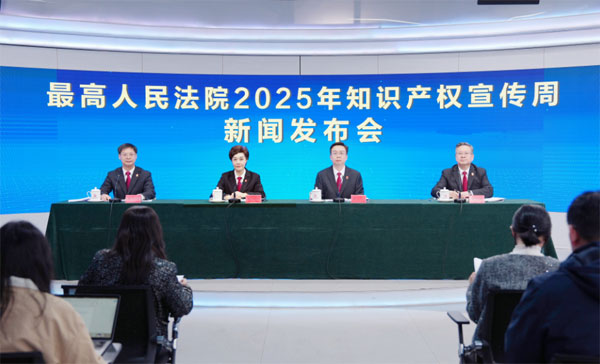
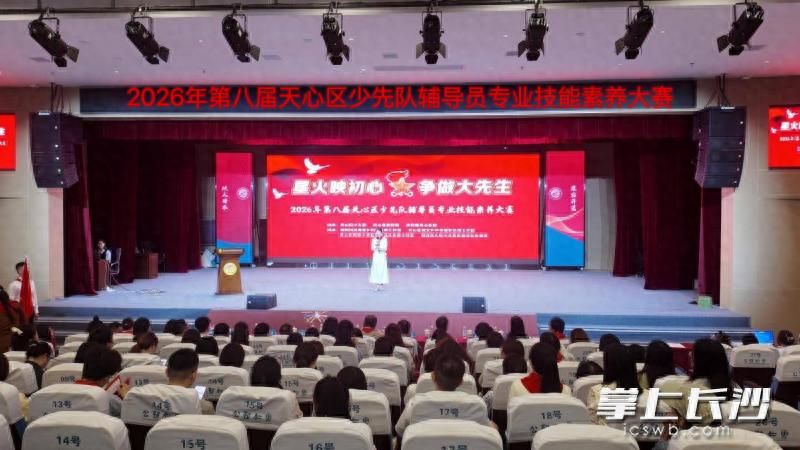
It shows the press conference scene。
On 21 april 2025, the supreme people's court held a press conference to publish the status of judicial protection of intellectual property in chinese courts (2024) and a typical case of intellectual property in people's courts in 2024 and to answer questions from journalists. The vice-president of the supreme people's court, mr. Tao kei won, the president of the people's division of the supreme people's court, mr. Li sword, and the vice-president of the intellectual property court of the supreme people's court, mr. Zhonglin, attended the launch. The press conference was chaired by the press spokesman of the supreme people's court, lin literary. At the launch, the vice-president of the supreme people's court, mr. Tau kae, gave an overview of the judicial protection of intellectual property rights by the national court in 2024。
In 2024, the people's court, guided by xi jinping's new-era chinese-style socialist ideology, implemented xi's philosophy of the rule of law in depth, fully implemented the 20th and 20th mid-middle and 3rd plenary sessions of the party, firmly established that the protection of intellectual property rights is a judicial concept that protects innovation, focused on innovation protection, and provided quality judicial services and strong rule of law guarantees for accelerated development of new quality productivity。
I. Improving the quality of trials and the full functioning of the judicial protection of intellectual property
One is the fair and efficient administration of justice. In 2024, nearly 530,000 new intellectual property cases (including 4,799,000 at first instance) were admitted to the national courts. More than 540,000 cases (49,410,000 at first instance) were completed. The number of cases concluded, the completion rate within the limits of the trial process rose steadily. The indicators of the ratio of cases to cases and appeals, second instance revision, remand of cases, and re-examination of applications continued to improve. The second is to insist on strict protection. Last year, the national courts applied punitive damages in 460 cases of infringement of intellectual property rights, an increase of 44. 2 per cent over the previous year. The supreme people's court has applied punitive damages in the case of the technical secret violation of the “new energy car chassis”, which was awarded over $640 million and was chosen as “the 10 major cases in 2024 for the promotion of the rule of law in the new era”. The third is effective division. Actively exploring the model of intellectual property dispute resolution and substantive dispute resolution. The supreme people's court has successfully resolved a copyright violation dispute involving well-known film works, leading to a settlement between the parties on this case and on the potential dispute over the remaining nearly 140 works, effectively avoiding the parties ' re-emergence。
Ii. Strengthening innovative judicial protection to help accelerate the growth of new quality productivity
One is to strengthen the judicial protection of science, technology and innovation. The supreme people's court issued opinions on the protection of science, technology and innovation with high quality trial services, which provide comprehensive and systematic guidance on trials in the area of science, technology and innovation. (c) adjudication of cases involving intellectual property rights in the field of new technologies and raising the level of judicial protection of scientific and technological innovations in key areas and core technologies. (c) to intensify efforts to combat intellectual property rights violations of technological achievements and to clean up the scientific environment. To safeguard the legitimate rights and interests of the subjects of innovation and to stimulate momentum within research. The supreme people's court hears public hearings in the case concerning the patenting of “bone arthritis drugs”, defends the rights and interests of scientific research subjects in accordance with the law and inspires high-tech people to be innovative and entrepreneurial. The second is to help promote the building of a single large market. Strictly combat the malign registration of trademarks and the counterfeiting of abuses, increase the protection of the right to geographical signs and trademarks, traditional brands and old characters, and create an internationally influential chinese brand. Strengthen anti-monopoly and anti-improper competition justice and regulate practices that undermine fair competition, disrupt market order and lead industries towards openness, innovation and empowerment. Third is optimizing the protection of the rights and interests of innovation. Study the development of guidance on judicial protection of data rights and property, the proper handling of data interest disputes and the promotion of efficient flow and trading of data elements. Cases involving disputes involving artificial intelligence are dealt with in accordance with the law, which supports the application of artificial intelligence in accordance with the law and leads to the development of health science in the artificial intelligence industry. The beijing internet court concluded the "aiwensheng case" and actively explored ways to protect the copyright of artificially intelligent products, and the case was selected as the "ten nominations for 2024 for the new age process for the rule of law"。
Iii. Deepening institutional reforms and improving the intellectual property justice system
One is the ongoing strengthening of specialized intellectual property justice institutions. There are 30 intellectual property courts in local courts nationwide, 558 grass-roots people's courts with jurisdiction in intellectual property civil cases, and the distribution of intellectual property cases continues to be optimized. In the six years since its establishment, the intellectual property court of the supreme people's court has completed nearly 20,000 cases of technical-type intellectual property appeals, the number and percentage of cases involving strategic and emerging industries has risen over the years, and the effectiveness of the reform of the mechanism for the review of intellectual property appeals at the national level has been highlighted. Further progress has been made in reforming the “triple court system” and in conducting a structured pilot exercise, with the introduction of a “triple court” mechanism for intellectual property cases in 25 high courts, 242 middle courts and 287 grass-roots courts throughout the country, further enhancing the overall effectiveness of judicial protection of intellectual property. The second is to explore the development of specialized intellectual property justice mechanisms. Study the development of a draft legislative recommendation on the special procedures law on intellectual property to facilitate its inclusion in legislative planning. Strengthen regional judicial collaboration and continuously improve the quality of trials. The courts in beijing and innermont have established and deepened regional collaborative mechanisms for intellectual property justice, promoting information-sharing and skills-sharing in the relevant regional courts. Third is the improvement of the mechanisms for the verification of the facts of diversity. The establishment of a “national pool of technical court investigative talent” has been continuously advanced to effectively alleviate the difficulties of fact-finding in technical cases. Actively piloting the application of copyright ai to prevent copyright disputes from the source, the case was selected for the third set of typical cases of intellectual property power-building under the state council。
Uniform standards for the application of the law and improved rules for intellectual property adjudication
One is to actively promote the publication of judicial interpretations. The supreme people's court has introduced a judicial interpretation of antimonopoly civil proceedings, systematically regulating and clarifying the applicable standards of antimonopoly justice. Study the drafting of criminal justice interpretations of intellectual property rights, strong sanctions and deterrents to serious intellectual property abuse. (c) expedite the drafting of judicial interpretations of patents, trademarks and copyrights and promote the harmonization of rules for judicial protection. Second is the continuous strengthening of line guidance. The supreme people's court coordinates the deployment of lines and provides precise supervision guidance. Establishment of regular communication mechanisms with relatively weak courts to improve overall trial capacity. (b) the administration of irregular mass litigation, leading to legitimate claims and good faith actions by the right-holders. Organization of business training and theoretical research exchanges and creation of a platform of intellectual property professionals. Third is the effective use of case guidance. The supreme people's court issues typical case studies of the subject matter, summarizing in a timely manner the rules governing the administration of justice in the relevant areas. (c) increase the dissemination of cases from the people's court and promote the sound harmonization of the rules governing decisions. Active use of the french-language platform to guide practice, to advance the “bank integration” and to facilitate the translation of responses. By the end of 2024, 772 cases had been opened around intellectual property trials, and over 7,000 inquiries had been completed, resulting in 207 inquiries。
V. Improving synergies and promoting synergies in intellectual property protection
One is the continued strengthening of the interface between the administration of justice. The supreme people's court, in conjunction with the national copyright authority, issued opinions on enhancing co-operative protection of copyright, which set out a working pattern for greater protection of copyright. Implementation of the opinion on enhancing the coordinated protection of intellectual property rights, signed with the national intellectual property agency, and promotion of harmonization of standards for the administrative review of trademarks and judicial standards. Local courts in beijing and zhejiang have established interface mechanisms with relevant local administrations to enhance information-sharing and coordinated regulation of intellectual property abuse and unfair competition cases. The second is to deepen the implementation of the “overall-to-all” twinning mechanism. Nationally, the organization of conciliation of intellectual property rights is fully covered, and mediation organizations and mediators continue to grow. The supreme people's court issued a second series of excellent cases and typical experiences of “general versus total” intellectual property dispute mediation, which served as a model lead. The third is the ongoing promotion of the development and implementation of judicial recommendations. The supreme people's court has actively promoted the realization of the judicial recommendations relating to the film industry. In 2024, the first-instance court case involving the authorship of films fell by 43. 32 per cent in comparison with the same year; and a short film collection called “protecting intellectual property rights, helping to create innovation”, organized jointly with the chinese filmers' association and the ministry for the defence of rights and interests of the chinese confederation, served the high-quality development of the film industry. The courts in beijing, hebei and shanxi have been active in developing judicial recommendations, improving the regulatory policy of the relevant sectors and promoting the health of industry。
Vi. Strengthening export cooperation and a high-level of services
The first is the equal protection of the legitimate rights and interests of both chinese and foreign parties under the law. In 2024, the national courts received 852 new cases of intellectual property rights involving foreign nationals at first instance, and the people's courts heard cases of intellectual property rights involving foreign nationals in a fair and impartial manner, protected the legitimate rights and interests of both middle and foreign parties on an equal basis, and rendered more leading judicial decisions, thereby demonstrating the image of the country's responsible state for strengthening the protection of intellectual property rights. The second is deep participation in global governance of intellectual property rights. The supreme people's court has jointly organized with the world intellectual property organization an international seminar on intellectual property justice and has actively participated in international conferences convened by the world intellectual property organization to contribute chinese judicial wisdom to global intellectual property governance. To recommend 66 cases of chinese intellectual property to the world intellectual property organization (wipo) law and treaties database, to expedite the updating of database cases and the editing of a collection of typical cases, and to use judicial cases to tell the legal story of chinese intellectual property. Actively promote cooperation with the arbitration and conciliation centre of the world intellectual property organization (wipo) to facilitate substantive settlement of foreign intellectual property disputes. Third, active participation in bilateral multilateral exchanges. The supreme people's court held a judicial exchange on intellectual property between china and the united states to promote greater understanding and consensus between the two sides. Ongoing work on the central european cooperation on intellectual property rights project to facilitate communication between the two sides. The china-british exchange seminar for intellectual property judges, participation in international exchanges such as the china-singapore case forum, the asian masters of commercial justices ' course, the korean international intellectual property court conference, continued to strengthen exchanges and cooperation with international organizations such as the international trademark association, and continued to enhance the international influence of chinese intellectual property law。
A new era and a new mission. Guided by xi jinping's philosophy of the rule of law, the people's court will play its full role in intellectual property justice, with a high level of judicial protection of intellectual property, promote competition among all factors of production and the full flow of all sources of innovation, and contribute to the development of new quality productivity and the building of intellectual property power。