On 3 january 2019, the zenit iv successfully landed in the pre-selected landing area of the von carmen impact crater in the antarctic-atken basin on the back of the moon, the first human landing on the back of the moon. In addition to achieving the first human back landing detection, the zenit iv carried out a biopaste test. In this bioplug, six species of potato, oil, mustard, cotton, yeast and fruit fly were carried. It is hoped that the growth of plants, animals and microorganisms on the moon will be validated。
A test photograph sent back at the beginning of the year showed that cotton seeds in the kopp payload had grown a green leaf, the first to grow on the moon. However, for reasons of camera clarity, some of the information in this photograph has not been confirmed. Like the shadows on the green leaves in the pictures。
In recent days, the research and development team has processed the picture in depth through three-dimensional re-engineering and data analysis. It was discovered that the green was actually made up of two leaves, whereas the shadow just described was the shadow of another leaf. At the same time, this picture shows the growth of plant roots on the moon, proving once again that plants can still be cultivated in conditions of intense radiation and low gravity on the moon。
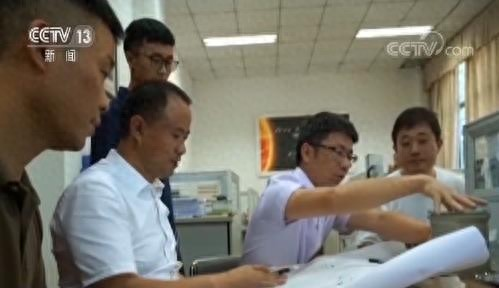
The experiment was successful, but it may not have occurred to you that this team, which achieved the first “grooming” on the moon, was not actually a professional space team. Most of them do not even have space-related backgrounds, which also leads to many unexpected difficulties in developing and testing。
No space background dreamer
From environment, machinery, materials to biology, the team of more than a dozen individuals covers a wide range of disciplines, but none of them is a space professional. Three years ago, the zenit iv programme for the public collection of biobiology pilot loads was launched in nearly 300 programmes. This is the first time that this group of spacemen has been exposed to space missions。
There are no specialized testing sites and no specialized components, which have been questioned. And because they are carrying living creatures, would it affect the overall mission of the zhuang four, which is the biggest controversy facing the project。
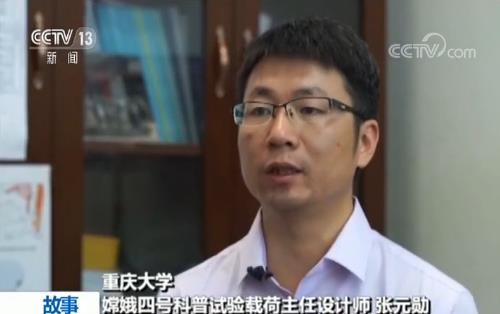
Zhang won-hoon: because zhou-lu is an important task for the country, we can't afford to make any mistakes. We can understand that. Where they think we might have problems, we're going to experiment and we're not going to have problems。
No one in the team knows what their fate will be, and for two years they will only be able to take questions, face them, resolve them to prove the safety of the payload。
In such a long race-sawing, team members stayed from 60 to 70 at the beginning to only a dozen at the core. And just half a year from the launch, the camera used to film the growth of life was again problematic, again exposing them to a desperate situation。
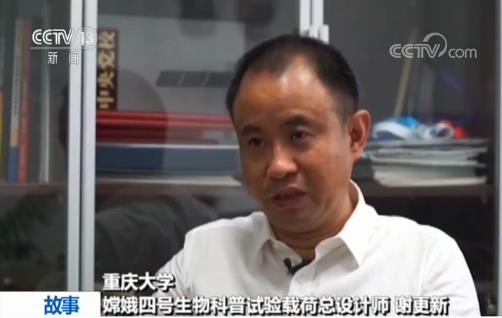
The master designer of the bioplug 4 test payload of zhuang-eun: the picture can't come back. We're all tired by now. But none of these people in the small core team, none of them left, and all of them stuck to the end。
Zhang won-hoon: never thought about it. I've always felt like i could go up there, and i'm here for that。
On 28 september 2018, only 70 days before the launch, the master and commander-in-chief of the general and detector systems of the zhu ' a iv mission decided to meet to agree whether or not the kopo payload could be carried on the moon。
After a detailed review, the experts concluded that the payload met the criteria and would not affect the overall task of zenit 4, and that the two-year commitment of the development team had finally landed. On the day before the bio-testing unit took off with the zenit iv, thanks were paid to the experts who had updated the mission systems for their thoughts。
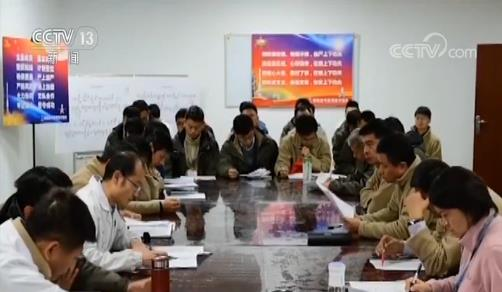
The chief designer of the bioplug 4 test payload, thank you for updating: our load is going to go up, but it's probably not going to grow or fail, and if someone outside is mocking us and criticizing us, i want you to explain to us, we're trying, we're trying。
Under space standards, we keep working on the subtraction
In fact, not only did they not affect the zenit iv mission, but they also succeeded in producing the first plant on the moon, which is inextricably linked to their continuous learning and adaptation to space standards in the development process。
The structure and design are fixed, since the qin 4 was originally a backup for the qin 3. Only 3 kg of payload and less than 20 centimetres of space were left behind. Under such close and severe space constraints, the development team has made many trade-offs, both regretful and rewarding。
There's only one plate of palm size in front of you, which is used to place a device carrying the life of the moon. The cells above are used to distinguish different plants, with a width of 7. 5 mm and a length of 9 mm. That is to say, all plant seeds can only grow in the space of this nail cover, which is the microcosm of the "small" space left to the kopload space by the zhut iv。
Plants have to choose smaller, animals have to choose smaller, and thanks to the update, the animals they had chosen were turtles, hoping to be able to verify the survival of higher animals on the moon and to show better results。
The chief designer of the bioplug-four is grateful for the update: we started with a half-year or even a year, with turtles as the main thread to design the ecosystem. But when we were finished, we were sealed on october 10, and the arrow was launched, almost two months before december 8. Make sure the turtle breathes oxygen inside。
That is, turtles need to survive in closed space for two months. However, because of the lack of space, oxygen in the tanks can only support turtles for up to 20 days. So only one less oxygen-consuming animal can be replaced。
This also means that the ecosystems previously designed for turtles have to be reversed. This is the kind of "turn" team that's actually gone a lot. At the very beginning, they hoped that the organisms in the payload would be able to spend a month and night on the moon, so that they could observe the difference in growth between the day of the month and the night of the month。
The moon's night temperature reached minus 180 degrees, and one night on the moon was 14 days on earth, so it was necessary to carry batteries to power the heat-control system。
Zhang won-hoon: we spend the most time on heat control and this battery. The 17 structural optimizations were around either thermal or battery demand。
For more than a year, the team has been looking everywhere for small quantities of batteries with enough energy. However, when they finally found them, the batteries were not verified for reliability in the space sector because of their energy density and their unknowns。
Although the team had to accept the fact that the payload could not spend the night of the month, it had also given the original space “showers” a true understanding of what was a space standard. The team members thus began to evolve from structural design to material optimization, which also laid the foundation for their eventual success in moving to the moon。
Breaking the shackles
Although the lack of contact with space missions had made the group more difficult and difficult. At the same time, however, it is precisely because they were not “bound” by space missions that they put forward an innovative idea that, in some cases, has become a tool for solving problems。
Zheng zheng zheng, who is dealing with these bottles on a daily basis, never thought that one day he would have an intersection with space。
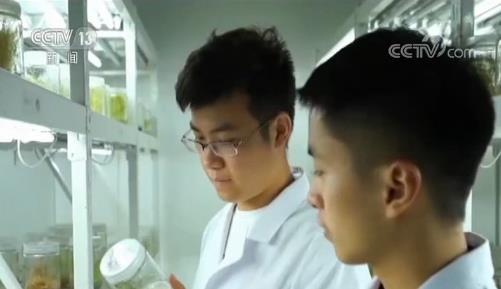
Zheng zheng zheng zhen, a member of the zheng qianxian bio-pavous payload team, said that he had only learned from science channels or books that he couldn't think before going to the satellite launch center, and felt that place was particularly mysterious。
As a biological doctor, it's not difficult to feed a few plants. But this mission of "cooking" in space has created a lot of problems for zheng. For example, in order to prevent the soil from coming out on its way to the moon, a sheet of cloth would need to be built. If fixed with a general veil, while ensuring that the soil is not dispersed, plants cannot grow。
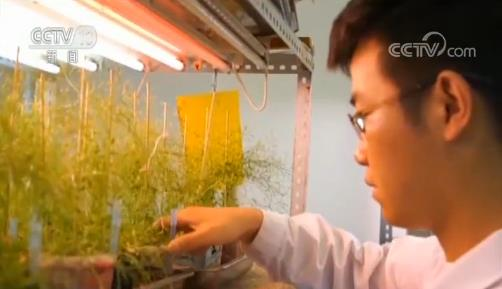
Jung: because the eyes are too small, the seeds can't reach, they can't see, they can't take pictures. Keep saying what to do. And then suddenly i thought that i was going to put water behind me, and then it would be covered up and then it would disappear and there would be no such material。
By looking for a large amount of information, zheng zhen zhen had indeed found such material — water soluble cotton used in embroidery. However, it is not actually available in a biobiology test payload, which needs to be tested extensively。
Zheng cheon: it's not clear whether this material dissolved will affect plant growth or poison plants。
After repeated experiments, zheng zhen zhen zhen zhen zheng zheng zhen has finally confirmed that the aqueous cotton does not pose a hazard to plants and can be used as a material for stable soil. So, this seemingly simple but efficient solution became the key to the success of the kopload。
There's a lot of ideas like this. Although everyone had no experience with space missions, that gave young people enough space to imagine。
The chief designer of the biopatron 4 test payload thanks for updating: we don't think about these things in conventional space, because the team is young and he doesn't have a choice. They send me a message as soon as they're done, and then they do an experiment, and the data is available, so it's settled。
On 7 january 2019, when a picture of the success of the cotton seed sprouts was sent back from the kopoload on the moon, it proved that this creative team paid off for two years。
For some members of this non-professional space team, this science experiment may be the only chance in their lives to get close to space, and they have achieved the dream that ordinary people can explore the universe with persistence and innovation。