


In 2020, the year was a difficult one for the whole population to survive the epidemic, to withstand the floods and to catch up with the policy of returning to the forest. A circle, small nurseries are gone, big ones are small. At the same time, there is increasing competition in the market, and simple planting of trees is no longer advantageous, and many seed farmers are beginning to try innovative planting techniques and methods to reap more benefits, among them the set of techniques。
Set methods and advantages
Speculation refers to the way in which crops are grown in the first or second-season period of crop growth, which, when compared with monoculture, allows the full use of space in a phased manner, prolongs the later-season crop growth season, increases the replant index and increases total annual production。
The application of plant techniques in tree cultivation allows for efficient use of nursery space and increases the efficiency of unit area。
Set of care
Plantation should be high enough to match the main planting plant
The aim is to facilitate ventilation and increase the efficiency of light use。
Package crops do not share the same pests and pests as the main planted trees
Insects have always been a major problem for tree cultivation, so when choosing a crop, it is important to know whether the crop has the same pests as the main plant, and if so, never grow together, otherwise the pests will be unusually “absolute”. For example, the adjunct of sea beaks cannot be ploughed with the tarp because rust can cycling between them, causing greater harm。
The root systems of the plant should vary
It is usually a deep-seated system that combines shallow systems to avoid competition for moisture and nutrients, so that they can take advantage of the nutrients and moisture in the soil and contribute to the growth and growth of crops for the purpose of reducing and increasing production。
Implants can't share with the main tree
Two or more crops are grown together, and chemical substances such as fungicides, growthers, organic acids and bioalkalis that are distributed to each other can directly or indirectly affect each other's growth. If the crop choice is inappropriate and inhibits the growth of the main planted tree, or even “kills” the main planted plant, it can be lost and lost。
The plant itself needs some economic value
This is too obvious to be repeated. After all, free “weed” cannot be used as a crop。
Set type sharing
Tree + tree
This is the most common pattern of homogeneity, which, using differences in size, dwarves and ecological habits, can solve the problem of small areas and increase the volume of small areas. For example, silver apricot+lombo+matwin, farry+françois+holky+gold. Such a combination can easily lead to high yields, but the economic benefits also depend on specific species。
Tree + herb
Herb is of high economic value and therefore a good set of options. The saplings tend to grow higher when they grow, and the herb tends to be small, allowing for the selection of attractive chinese medicine, such as ginseng, yellow chain, lingsei, tiansima, etc。
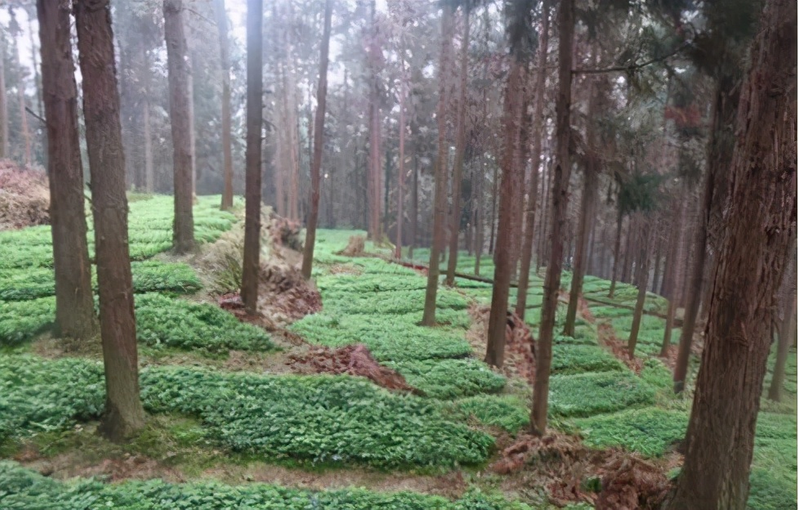
Tree+grass
Over a period of one to three years after the tree has been planted, some high-strength pastures, such as tiger grass, wild and ancient grass, can be planted. When trees fall apart, weeds can be used to raise ducks and geese, saving the cost of artificial grass-cutting and fattening poultry, and their faeces can be the nutrients of trees。
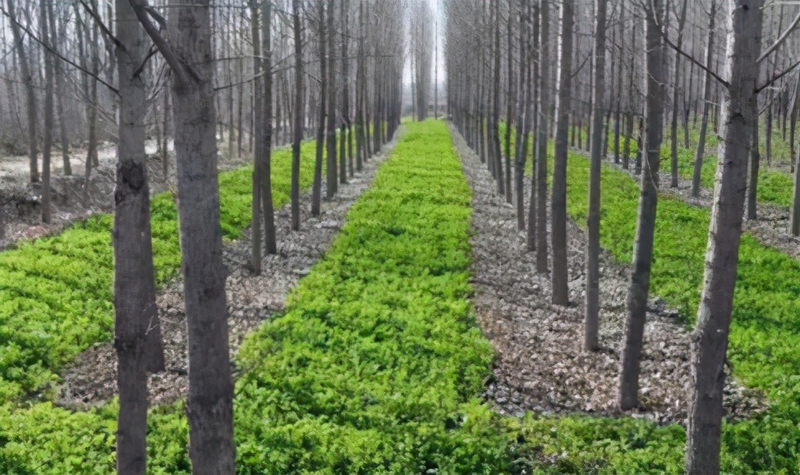
Slender + fungus
This model is more appropriate for fast-growing trees, growing up to 4 to 5 years, with large trees covering their shades, and the dim and humid forest space being particularly suitable for bacterial growth, with high economic benefits。
Concluding remarks
While they allow nurseries to diversify and extend the industrial chain, there are limitations. They may choose according to their own circumstances, taking into account market demand。



