


I. Cultivation
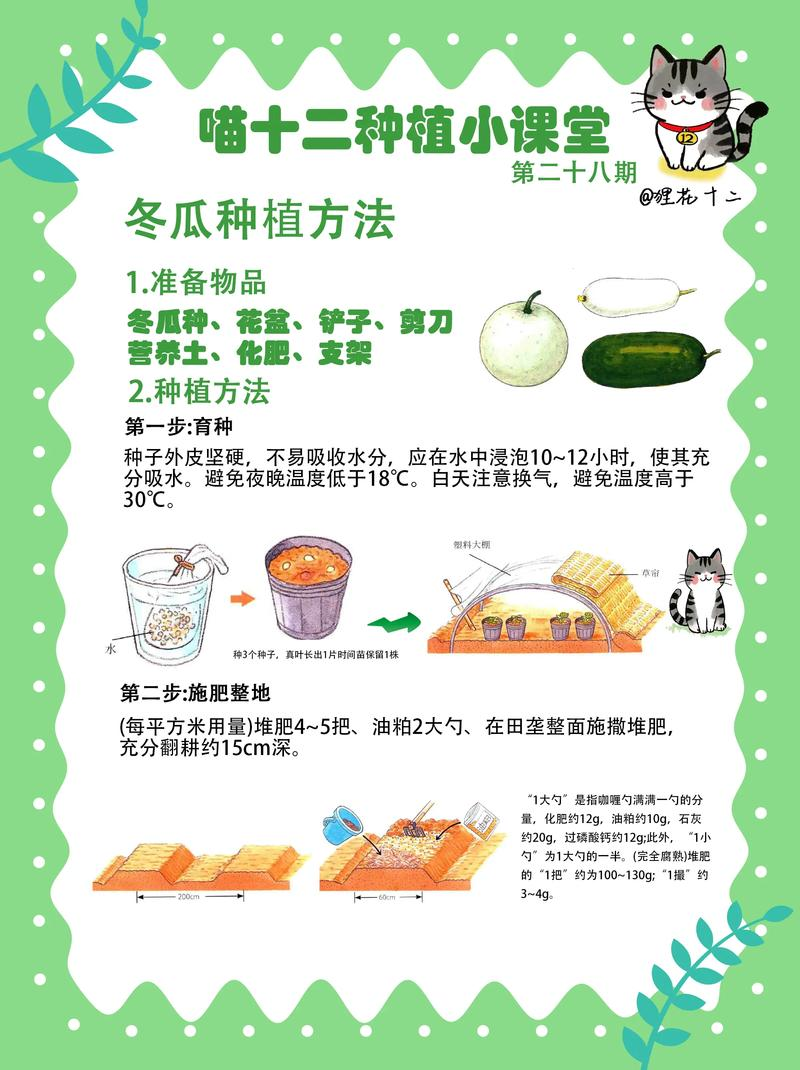
Seed treatment. Winter melon seeds should be immersed in seed seed seedlings and seed disinfection prior to seeding because of their thick skins and their insinuability. 20 minutes leaching with more than 50% more than 250 times more fungus. Sterilized seeds are washed with water and then immersed for 5 to 6 hours, and are taken up for seedlings at temperatures around 30°c。
Child-rearing. It is broadcast early and in due course, from the end of january to the beginning of february. It is then covered with film arches. When a leaf grows, it is transplanted to a nutrition bag, with a specification of 15 x 18 cm, where fertile soil from uncultivated melon crops is selected and then covered with thin film arches。
Ii. Standing
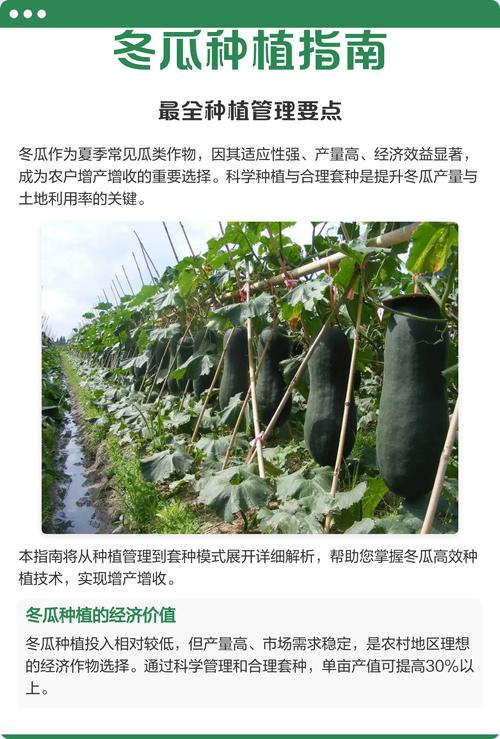
1. Land selection. New lands with uncultivated melon crops have been selected, or water and dry wheels have been used for three to five years for field cultivation。
2. Rise and shine. It is made of 110 to 120 centimetres, 50 centimetres wide, and the field is surrounded by a ditch, which is connected to each other and easily drains and drains。
3. Reasonable insulation. When temperatures stabilize at above 15 degrees celsius, the nutrition bag is removed when planted. A line of 60 to 70 centimetres per plant. The acres are planted with 450-550 plants, which are then refilled with root water。
Iii. Fertilizer water management
1. Fabrication. The glyph is buried in the middle of the ground when it rises. Organic fertilizer of 2000-3000 kg per acre and calcium per phosphate of 50 kg。
2. Coupling. Acre application of three elements (n, p, k content of 15% each) to seedlings of 5 to 6 is 10-15 kg compound fattening and 8-10 kg urea. Promotion of chicken extension and increased nutrient accumulation. For the formation of the female and the sitting melon. The first female, when open, controls the fat and the water, preventing the growing. Plum nuts。
3 re-enactment. Enhance management of fat water when the fruit is up to 3. 4 kg. Acre application of 15-20 kg compound fattening (n, p, k content of 15% each), urea 10-15 kg and potassium chloride 8-10 kg. Once every 10 to 15 days and four to five times. The winter melon, which requires a large amount of water for its growth, should be filled in a timely manner, in the morning, until one half of its height is fully wet and drained, the soil is kept humid, and during the rainy season water should be eliminated。
Iv. The mat with the chicken。
After planting, the chicken is set up when the seed is 50 to 60 centimeters tall. 60-70 centimeters tall. Remove all the chickens before they sit and leave 2-3 chickens at 3-4 kg。
V. Artificially assisted pollination。
The flowers of winter melons are the same for females and males, and artificially pollinated to increase sitting rates, by choosing the males that have just opened in the morning, and by removing the petals and rubbing them gently on the female head。
Selection of cucumbers。
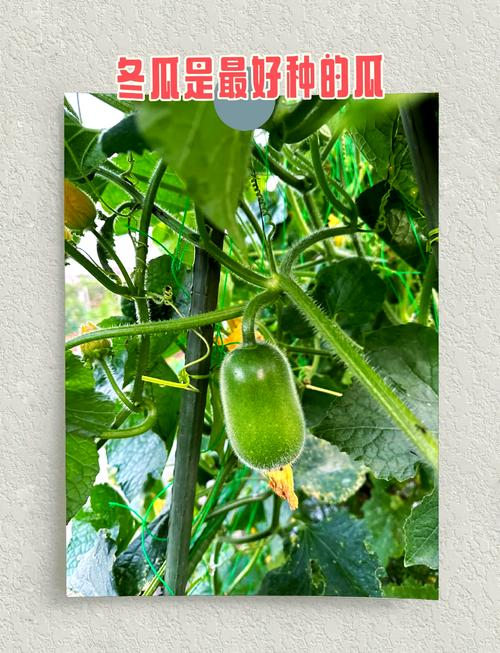
The size of the melon is related to the melon node and the quality of the cucumber. When the melon is left, it is grown in a large section, usually with two or three of the same upper and lower parts of the 21-27 section, covered in hairy and radiant guacamole. When it reaches 10 centimetres in diameter, it removes it and leaves it alone。
Vii. Pest control。
1. Disease prevention and treatment. The main diseases of winter melons are atrophy and disease. The prevention and treatment approach combines plant and chemical control. Cultivation control, using three to four years of dry water rotation with non-melon crops, increased application of organic fertilizers, appropriate control of chemical nitrogen fertilizers, increased application of phosphorus, potassium fertilizer, etc. Chemical control. In the early stages of the atrophy, roots were given by 800 times the glucose or 200 times the agricultural resistance of 120 times or 600 times the enzymes of 70 per cent of the dichlorine. Epidemics are treated in the aftermath of heavy or heavy rains, with 58 per cent of redomir or 72 per cent of girex 600 times or 12 per cent of copper pine resin 800 times。
2. Pest control. The main pests in winter melons are walruses, guacamole, and so forth. Optimizing the rotation of highly effective and low-toxic pesticides. Elephants are sprayed with 90% trichlorfon or 80% dichlorvos 600 times the fluid, and the masts are prepared to be treated before the smelt, with 25% lice 2000 or 1,000 times the winter. It is difficult to use mites to kill a star or alfuddin no. 3 1,500 times the fluid or 800 times the phosphorus after 4 p. M. (china agricultural technology network)



