Spinachs are cold, intolerant of high temperatures and strong light, and generally have a temperature above 25°c that makes normal growth difficult. The summer spinach tends to sow in stages in may-july, with harvests continuing from late june to mid-september. High economic benefits are generally achieved through the adoption of appropriate technologies and the introduction of anti-seasonal cultivation during the summer. So, what do you need to know about summer spinach if it's to be high
1. Selection of spinach varieties
The sprouts of summer spinach are in high temperatures and long daylight seasons, and although the foundation of the leaf is becoming rapidly divided, the buds are also becoming more divided and screeched. It also has high temperatures, high evaporation, strong breathing, low accumulation of plant nutrients, limited growth in leaf area and poor quality. Heat-resistant, smoke-resistant varieties are selected. It's like kyo bo 6, the anti-heat king, the big leaves, the fast green。
2. Summer spinach necessary facilities
Sunshield protection is key to success in the summer spinach cultivation. It is necessary to cover the shampoo against rain, and to cover the sun net (50-60 per cent per day) with cooling. The membrane is compacted with a pressurized membrane line and is rolled up around the normal time, with only the upper vertebrae left to cool, and the tectonic seals down during the rainy days, preventing rain from entering the membrane from causing roots, rotting roots and dead seedlings. The most significant cooling effect is that 20 centimetres of the shroud are left when sunnets are installed. It would be preferable to use a mobile form to make it easier for rollers to operate. Covering the sunnet during high-temperature periods between 9 a. M. And 4 p. M. In the middle of a sunny day, prevents a strong light from being thrown up when the light is weak on or after 9 a. M. And 4 p. M., both to prevent high light and warm and to allow spinach to see enough sunlight. In addition, it would be preferable to include aft nets where conditions exist, since aphids and grey lice are a direct hazard not only to shantytes, but also to vectors for the transmission of viral diseases. Pre-planting can be done by sealing a 60-70-point anti-worm net around the arch shed or south of the shed, which does not affect ventilation, is resistant to insects, and is able to isolate vectors from the shed and directly and indirectly reduces the insect hazard。
3 spinach sprouts
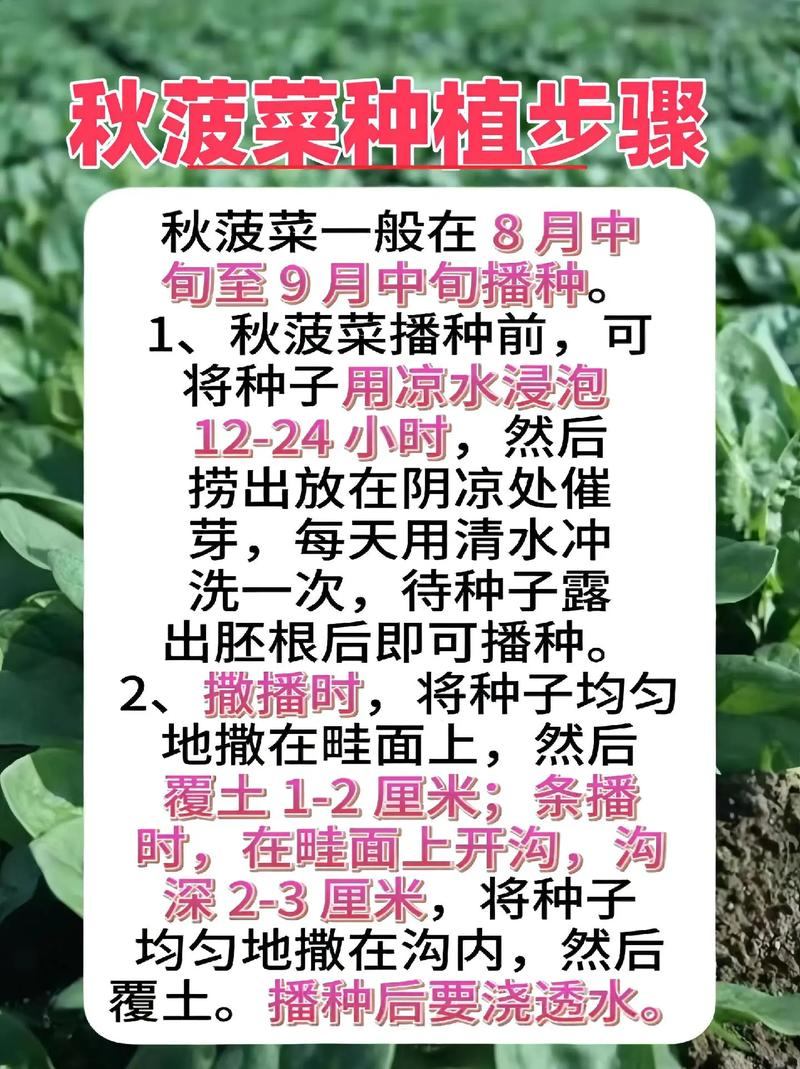
Summer spinach tends to sow in may-july, and harvest in july-august. Live broadcasts were available in mid-june and seeding was required at low temperatures between late june and late july, when temperatures exceeded 30 degrees. Specifically, seeds are sprung 24 hours in cold water at around 20 degrees, for about four days, when the seed has surfaced its embryos (dew) and can be sown with sand, with attention to the bottom water before planting。
In-house sandy land can be broadcast flatly, for example, in cases of soil adhesiveness, preferably in the form of seedling. Years of production have shown that spinach cultivation in the summer season is the most vulnerable to flooding, such as the cultivation of muscular stasis in the platinum, which makes the base of the leaf well ventilated and less susceptible to disease. It is usually 50 centimetres, 30 centimetres wide, 10 centimetres high, 2 rows per crop, and open ditches with around 1. 5 kg per acre。
4. Summer spinach field management
After broadcasting and immediately covering the sunnets, the nets should be ready in a timely manner, and when the seedlings are ready, the water should be controlled and the roots should be induced to “seek for water” in order to develop a strong root system, with a moderate duration of three to four days of drought. During the summer spinach growth, water cannot be poured, otherwise serious roots, dead seedlings and leaves will be created and even the harvest will be cut off. Water should be watered in a manner that does not lead to drought, in accordance with soil conditions, and the timing of the water should be chosen in the morning or evening, with the fear of watering at high noon temperatures. Scalding, both to keep warm and to prevent the growth of mosses, is critical for disease prevention. Since the huts are fertile in soil, spinach will not be required to fatten for the long term。
5. Harvest

When spinach grows to 20-30 cm high (about 35-40 days) it must be harvested in time. The market may also be marketed with an appropriate advance or delay of one to two days. But do not drag too long, so the harvest is not too late due to the high and perishable summer temperatures。
These are the points of summer spinach, which is difficult to grow because of the high summer temperatures and the need to manage the five main points in order to produce good summer spinach。