Zhang was crouching on the ground, holding a garlic head in his hand, frowning his eyebrow to death。
"why is this so small this year?" he's groaning, and he's playing the drums。
What's the difference between big and full garlic and peanut rice
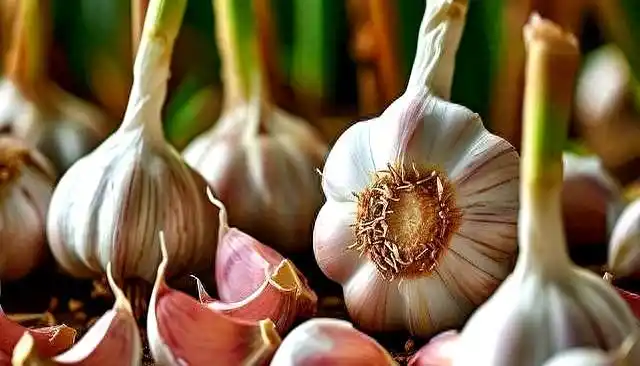
In fact, it's a matter of “time” and “management”, and it's a matter of losing everything。
It's a piece of garlic. It's a family thing。
It's not easy to grow。
Its roots are not deep, mainly in 10 to 25 centimetres of soil, and it likes to cool the weather, not to be afraid of cold, but to heat and water。
When they grow, they have to grow between five and six leaves before winter comes, so that the garlic seed is enough to feed, resist freezing, and survives the winter safely, and the garlic is big behind。
If it grows too early, before winter, its nutrients run out, it is resistant to freezing; it is too late, it is small, leaves are small, it is prone to freezing in winter, and it is small and low in the following year。
Time to grow garlic, to see local weather。
Most of our country is built in autumns, in particularly cold places in the north-east, in inner mongolia, with long winters and springs。
The core is to make garlic grow at the right temperature, either safely through winter or successfully through springing。
The warmest places in the south, like sichuan, chongqing, guizhou, yunnan and the north-south side of the lake, are not cold in winter, with the lowest temperature above 0°c, and can be planted in late august and early september。
At this time, the temperature is right, the seeding is fast, and it lasts more than two months, and five to six leaves will grow before winter. It will not be cold or cold. It will last from march to april, and it will last from may to june。
In the yangtze basin and the huang huai region, such as shandong, north-south, henan, jiangsu, anhui, zhejiang and shaanxi guan, winter temperatures range from 5°c to 5°c, which can be frosted, generally growing around october。
For example, the main area of shandong garlic production is the most suitable species from 5 to 15 october, when temperatures range from 16°c to 18°c, so fast that by the end of november, when winter comes, it will be 25 to 30 cm high, with five to six leafs, and it will be winter with a simple cover。
In cold areas in the north, such as north north of the river, north-west of the hill, cold winters, high-risk autumns, some farmers will grow earlier, from late september to early october, allowing the seedlings to grow three to four leaves in mid-november, covering the membranes or drying the cold, so that it does not grow too much or too weak。
In the north-east, the interior of mongolia and the north of xinjiang, winter temperatures are often below -10°c, and garlic cannot survive the winter in the open, but only in spring。
The key is to “premature planting, but not to let the seed grow mad”, when the soil is frozen and the average temperature during the day is stable at 5 to 8°c, so plant quickly, usually from late march to early april。
At this point, garlic can finish springing at low temperatures, and then it can smoke and make garlic normally; it is warmer late, it is not springing enough, it is easy to grow seedlings without garlic, or it's sprawling。
What about the time you grow garlic
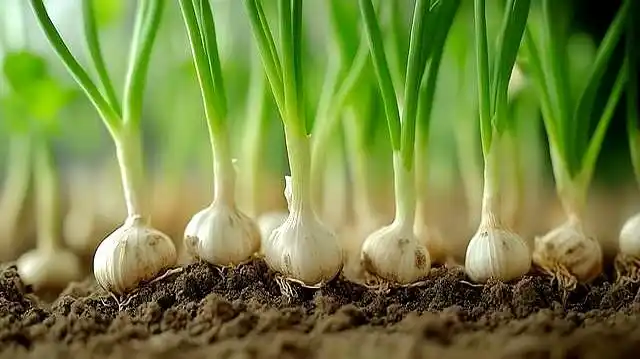
It depends on species, soil and old experience。
It grows fast enough to grow three to five days late; it grows slow enough to grow five to seven days early to ensure that leaves are sufficient before winter。
Sands are not well fed and are fast enough to grow two to three days later; the adhesive land is poor and slow to grow two to three days early, so that it does not grow long enough before winter。
It's three to five years, three to five days later, and three to five days earlier, depending on the weather。
Garlic looks simple, but every step of the way affects seedlings and strength。
Garlic has to be big, full, no wounds, no molds, no worms, little petals, porridges, deformed petals, broken petals。
Growing the previously selected garlic petals in a cool place, tan for two to three days, flipping one to two times a day, drying up the garlic petals, reducing the disease on them, and breaking the “sleeping” and giving it early buds。
After sunbathing, a hot water of between 30 and 35°c is used for 12 to 24 hours to make it drink enough water to germinate quickly; if the earth is prone to garlic rusty, root decomposition, 50% more fungus or 70% more methyl sulfur in the hot water, 12 hours more, and they are washed with clean water, dried up and replanted, and can kill the disease in the garlic belt and reduce the disease during the seeding period。
Fertilizing the whole earth is also critical。
Garlic is shallow and has weak nutrient intake, and it is necessary to clean up the soil and to fatten it to create a comfortable environment for its roots。
(c) land level, drainage, soil thick, nutritious sandy or bordery soil, other than in low-lying water, saturated or saline land。
The first 15 to 20 days of planting the ground deep between 25 and 30 centimetres, breaking the hard layer below and allowing the soil to breathe。
After three to five days of sunbathing, the soil is fertilized, killing the fungus and the eggs; then the earth is torn to pieces, and the earth is torn to the ground, which is to be made of flats of 1. 2 to 1. 5 metres wide, and the surface is to be flattened, and not to leave large pieces of earth, otherwise it is to be grown at a different depth。
Between 3,000 and 5,000 kg of rotting chicken, pig or cow dung per acre, with an additional 50 kg of a nitrogen phosphorus composite fertilizer, 30 kg of calcium per phosphate and 20 kg of potassium sulphate。
And when you have done so, you can also open a ditch in the guacamole, and bury it in the gutter, so that it does not touch the garlic, or burn the petals。
Seeding techniques are key, and the size of seedlings and garlic is influenced by distance, shallowness and garlic。
If you grow garlic, you can keep it close, 15 to 18 centimetres in length and 6 to 8 centimetres in length, and if you grow garlic, you will have a thin spot, 20 to 25 centimetres in length and 8 to 10 centimetres in length, leaving 30,000 to 40,000 seedlings per acre。
The four to five centimetres are the most suitable, either to open a ditch with a hoe or to dig a pit with a small shovel and to level the bottom of the ditch and pit。
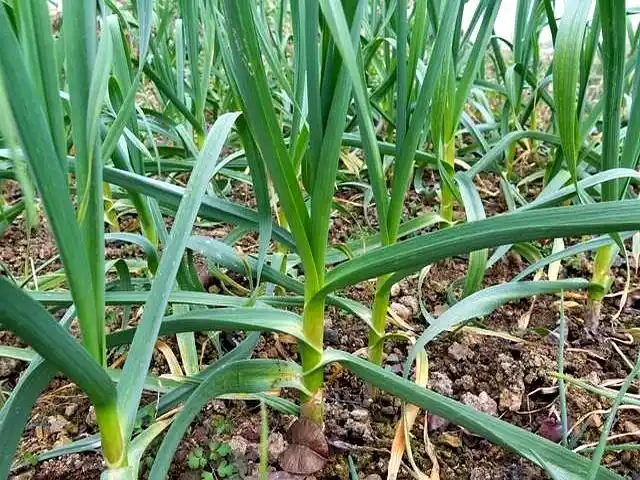
Garlic is supposed to “head up, stand up,” to lower the bottom of the garlic petals, point up the tip, gently push into the bottom of a ditch or pit, press the garlic towards the earth, and then build one to two centimetres of thick soil, so as to cover it in a smooth manner。
Cover the earth, stomp on the face with its feet or pressure plates, so that the earth and the garlic stick tight, so as not to sew, prevent the running of the water, so that the garlic can sprout。
After the show, you have to keep up with garlic, watering, chilling and weeding, so that the seedlings can survive the winter and spring and grow and make garlic。
From planting to seedlings, the key is to “maintenance soil wetness”, so that the soil is dryed with water of between 60 and 70 per cent so that the garlic can sprout; if it rains, drain out the water and don't allow the water to accumulate, otherwise the garlic will rot。
After the seeding, see if there's any shortage of seedlings。
Do not pour too much water, the soil is dried up and the seed is grown too much; if the bottom is not fat enough, 5 to 8 kilograms of urea water per acre are poured up to 10 to 15 centimetres。
Weeds are to be pulled in time, while the grass is still small, not with herbicides, which are vulnerable to seedlings, and not with grass and garlic。
It's cold in the north winter。
At the end of november, when the soil was frozen, “winter water” was poured once, so that the soil was wet, but not water, so that the soil could form a freeze and protect its roots from freezing; it could be filled with 1,000 to 1,500 kilograms of rotting manure per acre, covered on the surface, and nourished and warmed。
Particularly cold areas can be covered with a five to eight centimetre-heavy straw, weed or membrane, covering the membrane, so that the temperature below the membrane is not too high to burn the seedlings, so that the membrane is removed from the ground when it is frozen in the spring。
In february and march of the following year, when the sun warms and garlic begins to turn back, it is time to pour “back-blue water” and finish the pine soil, tearing up the sheeted soil and raising the temperature so that the roots grow well; 10 to 15 days after the return, 20 to 25 kg of potassium nitrogen phosphorus per acre, or 10 kg of urea plus 10 kg of potassium sulphate, to supplement the nutrients, to make the leaves grow and the garlic swell。
At this time, aphids are protected against aphids and garlic mackerel, which can spray 10% of aphids, and garlic mackerel, which can be ploughed with 40% of athion。
In spring, garlic is grown for long periods of time, 100 to 120 days, and it has to be completed. It is managed with “early seeding, early pipe”, which does not last long in winter。
The soil is frozen so that it can freeze the garlic for 15 to 20 days from 0 to 5°c; it can grow at a shallower, 3 to 4 cm depth, so that the ground is warmer and so that it can grow quickly。
When seedlings are produced, water and fertilize them, the soil is wet and 10 kg of urea per acre so that the seed grows fast; when garlic swells, 15 kg of potassium sulphate per acre, less nitrogen fattening, less so that the seed is too strong and the nutrients turn towards garlic。
If the garlic is too strong in the spring, the 5 per cent acetate is sprayed at 20 cm height to control the height of the seedling and allow the nutrients to go to the garlic。
At the heart of the garlic crop is “choice for time, breeding, fattening, piped”。
Autumn seeds are counted as “five to six leaves before the winter”, in the south between august and september, and around october in the north; in the spring, the fertilization is fast enough to plant, the most appropriate in march and april。
From the pick of garlic petals to the tube seedlings, every step is to be taken: the garlic is to be disinfected, the earth is to be fertilized, the land is to be grown in depth, and it is to be fertilized in the winter, and the spring is to be fertilized in time, so that the garlic is to grow and full of garlic。
You can adapt to local weather, variety and old experience, and you can grow good garlic and make money。