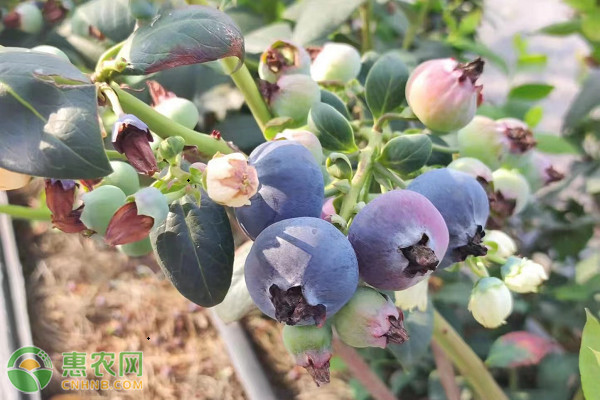
Blueberries are a fruit of high nutritional value, and because of their unique characteristics, prices are relatively high in the market. Blueberries are being cultivated in several areas of the country, mainly in shandong, jilin, liaoning, jiangsu, guizhou and yunnan. Following is a study of blueberry cultivation and management techniques。
1. Land selection
The choice of acidic soil is desirable in the selection of plots for blueberries. Soils should be loose, permeable and not less than 5 per cent organic. The fertile sandy soil is the ideal option. When the ground is being completed, it needs to rise. The rise must be directed in favour of drainage, which is generally about 20 cm tall, 100 to 120 cm wide and 60 to 80 cm wide。
2. Tree planting
Blueberry planting times are preferred to take place before the spring of the following year, after the tree has ceased to grow, and generally the rate of success is higher than in spring. A strong seedling is chosen for planting, which shall be grown in such a manner as to ensure that the seedling is dry and sprawled. The depth of the plant is shallow, filled back up to 1 to 2 cm above the root, and it is flat-beded, and when the plant is completed, the firm root water is filled. When the plant is completed, the lids and girdles are flattened, leaving 15-20 cm space on each side of the plant, and the lids are covered with a reflection film or rag。
3. Light management
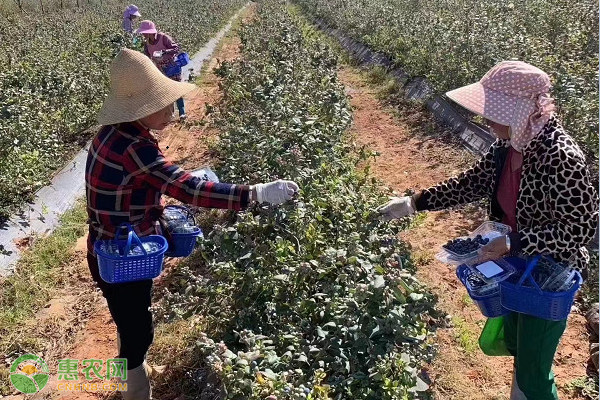
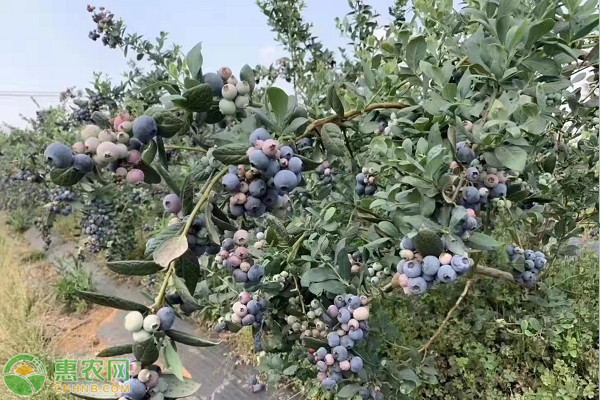
Blueberry growth requires sufficient light for light co-operation, which facilitates its growth and development. The production of blueberries is directly related to light, and the lack of light notes has led to reduced production, small flowering and lower results. In the summer, as long as there is no shortage of water, the problem is generally minor. Of course, appropriate shades of the sun work better if conditions so permit. In other seasons, blueberry buds in autumn and winter can be better divided if there is sufficient light, thus making the spring outcome more desirable。
4. Fertilizer management
The roots of the blueberries are fine and sensitive to fertilizers and therefore require careful application. Fertilizers cannot be overdosed, otherwise they can easily harm root systems and lead to plant deaths. The application of bottom and shallow organic fertilizers in winter, and the use of phosphate-based potassium phosphate in spring can make the flowers stronger; in addition, a small amount of cormorant fertilizer is beneficial to the outcome。
5. Cut management
In order for the blueberries to be high-yielding and of good quality, proper trimming is required. The mid-age tree is trimmed mainly to expand the canopy, divided into summer and winter. The summer trims are mainly the cutting of thin branches, the laying down of branches, the horizontal branches, the cross branches and the overt branches, the insect branches, etc. In winter, shearing requires cutting most of the buds and thin branches。
6. Water management
When blueberry trees are planted, they must be watered for 10 to 15 consecutive days. On the occasion of the may rainy season, in low-lying areas, trenches need to be repaired in a timely manner to ensure effective drainage. During high-temperature seasons, in the event of persistent drought, water should be poured in a timely manner, in a slow and small manner, and when high-temperature periods are avoided. Regular irrigation can be carried out if conditions permit。
7. Pest management
The main blueberry pests are asymptomosis, folicosis, moths and their larvae, dried oxen, termites, fruit flies, etc. In day-to-day management, pest prevention needs to be done. When pests are found, their lighting can be used to induce pests to be killed using amplified or black light lamps. When pests are more severe and other measures cannot be controlled, efficient, low-toxic, low-residual biological-source pesticides can be selected for chemical control. It should be noted that no chemical agent is sprayed during flowering, early fruit and harvest。
The above is a description of the management techniques for blueberry cultivation, which is most suitable for the planting of loose, organic sandy sandy soil, with a wide range of prospects and high market demand and value。
You may be interested in and welcome to the content of the following recommendations of the network:。