Autumn planting performance and high-yielding cultivation techniques in dragon rock, fujian province
Thank you
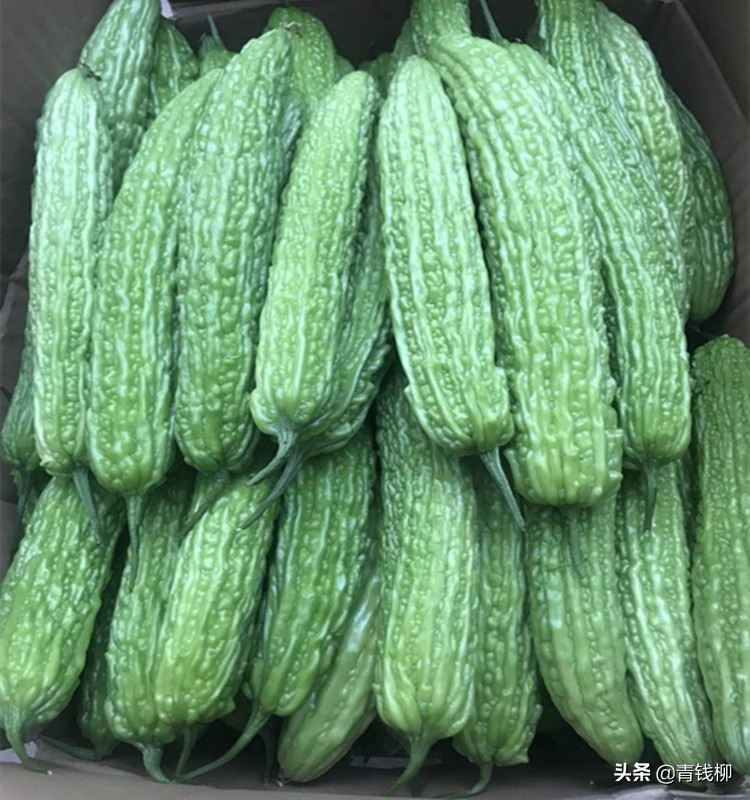
The bitter meadow, which is a year-old, reptile herbivorous plant from east india, is now widely cultivated throughout the country. Suffering melons feed on fake skins and fruit and meat, taste bitter colds, which have thermal detoxification, deflammation, etc., and which treats such diseases as osmosis and scabies, among the main vegetable varieties consumed in people's lives。
The province of fujian province has a long history of hard-nut cultivation, with annual cultivation of approximately 72 hm2 and total production of 3,020 t. As agricultural facilities become widely available and popularized, their cultivation expands over the years, and the fall-lated facilities account for about 12 per cent of the total. Many years of cropping have led to an increase in pests and diseases in the nueva lugo region, coupled with a trend towards higher costs and reduced efficiency in the production of hardmelon, which has seriously affected the productivity of local vegetable farmers. To that end, in june 2020, we introduced a new species of bitter meadows to be tested at the green mountain vegetation production base in the town of gangshan, nueva luo district, and conducted a comparative seeding experiment against the local main plant species, da ming. At the same time, a summary of the high-yielding cultivation techniques used in the production of the jade guava was drawn up。
1 reference test
1. 1 materials and methods
1. 1. 1 test material
Test-testing varieties of bitter melons are jade (provided by kim han industries ltd.) and daeming (provided by the dragon iridium vegetables seeds department)。
1. 1. 2 test method
The experiment was carried out at the base of the green and fresh mountain steel shed in the town of gangshan, nueva luang, lungi city. Base altitude 630 m, average annual temperature 19. 9 °c, annual daylight hours 1,913. 8 h, average annual precipitation 1,626. 8 mm, ecological environment good, 18 km from urban area, transport easy. The soil mass of the test plots is sandy soil, with moderate fertility and a front crop of green leaves and vegetables. The experiment was designed on a regional basis, each with a treated area of 49 m2. The seedlings were seeded on 22 june and given seedlings; on 10 july, the seedlings were planted on 4-6 leafs, with a range of 3. 5 m x 1. 0 m and a planting density of 190 667 m2. Management measures such as fertilizing water, chicken whole branches, fruit packs and pest control are routine。
1. 1. 3 survey statistical methods
(1) reception period: recording of seeding periods, planting periods, start-up periods, end-receiving periods of bitter melons. The starting period is based on the beginning of the harvest of mature fruit. (2) botanical form: on 30 july, five measurements of high strains, corrosive cortex (0. 3 m above ground), long blades (long extension of the main substrate to the front end of the central plant), wide blades (widest width of the largest leaf in the central plant) were selected, taking averages; survey no. 1 female section (calculated from section 1 of the base), leaf formation, leaf colour, melon habits, etc. (3) fruit materiality: during the productive period (28 august), each of the species involved in the test was randomly selected, and five indicators of melon shape, skin colour, melon tumour type, prism, melon tumour size, melon lumour, melon trajectories and trajectories, guacamole, guacamole colour, single guacamole weight were investigated. (4) production: the melon period records and summarizes each harvest in each region to convert the unit area production. (5) resistance: 30 september, a survey was conducted on coldness, heat resistance and resistance to pollinosis among the participating species。
1. 2 results and analysis
1. 2. 1 performance of production by type of ferocious species
The results of the production of each of the participating species are shown in table 1。
Table 1
As can be seen from table 1, the production of jade rough melons is 3,737. 3 kg/667 m2, calculated at an average sales price of $4/kg, with a value of $14,949. 2 usd 667 m2, with an increase of 389. 5 kg/667 m2 and an increase of $1,558. 0/667 m2。
1. 2. 2 timings for each of the test species
The waiting periods for each of the test species are shown in table 2。
Table 2
As can be seen from table 2, the female harvest began on july 30th and began on august 19th, with the final harvest being on november 16th, the full reproductive period 147d and the harvest period 89d. Premature macabre is better and harvest time is longer than ck。
1. 2. 3 botanical properties of each of the species involved in the test
The botanical properties of each of the species involved are shown in table 3。
Table 3 botanical properties of each of the species involved in the test
As can be seen from table 3, the leaves of each of the test-testing species are palm-shaped, all green, and all of the main chickens; the 1st female is 22. 6 knots, with a height of 162 cm, and the maximum leaf is 18. 8 cm, with a width of 17. 4 cm; and the jade is better developed and the 1st female is lower than the great mixing plum (ck)。
1. 2. 4 nutrientity of the fertilized species
See table 4 for the fruits of each of the test species。
Table 4
As can be seen from table 4, the melons of each of the test-testing species are cone-shaped, white green, melon-coloured, lumber-faced, guacamole-like; jade-polygued, lumber-sized, fruit-like, 30. 0 cm, length 6. 8 cm, meat-rich, 1. 3 cm, and, on average, 506 g; jade-polyguals are larger, heavy and thicker, compared to the melon, ck。
1. 2. 5 resistance of tested species
Field observations indicate that white powder in jade beads is lighter and more resilient than in the case of the tamarind melon (ck)。
1. 3 summary
The results of the experiment showed that the production and resistance to the disease of late autumn planting by the jade guava in the nueva luo district of the city of dragonstone were better, and that the appearances such as fruit colours and pyromas were in line with local consumption habits and were suitable for late autumn planting in the high-altitude area of chongxi。
2 high-yield cultivation techniques
2. 1 marriage
Bridging increases the resistance of plants to disease, prevents endemic diseases such as atrophy, reduces the rate of death and increases the production of bitter melons. The jade melon is married to a guacamole 3 as wood. Selenium and eardrum seeds are immersed in warm soup for disinfection. The seed is immersed in 55 °c hot water 15 min, followed by cold water to immerse the water at 30 °c and continue to immerse 8 h, when the seed is recovered and wrapped in gauze and placed under 30 °c constant temperature conditions, 2 ~ 3 d, and the seed can sow when it is exposed. 5 d before the gill. It is possible to marry when it is 5 ~ 6 cm tall, thick 0. 20 ~ 0. 25 cm thick, and it is connected to the stem of the embryo and the leaf. The seedlings are planted in small arches, where they grow four to six leaves。
2. 2 land selection
The plots of bitter melons shall be selected in areas above 500 m above sea level, with a cooler climate and high temperatures of day and night, and shall be based on vegetables and vegetables and avoid being associated with melons. High-salinization and soil salinization plots require timely clearing of gardens before planting bitter melons and the central treatment of residues to reduce the source of the disease, followed by a smooth distribution of plaster from 50 to 60 kg/666 m2, deep ground conversion, water recharge, and high-temperature stuporization in closed sheds after the membranes. Oda has distributed organic fertilizers of 300 kg/666 m2, con park complex fertilizers (12-12-17) 40 kg/666 m2, red bulls with magnesium complex fertilizers of 30 kg/666 m2 as base fertilizers, deep-turned and retweededed, thallium width (gavage) of 3. 5 m, thallium height of 0. 3 m, and a drip irrigation tube with silver black and two-coloured reflecting film。
2. 3 plantation
The plume is set at a range of 3. 5 m x 1. 0 m and a planting density of 190 666 m2。
2. 4 field management
2. 4. 1 water management
Bitter seedlings 3 d drip 1 and result period 7-10 d drip 1 the application of drip irrigation techniques not only saves water, but also reduces soil and air moisture and the incidence of diseases such as pollinosis and frost to reduce the frequency of application, while meeting crop moisture requirements。
2. 4. 2 roast whole branch
Suffering melons after chickening. The seedlings grow up to 30 cm and begin to tie chickens every five knots. All the branches below 0. 6 m are removed from the main tuber, and the main stalk is taken to the heart when it grows to 1. 5 m, leaving two to three thick stubs, with the subsequent stubbles left by the melon and the ungullish cut from the base. A balanced distribution of the chickens is ensured at the edges of the two gills, with timely cutting of the lower, yellow and sick leaves and increased ventilation。
2. 4. 3 pocket
When the fruit is 2 cm or so, a bag of bitter melons is placed in order to protect it from the plague。
2. 5 pest control
Suffering pests in the fall are mainly powdered diseases, guacamole flies, aphids, lice, ostriches, etc., and pest control should be carried out in a predominantly precautionary and integrated approach to plant protection, with the pesticides chosen to be low toxic, low residues and susceptible to degradation. When cedars are planted, 40 cedars, 467 m2 each in the field, and new plates are replaced in a timely manner when the cedars and blue sheets are clattering with insects; the presence of a sex trap around the planting area, 1. 5 m above the ground, can effectively reduce the harm caused by the guacamole fly。