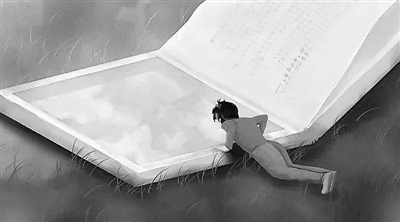
Fragmentation reading has been accompanied by controversy since its inception. The controversy revolves around the benefits and disadvantages of fragmentation reading for readers, but it is a matter of rhetoric and disagreement. Whether fragmentation reading is the welfare of the reader or disaster is worth thinking about by every reader and reader. Thus, from the perspective of the reader, neuroscience research and management principles, it is important to look at and consider the pros and cons of fragmented reading, and to suggest coping strategies, both in terms of clarifying the logic of reading and promoting the deepening of reading practices。
Fragmentation reading refers to the reading behaviour and the reading state of the fragmentation reading material, which is typically shown by the use of piecemeal time to read piecemeal texts. The current proliferation of electronic reading tools, such as mobile phones and readers, has led to increasing attention and controversy about the activity and phenomenon of fragmentation reading, leading many to misperceiving it as a product of recent times. In fact, the truth is not. If we look at historical developments, reading paper-based newspapers and periodicals at a time when electronic reading is not yet popular is also, to some extent, fragmented. In the age of the paper-media king, some readers prefer to browse fast through a large number of paper newspapers, while others “leave a newspaper for half a day”, although they differ in reading behaviour and reading status, but they are all expressions of fragmentation. It would clearly be inappropriate to call both systematic readings. It is therefore not surprising that, from the point of view of the transformation of the reading medium, fragmentation reading has its roots。
Scrap reading = little reading
Reader-based analysis
Given the manifestations of fragmentation reading, there is considerable controversy about whether it is more beneficial or less. In this regard, factors such as the age, occupation, time and effects of the reader should be taken into account in order to identify them with a specific analysis of the particular problem。
Case one: one of his elders is over 60 years old, and he is of secondary education. Every time we meet, he talks about some popular articles and videos in the circle of friends. According to my memory, over the years, he has worked hard to raise three children, and so-called cultural consumption has been, at best, at dinner to watch tv and street square dances. Today, all three children are growing up, and while still engaged in light manual labour, they inadvertently develop reading habits, flipping cell phones before sleeping and reading party news and self-media articles. One time in my home, the elder saw a lot of books on the bookshelf and also wished to take a book of family education for the reason of raising grandchildren. After some time, after an exchange, i'm sure the elder read the book on family education。
In this case, an elderly person with a low level of literacy, but with basic reading skills, was transformed from non-reading to reading by the presence of a mobile phone, which began a fragmented reading process. As a result, fragmentation reading has a role to play in promoting reading and universal reading, and cannot be simply absent。
There are, of course, some readers who are quite different. For example, while pursuing master's and doctoral studies, some readers have been intoxicated with reading paper books and have even developed good reading habits through systematic reading because of simple mobile phone functions and high school, tutor or self-requirement. It is regrettable, however, that, as mobile phones become more powerful, becoming involved in the upgrading of the media, the development of chat tools and the proliferation of self-messaging articles, they have been allocated a large amount of time and energy that should have been devoted to reading paper-based books, using mobile phones to view news, viewing media articles, etc. Readers and reading encounters like this may envious life: the reading habits that have been nurtured by years of reading paper books have been abandoned! Therefore, the actual effects of fragmentation reading should be judged on the basis of the reader's own situation, taking into account his or her professional needs, time and resources such as books, and examining and discussing the advantages and disadvantages of fragmentation reading on the basis of the principle of specific analysis of specific problems, rather than generalizing。
In terms of the cost and accessibility of reading, fragmentation reading may be cheaper and easier than reading paper books. For the general public, especially the fragmented reading of electronic media, such as the use of mobile phones to read news, self-message articles, etc., the economic costs can be negligible. In terms of the development and use of piecemeal time, the full use of mobile phones for fragmentation reading, newspaper media public articles, etc., is no less efficient than the use of the entire time to read newspaper news and research papers. Therefore, our reading of debris should be inclusive and used if it does not have the same effect as in-depth reading and systematic reading, and is pleased to see that it has the effect of creating awareness of reading, enhancing interest in reading and promoting reading actions. It must be made clear that fragmentation reading, however obvious it may be, does not change the fact that it is a reading and has the essence of reading。
If you read at least one comment a day, half a year or more, you can't say it's not a reading, can you? From this perspective, whether fragmentation reading is superficial or in-depth depends primarily on the ability of the reader to think in depth and the value of reading in depth。
Scrap reading = shallow reading
Analysis based on neuroscience studies
At present, the struggle for fragmentation reading is focused on the trade-offs, and it also manifests itself in a question: does long-term fragmentation reading allow readers to think less and less? In this regard, in the absence of large data supporting research, there may be some insights from the study of this issue in the context of reading brain mechanisms。
Case ii: a student who is in his or her home in a rural area is more aloof during his or her primary school, but can do his or her homework on time. But on one occasion, when the headmaster told her that she was not doing her homework, her mother caught her at home late because of her greed, beat her hard with a sorghum broom and threatened to hit you once with this broom if you did not study well, did not look good at writing and came back late. Since then, she has come home early and early every day to write her homework and read her books as soon as she entered the house. Due to her dedication, her homework was completed very quickly and the rest of her time was only good-looking, which was more interesting. This is how it goes through college, where it is still a hobby. She said, "i will always have a broom in my heart, although it is unfortunate, but i am grateful for the broom broom, and i will go back to school and study."。
That story sounds like a legend, because behind it there are secrets and incredible places. In some cases, the mother's truncheons have their own impeccable intentions, which, of course, do not obscure their limited educational capacity and lack of educational means. From a psychological point of view, parents understand the child's mind and mind, either intentionally or inadvertently, in keeping with the pattern of education: with a visible and visible broombroom, the child was given an invisible but powerful rule. The parents ' actions force the child to establish a psychological mechanism for reflection, i. E. To return home early to study hard, to avoid being beaten, and to study less early is to be beaten. The creation and operation of these psychological mechanisms, over a long period of time, has led to rich connections between neurotic synapses in the brain, which ultimately create and form a solid neuropath for reading. In the course of their studies, this neuropath of long reading is reinforced by the fact that the psychological shadow of being beaten and childhood memories have not disappeared, and its external expression has been the transformation from unreading to reading。
Neural science has shown that the nervous system consists of a large number of neurons, which are linked to neurons through synapses, while each neuron has a large number of synapses, which constitute an extremely complex neuropath for transmission and processing of information. As mentioned earlier, some readers are particularly interested in studying during primary and secondary school and even during the master's degree programme, but not once they graduate to work. According to the findings of neuroscientific research, it can be inferred that there has been some or even a greater change in the nervous circuit of the brain: the neuropath previously created by the reading behaviour of long-term continuous reading of paper books, the fragmentation of the text by electronic means such as work, housework, socialization, entertainment or mobile phones, has been abandoned or significantly altered after a certain period of time when the brain has built a new neural circuit. This recognition has given profound inspiration to reading research, allowing us to revisit the impact of fragmentation reading on the development of human thinking。
First, if a person expects to develop the ability to think in depth by reading, it is necessary to create a neuropath of deep thinking in the brain through appropriate reading practices. And the creation of neuropaths in the brain that can lead to deep thinking does not have a clear advantage over the reading of paper-based whole books。
Second, if a person is able to develop deep thinking through reading, it means that by reading he or she has also established a neuropath in the brain that leads to deep thinking, short-lived or occasional fragmentation reading, which does not result in the original neuropath being abandoned or significantly altered。
Third, long-term continuous fragmentation reading, such as the use of electronic tools such as mobile phones to view news messages and to read from media articles, will create a neuropath for the brain that is suitable for fragmentation reading. As a result of the potential of the neuro-return route, a person can automatically take up a submersible view of the news, read articles from the media, and evolve into a form of “hand addiction” and “aspiration”, which may eventually lead to a shrinking of readers, fatigue and rejection of reading the whole paper book。
It's a double-edged sword for any reader in terms of the construction of a neuropath in the brain. Whenever a person begins to read, it is possible that, as long as it lasts, he or she will eventually form a neuropath suitable for a certain reading, and once he or she has given up reading, the neuropath that was originally appropriate for reading may eventually be abandoned or changed significantly。
At present, the lack of reading of the entire book by young people in paper form has caused concern among many knowledgeable people. In this regard, schools and teachers should create a rich variety of reading spaces, reading situations and reading activities, promote young people's commitment to reading classics in their reading activities, and enable young people to develop a new generation of thinkers through long-term reading practices that are appropriate for their deep thinking。
For both young people and teachers, we should be fully aware of the premise and basis that fragmentation reading can only be effective if it takes into account the age, occupation, time, etc. Of the reader, as well as the potential role of neurologic pathways in the brain that neuroscience has revealed。
From a managerial point of view, addressing once and for all the trade-offs of fragmentation reading is a system engineering exercise that requires continued reflection and exploration. As to the strategic measures to be taken by readers to cope with the disadvantages of fragmentation reading, or to optimize the actions and effects of fragmentation reading, apart from the inherent premises and foundations, it is important to pursue and promote the harmonization of people, things, times and so forth, with a view to optimizing reading behaviour through the adaptation of the reader's mentalities, persistence, etc., so as to shape and re-engineer the neuropaths in the brain that are more appropriate for deep thinking。
(student at the chinese academy of educational sciences, secondary school teacher attached to the henan tropical ocean institute)
Chinese journal of education, 9th edition, 10 june 2019